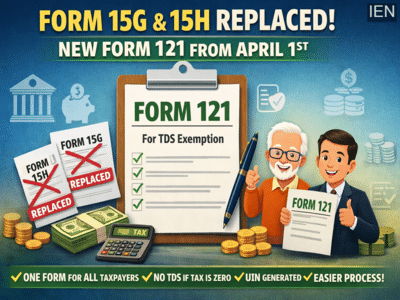
In a major move to simplify tax compliance, the Income Tax Department has introduced a new declaration system starting April 1, 2026. The widely used Form 15G and Form 15H have been discontinued, and a single unified Form 121 will now be used by all taxpayers to avoid Tax Deducted at Source (TDS), provided their tax liability is zero.
This change, effective from the new tax year 2026–27, is expected to streamline processes, reduce confusion, and make compliance easier—especially for senior citizens.
What Is Form 121 and Why It Was IntroducedForm 121 is a new declaration form that allows taxpayers to inform banks or payers that their total taxable income is below the taxable limit. Once submitted, TDS will not be deducted on eligible income.
The government introduced this unified form to:
Earlier, taxpayers had to choose between different forms based on age. Now, a single form applies to everyone, making the process more straightforward.
Goodbye Form 15G & 15H—One Form for AllPreviously:
From April 1, 2026:
This change removes the need to remember separate eligibility rules and simplifies the filing process for millions.
Who Can Use Form 121?You can submit Form 121 if:
Once submitted, banks or financial institutions will not deduct TDS on your income.
Types of Income Covered Under Form 121Form 121 applies to multiple income sources, making it highly useful for common taxpayers. These include:
This wide coverage ensures that most regular income streams are included.
What Is UIN and Why It MattersEvery time Form 121 is submitted, a Unique Identification Number (UIN) will be generated.
The UIN helps:
This is part of the government’s effort to digitize and monitor tax declarations more effectively.
Responsibilities of Banks and PayersBanks and institutions responsible for making payments must:
This ensures better compliance and accountability within the system.
Benefits for TaxpayersThe new rule offers several advantages:
1. Simplified ProcessNo need to choose between multiple forms—just one form for all taxpayers.
2. Ease for Senior CitizensElderly taxpayers benefit the most, as the process becomes less complicated.
3. Reduced ErrorsUniform rules minimize confusion and filing mistakes.
4. Better TransparencyTracking through UIN ensures accountability and reduces misuse.
Final TakeawayThe introduction of Form 121 marks a significant step toward simplifying India’s tax system. By replacing Forms 15G and 15H with a single declaration, the government has made TDS-related compliance easier and more transparent.
If your income falls below the taxable limit, using Form 121 can help you avoid unnecessary TDS deductions while keeping your tax filings hassle-free.