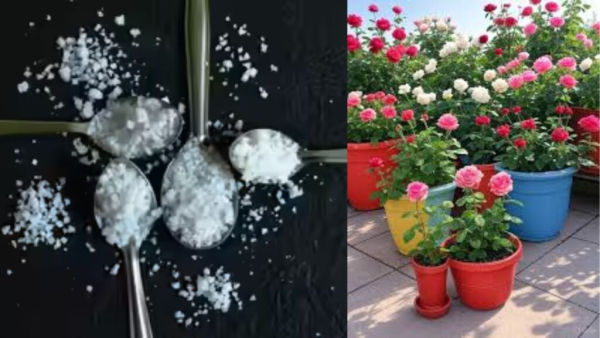
Gardening Tips:Everyone wants their garden to always look green and blooming, but sometimes despite proper care the plants start withering. Flowers remain small or leaves turn yellow and start drooping, which reduces the enthusiasm for gardening.
Gardening experts have suggested a very easy and economical solution to such problems – Epsom salt. This special salt is considered very effective in improving the health of plants and when used properly can change the appearance of the garden.
Epsom salt is actually magnesium sulphate, which provides two important elements essential for plants – magnesium and sulphur.
Magnesium helps in the formation of chlorophyll, which keeps leaves green and allows plants to make food from sunlight. Whereas sulfur gives plants the strength to produce essential nutrients and fight diseases.
The use of Epsom salt increases the plants’ ability to absorb nutrients. Many times, despite the presence of fertilizer in the soil, the plants are not able to absorb it properly, in such a situation this salt strengthens the roots and helps them in taking nutrition.
With its use, the leaves become shiny and the color of the flowers becomes deep and attractive.
When plants become stressed after repotting or their leaves start turning yellow and curling, then spray of Epsom salt proves to be very effective.
It reactivates the plant cells, causing their growth to resume and new branches to emerge.
Epsom salt can be used in two ways.
Keep in mind that do not plant it in dry soil, watering is necessary.
It is considered best to use Epsom salt once a month. Especially when a new plant has been planted or the plant is budding.
Its use before fruit appearance in plants like tomato, chilli and rose helps in increasing the yield. It also provides relief to plants burnt by the strong sunlight in summer.
This salt is safe for most flowers and vegetables, but its effect is most visible on rose, tomato, chilli and lemon plants.
Its use in indoor plants like money plant and peace lily also makes the leaves dense and green. However, it should be used sparingly in succulents and cactus.
Disclaimer: The claims made in this article are based on Instagram videos and information found on the internet. NBT does not take responsibility for its truthfulness and accuracy.