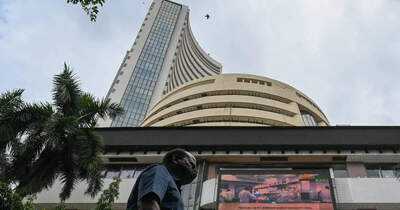
On Thursday, the stock market experienced a significant downturn, with the ongoing conflict in West Asia contributing to the instability. By 10:10 AM, the benchmark Sensex index had dropped over 1,500 points, reflecting a decline of 2.1%. Similarly, the Nifty index fell nearly 500 points, also down by 2.1%.
Since March 2, the market has been on a downward trajectory, primarily due to rising energy prices and growing economic uncertainty. The India VIX, which gauges market volatility, surged by 4.4% on Thursday.
Other major Asian stock markets mirrored this decline on Thursday. As of 9:25 AM Indian time, Hong Kong's Hang Seng index was down by 1.1%, South Korea's Kospi plummeted by 3.9%, Japan's Nikkei fell by 2.2%, and China's Shanghai Composite decreased by 0.5%.
The Indian rupee saw a slight improvement on Thursday following the Reserve Bank of India's implementation of new measures aimed at curbing speculative trading. The rupee was trading at 93.2 against the US dollar during early trading hours, despite ongoing foreign fund outflows and declining stock values. Earlier in the week, it had briefly dipped below a record low of 95.
This fluctuation in currency value is indicative of the broader economic challenges facing the country.
Since the onset of the conflict, global oil prices have surged by over 50%. On Thursday, the price of Brent crude oil reached nearly $106 per barrel, following a speech by US President Donald Trump that offered no immediate resolution to the conflict. Prior to the address, Brent was priced around $100 per barrel and was at $78 per barrel just before the conflict began.
Trump indicated that while the US military's primary objectives in Iran are nearing completion, further actions against the country are expected in the coming weeks. Meanwhile, US WTI crude was trading at approximately $104 per barrel.
The Strait of Hormuz, a crucial maritime route for global oil supply, has been largely blocked by Iran since the conflict escalated, affecting about 20% of the world's petroleum supply.