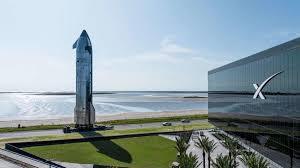
SpaceX, the rocket and satellite company led by Elon Musk, has quietly taken a major step toward going public. The firm has filed confidentially for an initial public offering (IPO), setting the stage for what could become the largest stock market listing in history.
The move signals a shift in how investors view space. What once felt like a high-risk bet now looks like a core part of the global economy.
Reports suggest SpaceX is targeting a valuation above $1.75 trillion. If achieved, it would place the company among the most valuable in the world. It would also mark a turning point for the space industry, showing that it has moved beyond early experimentation into a stable, revenue-generating sector.
The company may try to raise more than $50 billion through the IPO. That would surpass the $29.4 billion raised by Saudi Aramco in 2019, which still holds the record for the largest IPO to date.
SpaceX also wants early inclusion in the Nasdaq 100 index. This suggests it aims to position itself alongside major technology firms rather than traditional aerospace companies.
Unlike many high-growth firms, SpaceX already reports solid profits. The company generated about $8 billion in profit on $15.5 billion in revenue last year.
Two core businesses drive this performance.
First, its Falcon 9 and Falcon Heavy rockets. These reusable launch systems have cut the cost of sending payloads into orbit. By landing and reusing boosters, SpaceX has turned space launches into a more routine operation.
Second, Starlink. This satellite internet service provides high-speed connectivity across the globe. It brings in steady, recurring revenue and carries strong margins. Starlink also supports remote regions, ships, and military users, which adds strategic value.
Together, these two segments create a mix of hardware and subscription income. That balance makes SpaceX more stable than many other aerospace firms.
The IPO follows a recent merger between SpaceX and Musk’s AI startup, xAI. That deal valued SpaceX at $1 trillion and xAI at $250 billion.
The combination links space infrastructure with artificial intelligence. SpaceX is also seeking approval to launch up to one million satellites designed to act as orbital data centers. These satellites could support AI workloads in space, reducing pressure on Earth-based data centers.
This plan shows how Musk wants to connect his ventures. Rockets, satellites, and AI systems would work together as one network.
Investor demand appears strong. Analysts note that many funds want exposure to SpaceX, even at high valuations. Still, the pricing may depend less on current earnings and more on belief in Musk’s long-term vision.
This creates a familiar pattern. Like Tesla, SpaceX may trade at levels that reflect future potential rather than present metrics.
However, there are concerns. One key issue is “key man risk.” Musk leads several major companies at once, including Tesla, Neuralink, and The Boring Company. Investors may question how he can manage all of them at scale.
To address this, SpaceX is expected to use a dual-class share structure. This would allow Musk to keep control even after selling shares to the public.
The timing of the IPO also matters. Governments now treat space as a strategic domain. NASA relies on SpaceX for missions, including lunar programmes. The Pentagon views space infrastructure as critical to national security.
Starlink has already played a role in defense and communications. Its network can provide internet access in conflict zones or remote areas where traditional systems fail.
This makes SpaceX more than a commercial venture. It is part of the national infrastructure in several countries.
If the IPO succeeds, it could revive the wider market for new listings. The US IPO market has stayed quiet in recent years. A strong debut from SpaceX could encourage other firms, including those in AI, to follow.
More broadly, the listing would show that investors now see space as a long-term growth sector. It would also test how far public markets are willing to support bold, capital-heavy projects.
SpaceX is not just raising money. It is asking investors to back a vision that stretches from Earth to Mars. Whether markets accept that vision will shape the next chapter of both finance and space exploration.