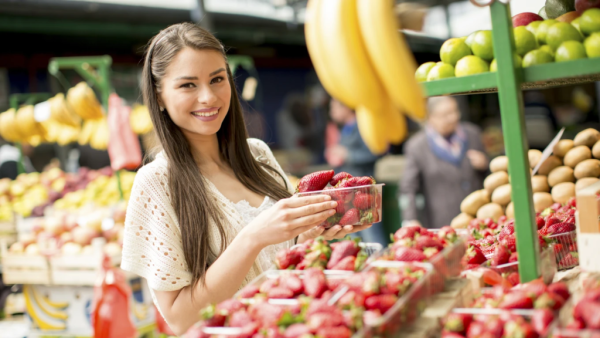
A grocery store employee shared the unsettling way stores “rework” moldy fruit, like strawberries, to avoid losing money on perishable items. His video gives buyer beware a whole new meaning.
As spring unfolds across the U.S., warmer weather and longer days bring a lot to look forward to, including the arrival of fresh seasonal fruits. While citrus fruits rule the winter months, spring can be marked as the beginning of berry season. But before you go all out on buying berries, make sure that the fruit you’re getting is actually fresh.
The unnamed grocer filmed himself sorting through a pint of strawberries as he explained, “This is what happens when you get food from a grocery store.”
“What we do here at the store is, we take the moldy strawberries out, throw them away, and then we resell it,” he said, as he rearranged the non-moldy berries to make the container look new.
: One Of The Simplest Ways To Save The Planet Is To Avoid Buying This Common Grocery Store Item
Volodymyr TVERDOKHLIB | Shutterstock
In the caption of his post, he touched on how mold can harm people’s health, citing gastrointestinal issues such as nausea, vomiting, and upset stomach.
However, not all moldy food causes harm: Some foods, like cheeses, contain “good” mold that’s safe to eat. The mold that grows when food is spoiled should be avoided, however. Yet, experts note that eating small amounts of mold probably won’t cause harm.
Randy Worobo, a professor of food microbiology at Cornell University, noted that “When you ingest the mold, the acids in your stomach, as well as the digestive enzymes, will break the cells down.”
Yet some molds are dangerous, especially for people who are immunocompromised. It’s possible for mold to colonize and cause fungal infections, so the immunocompromised population should be especially careful and avoid eating any moldy food.
In a separate follow-up post, the worker continued his exposé on grocery store fruit, explaining how he rearranges fruit that’s gone moldy in order to sell it.
“What we do is called ‘reworking,’” he said, which involves taking moldy fruit out, throwing it away, then saving the rest to resell. He shared that some fruit goes back on the floor after it’s been sorted, and other fruit gets cut up and made into pre-made platters.
: People Who Regularly Eat This Supposedly ‘Bad’ Food Are More Likely To Live To 100, Study Finds
He demonstrated how he throws away the “nasty, moldy” strawberries and then cuts the rest up to make a fruit plate, one of many items that stores charge more money for. It’s not only strawberries that get this royal treatment, but it’s also the “same with the blueberries,” he explained. “We go through the blueberries. See, it’s bad; this is no good. We go through it, take it out, throw it away, put it back on the floor for y’all to eat.”
People commented below his post, with some expressing gratitude that he was sharing this pertinent information. Others worried that he’d get fired for spreading his moldy fruit knowledge.
Other commenters noted that what happens in grocery stores isn’t so different from what they do at home: Remove a moldy piece of food and eat what wasn’t touched.
 Katrin Primak
Food waste is a serious issue across the United States, with 92 billion pounds of food — 145 billion meals — thrown away each year. Thirty-eight percent of food goes unsold or uneaten, and 51.7% of waste comes from the food industry.
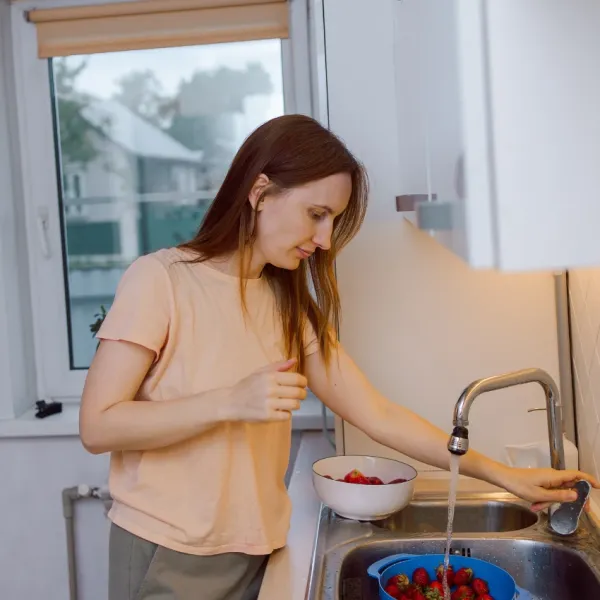
If you’ve bought strawberries at a store and want to stop them from going moldy quickly, try the following technique. Wash the strawberries in a solution of one part white vinegar and three parts water to remove bacteria, mold, and dirt. Drain the berries, rinse them with cold water, and dry them in a salad spinner lined with paper towels to remove as much moisture as possible, which is what makes berries go bad in the first place.
Knowing how to store food correctly is a big part of making sure it doesn’t spoil so that you get to actually eat the tasty foods you spent your hard-earned money on.
: Study Proves The ‘Shopping Cart Theory’ Actually Can Reveal Someone’s True Character
Alexandra Blogier, MFA, is a writer who covers psychology, social issues, relationships, self-help topics, and human interest stories.