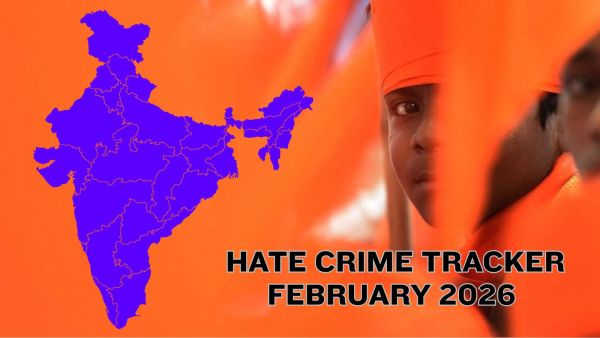
Hyderabad: At least 67 hate crimes were recorded across India in February 2026, a 59.5 per cent rise from January’s figures, according to data we compiled at Siasat.com.
Uttar Pradesh recorded the highest number of cases at 20, followed by Telangana with 14, of which 13 were against Muslims and one against Dalits. Five of Telangana’s cases originated in Hyderabad alone.
The month also saw sustained hate speech at public rallies, an AI-generated video by a ruling party’s official handle depicting a sitting Chief Minister firing at Muslim men and fresh instances of caste-based discrimination in states across the country.

Yet, against this backdrop, a handful of incidents – collectively being called the “Mohammed Deepak effect” – pointed to ordinary citizens pushing back against communal aggression.
Below are some of the incidents that drew national attention.
Ten Muslim families in Madhya Pradesh‘s Balaghat district have been living under a social boycott after a Mahasabha passed a resolution directing Hindu families to sever all commercial and personal ties with them.
In Uttar Pradesh, amid the Election Commission’s Special Intensive Revision (SIR) of electoral rolls, Booth-Level Officer (BLO) Prashad Yadav alleged that a person named Dharmendra Maurya filed objections through Form 7 seeking the removal of 86 Muslim names from the roll. “When I saw the names on the list, I realised that the people mentioned are all alive and present at their locations,” Yadav said.
Early February saw the Assam Bharatiya Janata Party’s (BJP) official X handle post a controversial AI-generated video depicting Chief Minister Himanta Biswa Sarma firing a point-blank shot at two individuals – one wearing a skull cap, the other with a beard. The video, widely condemned as a call for violence against Muslims, was later deleted. All India Majlis-e-Ittehadul Muslimeen (AIMIM) chief Asaduddin Owaisi filed a complaint with the Hyderabad Police seeking criminal action against Sarma, who casually said he was “not aware” of the video.

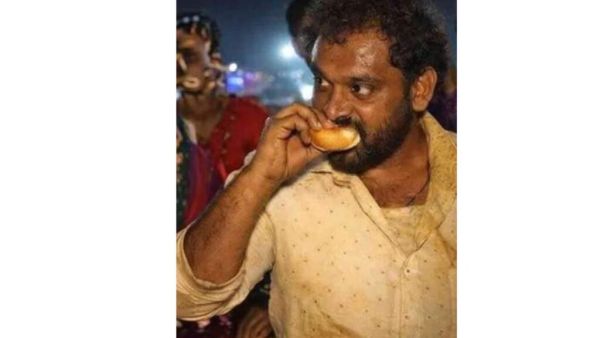
In Telangana, khova bun vendor Shaik Shaiksha Vali was publicly humiliated at the Medaram Jatara when YouTubers from Tejaswi News accused him of “food jihad” and demanded he eat his own buns on camera to “prove” they were not poisoned.
Muslim politicians also faced discrimination. In Maharashtra‘s Chhatrapati Sambhajinagar district, Hindutva youth and temple management sprinkled cow urine on the Nageshwar Mahadev temple as a “purification” ritual after Shiv Sena MLA Abdul Sattar performed puja there during Maha Shivratri.
As Ramzan began in February, communal tensions flared in parts of the country. On February 16, two days before the month started, worshippers at the Jama Masjid in Telangana’s Yadadiri Bhuvanagiri district found their mosque vandalised, with beer and whisky bottles strewn inside and copies of the Quran desecrated.
Four days later, a communal clash broke out in Kamareddy after a Muslim man named Muzzamil allegedly objected to a saleswoman playing a devotional song at work. The argument quickly escalated into stone-pelting between Muslims and Hindus, injuring several people. As many as 19 people were arrested.
At the Virat Hindu Sammelan in Delhi, a Hindutva speaker mocked Muslims, saying, “Allah ko bas puncture banana aatha tha (Allah only knows how to repair punctured tyres),” and urged participants to “store weapons at home in preparation for any Muslim terrorist activity.”
Mohammed Umardeen was shot dead in Delhi’s Nandi Nagri while trying to protect his teenage son from being beaten by a group of men.
In Madhya Pradesh’s Sihora town, a dispute over loudspeakers during a Hindu aarti (puja) and Taraweeh prayers turned violent after a Muslim boy asked the temple authorities to lower the volume and was assaulted. Sixty people, mostly Muslims, were subsequently arrested.
Near Saharanpur in Uttar Pradesh, two Hindu Raksha Dal women painted “Musalmaan ke liye road nahi hai(This road is not for Muslims)” on a wall along the Delhi-Dehradun highway, and showed no remorse when confronted, maintaining they had done nothing wrong.
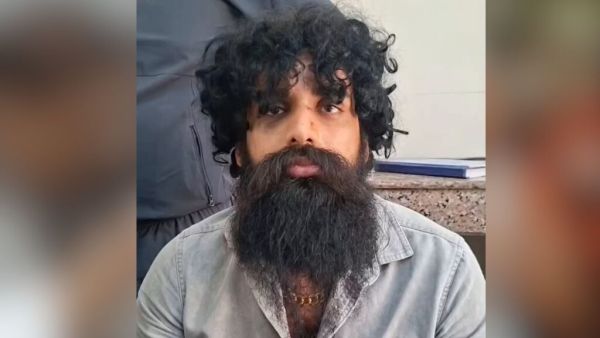
Hindutva leader Daksh Chaudhary, a self-styled gau rakshak (cow vigilante), was caught on video assaulting a Muslim man named Imran, accusing him of being in a relationship with a minor Hindu girl and of misrepresenting his identity as Manish Chauhan.
Right-wing leaders and BJP leaders continued to spew hate in public events, with some making explicit calls for violence against Muslims.
At a Hindu Garjana rally in Madhya Pradesh, Goshamahal MLA T Raja Singh said those who refused to sing “Vande Mataram” would be shown their “right place,” and added, “Each of my Bajrangis can behead 10 Bangladeshis. But I have only one demand… There should be no case and no FIR (first information report).”
In Hyderabad, Bharatiya Janata Yuva Morcha city president Nithin Nandhkar was booked for using derogatory language against AIMIM leader and Mumbra corporator Sahar Yunus Shaikh.
Karnataka BJP MLA Basangouda Patil Yatnal was booked for alleged hate speech against Mahatma Gandhi and Jawaharlal Nehru at Shivaji Jayanti celebrations, where he said that “love jihad” was being used by Muslims to target Hindu women. “Love jihad” is an Islamophobic conspiracy theory promoted by right-wing Hindutva groups to misrepresent consensual interfaith relationships.
At Siasat.com, we documented 16 hate crimes against Dalits in February, five of them from Uttar Pradesh. Upper caste groups attacked Dalit weddings and cases of sexual assault against women were reported from UP, Gujarat and Rajasthan.
There was no respite from caste discrimination even in death, as was seen in Bihar, where the body of 91-year-old Chamki Devi was cremated at a road intersection after her family was reportedly denied access to the cremation ground.
In Kerala, a 23-year-old Dalit priest, PR Vishnu, resigned alleging caste discrimination, threats and fabricated complaints. He told the media he was drawn towards the priesthood because of his love for Sanatan Dharma, but claimed deliberate attempts to paint him as a thief.
In Punjab, economics professor Harpreet Singh alleged two years of casteist remarks from a colleague at Punjab University.
In Karnataka and Telangana’s Mancherial district, relatives of upper caste women attempted honour killing after the women married Dalit men. Both couples survived.
In Bihar, a Catholic nun was harassed by a group of male students who directed sexually explicit remarks at her while filming the encounter on camera. The visibly distressed nun attempted to push the camera away from her face. This was the lone documented hate crime against the Christian community in February we documented at Siasat.com.
Beneath a sea of rising animosity and Islamophobia, a few instances of communal solidarity stood out. We call it the Mohammed Deepak effect, the Hindu man who stood to right-wing goons for a Muslim shopkeeper in Uttarakhand.
In Varanasi, Hindutva workers’ attempts to intimidate Muslim shopkeepers were foiled by local residents who drove them away, shouting, “ID dikha (Show your ID).”
Shaik Shaiksha Vali, the vendor accused of “food jihad” in Andhra Pradesh, received an outpouring of public support from local Hindus who visited his stall to buy his buns. Hyderabad MP Owaisi and Andhra Pradesh Deputy Chief Minister Nara Lokesh both condemned the harassment, saying that divisive and communal behaviour had no place in Telugu society.

At Lucknow University, Hindu students formed a human chain to help Muslim classmates offer namaz and break their fast during Ramzan, after the administration sealed access to a mosque inside the Mughal-era Lal Baradari building on campus.
In Telangana’s Hanumkonda district, 30 Dalit families had their drinking water supply restored after the State Human Rights Commission issued an interim order. In Karnataka’s Gadag district, the state’s first government-run barber shop was inaugurated, weeks after a barber refused to serve a Dalit customer.
Despite a steep rise in recorded atrocities through February, these moments were a reminder that not every part of the country has given way to division.
Sixty-seven incidents in 28 days. That is roughly one hate crime reported every ten hours. In all likelihood, many have not made it into any tracker – because no one filed a report, because the family was too frightened, because the incident happened in a village with no one to document. February’s 67 is a floor, not a ceiling.


