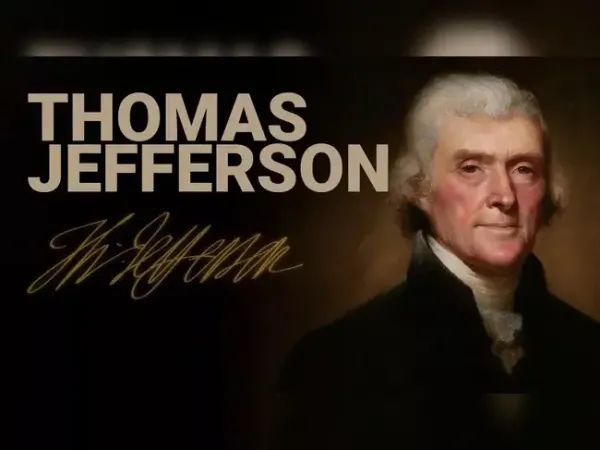
Thomas Jefferson (1743–1826) was an American statesman, diplomat, and political thinker who served as the third President of the United States from 1801 to 1809. He is best known as the principal author of the Declaration of Independence, a defining text that articulated the colonies’ break from British rule and laid out enduring ideals of liberty, equality, and self-governance.
A leading figure of the early American republic, Jefferson also served as the nation’s first Secretary of State under George Washington and later as Vice President to John Adams. His presidency is notably marked by the Louisiana Purchase, which doubled the size of the country and expanded its western frontier.
Beyond politics, Jefferson was a polymath with interests spanning architecture, science, education, and philosophy. He founded the University of Virginia, reflecting his belief in the central role of education in sustaining democracy.
However, his legacy remains complex and debated, particularly due to his ownership of enslaved people despite advocating for liberty and human rights. Jefferson’s writings and ideas continue to influence democratic thought worldwide, even as historians scrutinize the contradictions between his principles and personal practices.
"The glow of one warm thought is to me worth more than money."
Meaning of the quote
The quote by Thomas Jefferson suggests that emotional warmth, kindness, and meaningful human connection hold greater value than material wealth. A “warm thought” reflects empathy, affection, or genuine goodwill, intangible qualities that enrich life in ways money cannot.
Jefferson emphasizes that inner contentment and sincere human sentiment provide deeper and more lasting fulfillment than financial gain, underscoring the idea that true wealth lies in emotional and moral richness rather than in possessions.
Relevance in today’s world
In today’s material-driven world, Thomas Jefferson’s words highlight the enduring value of empathy and human connection over wealth. As stress and digital isolation rise, simple acts of kindness and genuine understanding remain more meaningful and fulfilling than money.
A leading figure of the early American republic, Jefferson also served as the nation’s first Secretary of State under George Washington and later as Vice President to John Adams. His presidency is notably marked by the Louisiana Purchase, which doubled the size of the country and expanded its western frontier.
Beyond politics, Jefferson was a polymath with interests spanning architecture, science, education, and philosophy. He founded the University of Virginia, reflecting his belief in the central role of education in sustaining democracy.
However, his legacy remains complex and debated, particularly due to his ownership of enslaved people despite advocating for liberty and human rights. Jefferson’s writings and ideas continue to influence democratic thought worldwide, even as historians scrutinize the contradictions between his principles and personal practices.
Quote of the day
"The glow of one warm thought is to me worth more than money."
Meaning of the quote
The quote by Thomas Jefferson suggests that emotional warmth, kindness, and meaningful human connection hold greater value than material wealth. A “warm thought” reflects empathy, affection, or genuine goodwill, intangible qualities that enrich life in ways money cannot.
Jefferson emphasizes that inner contentment and sincere human sentiment provide deeper and more lasting fulfillment than financial gain, underscoring the idea that true wealth lies in emotional and moral richness rather than in possessions.
Relevance in today’s world
In today’s material-driven world, Thomas Jefferson’s words highlight the enduring value of empathy and human connection over wealth. As stress and digital isolation rise, simple acts of kindness and genuine understanding remain more meaningful and fulfilling than money.