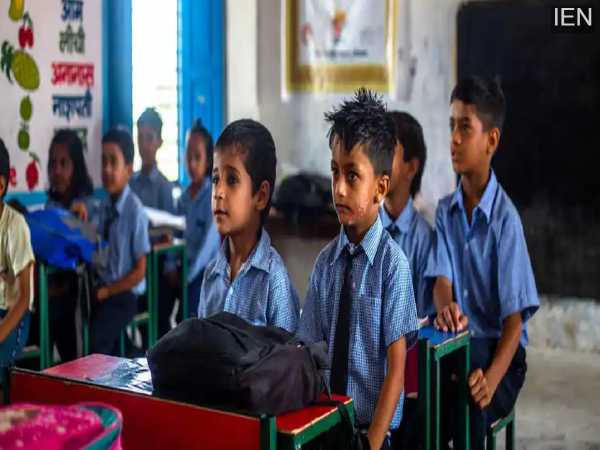
RTE Gujarat Admission 2026: The state government has made approximately 84,000 seats available this time for children belonging to economically weaker and backward sections of society. The objective of these seats is to provide a quality education to these children.
RTE Gujarat Admission 2026: The admission process for private schools in Gujarat, under the Right to Education (RTE) Act, has commenced for the academic session 2026-27. The state government has allocated approximately 84,000 seats this year specifically for children from economically weaker and backward sections. The aim behind these seats is to provide quality education to children who are economically disadvantaged and for whom education in private schools might otherwise be unaffordable.
Under the RTE Act, 25 percent of the seats in Class 1 of private schools are reserved for admissions. This reservation benefits children belonging to the Economically Weaker Sections (EWS) and other disadvantaged groups.
Application Dates and Procedure for Gujarat Schools
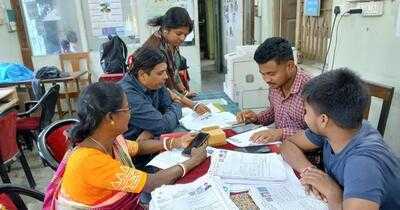
This year, online applications under the RTE Act will open on April 4, 2026, and remain open until April 17, 2026. Applicants can submit their applications through the state government’s official portal. The entire application process is conducted online; therefore, there is no requirement to physically submit forms at the schools. Applicants are advised to retain a printout of their submitted application for their records.
Required Documents for Gujarat School Admissions
During the application process, parents are required to upload several essential documents. These include the child’s birth certificate, domicile certificate (proof of residence), and an income certificate or Income Tax Return (ITR). In cases where an ITR has not been filed, a self-declaration stating that no income tax was filed must be submitted instead. These documents are mandatory to verify the child’s eligibility and the family’s economic status.
Eligibility Criteria and Age Limit for RTE Admissions
There are specific mandatory rules for securing admission under the RTE Act. Foremost among these is the requirement that the child must be a resident of the state. Additionally, the child must belong to the Economically Weaker Section (EWS) or a recognized disadvantaged category. The child must be 6 years old as of June 1, 2026. This year, the annual income ceiling has been set at ₹6 lakh to enable a larger number of families to benefit from the scheme.
Seats and Medium of Instruction for Children under RTE
The seat allocation process for children under the RTE Act is transparent and systematic. At the time of application, parents are required to list their preferences for 8 to 10 schools, and seats are allotted based on the child’s preferences and seat availability. If the number of applications exceeds the available seats, selection is conducted through a computer-based lottery system. Special priority is accorded to certain categories of children, such as orphans, children with disabilities, child laborers, children of martyred soldiers, and children belonging to Scheduled Castes (SC), Scheduled Tribes (ST), Below Poverty Line (BPL) families, and the Economically Weaker Section (EWS). Furthermore, education in private schools is imparted in various languages, including Gujarati, Hindi, English, and Urdu.