
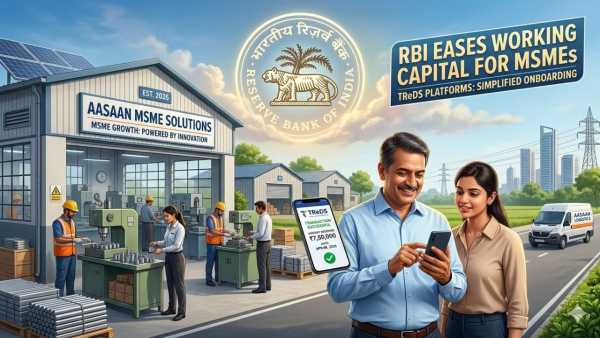
The Reserve Bank of India on Wednesday proposed to ease the onboarding rules for small businesses i.e. MSMEs on the Trade Receivables Discounting System (TReDS) platform. These platforms provide immediate working capital to these institutions. Regulated by the RBI, these digital platforms enable MSMEs to discount their trade receivables (invoices) and obtain working capital instantly from lenders like banks and non-banking institutions without any collateral. The main TReDS platforms in India are RXIL (Receivables Exchange of India), M1xchange (Mynd Solutions) and Invoicemart.
Governor Sanjay Malhotra made various announcements along with the monetary policy announcement. The RBI Governor said that in order to promote 'ease of doing business' for MSMEs and encourage their greater participation on TReDS, it is proposed to waive the requirement of 'due diligence' of MSMEs during onboarding on the TReDS platform. The central bank introduced the TReDS framework in 2014. Insurance companies were added as the fourth participant in 2023. RBI said that other existing instructions have also been comprehensively reviewed, and draft instructions will be issued soon for public consultation.
Although the TReDS platform has been in existence for many years, it has not seen much growth in transaction volumes due to several challenges including lack of digitalization and market fragmentation among MSMEs. Central banks and the government are taking measures to promote the use of such platforms to increase access to loans to MSMEs. In the Union Budget for FY27, Finance Minister Nirmala Sitharaman had proposed to make TReDS mandatory as the default transaction settlement platform for all purchases made by Central Public Sector Enterprises (CPSEs) from MSMEs. While presenting the budget, Sitharaman had said that to leverage its (TReDS) full potential, I propose… that TReDS be made mandatory as a transaction settlement platform for all purchases made by CPSEs from MSMEs, which will act as a benchmark for other corporates.