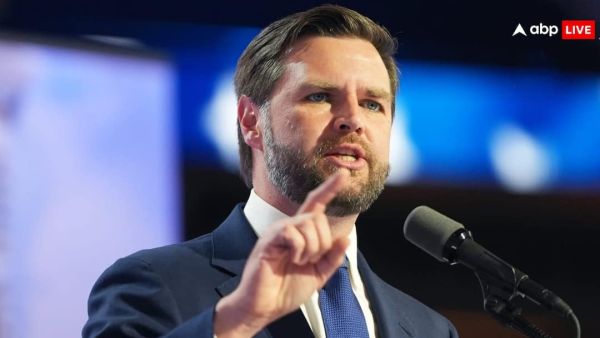
Another row erupted amid the ongoing West Asia conflict after US Vice President JD Vance claimed on Wednesday that Iran sent multiple versions of a “10-point proposal,” which created confusion ahead of negotiations. What started the row was Vance's claim that one of the early drafts sent by Iran may have been generated using ChatGPT, a popular artificial intelligence (AI) tool.
Speaking to reporters while departing Hungary, Vance said at least three separate proposals had circulated, complicating clarity over what forms the basis of talks.
“The first 10-point proposal was something that was submitted, and we think, frankly, was probably written by ChatGPT, that was submitted to Steve Witkoff and Jared Kushner that immediately went in the garbage and was rejected,” Vance said, as reported by CNN.
He was referring to discussions involving US officials, including Special Envoy Steve Witkoff and senior adviser Jared Kushner.
Vance said a subsequent version, shaped through exchanges between the United States, Pakistan and Iran, was more substantive and is now being used as a reference point in diplomacy.
“There was a second 10-point proposal that was much more reasonable that was based on some back and forth between us, between the Pakistanis and between the Iranians. That is the 10-point proposal that the president was referencing in his Truth yesterday,” he added.
The vice president also pointed to another proposal circulating online, describing it as more extreme than the first.
He criticised coverage of the earlier draft, suggesting it did not reflect an official Iranian position.
“That initial proposal was put forward by ‘little more than a random yahoo in Iran,’” Vance said, according to CNN.
However, CNN reported that the initial proposal had been obtained from Iranian officials and was carried by multiple state media outlets, which portrayed it as a framework Tehran had advanced in negotiations.
The differing narratives highlight uncertainty over the origins and legitimacy of the proposals as Washington and Tehran prepare for formal engagement.
Separately, Vance dismissed claims that Lebanon was included in the ceasefire arrangement between Washington and Tehran, stressing that the agreement was narrowly focused.
“We never made that promise. We never indicated that was going to be the case. What we said is that the ceasefire would be focused on Iran and the ceasefire would be focused on America's allies, both Israel and the Gulf Arab states,” he said.
He reiterated that the truce framework was centred on Iran and key U.S. allies, including Israel and Gulf Arab nations, amid a fragile two-week ceasefire currently in effect.
The White House has said that Iran submitted two separate 10-point proposals during backchannel exchanges, with one being outright rejected by US President Donald Trump as unacceptable.
White House Press Secretary Karoline Leavitt said the initial proposal was deemed “unserious” and was immediately dismissed by the US negotiating team.
“I have seen a lot of inaccurate coverage today from the media. The Iranians originally put forward a 10-point plan that was fundamentally unserious, unacceptable, and completely discarded. It was literally thrown in the garbage by President Trump and his negotiating team. Many outlets have falsely reported that plan as being acceptable to the US,” Leavitt said.
She added that a second proposal from Iran was considered viable and has formed the foundation for ongoing diplomacy, including the current two-week ceasefire and planned negotiations.
“Iran has agreed to open the Strait of Hormuz, and as the president said, we have received a proposal from the Iranians that has been determined to be a workable basis on which to negotiate,” she said.
Leavitt said the acceptable framework aligns with Washington’s broader demands, including Trump’s position on halting uranium enrichment in Iran.