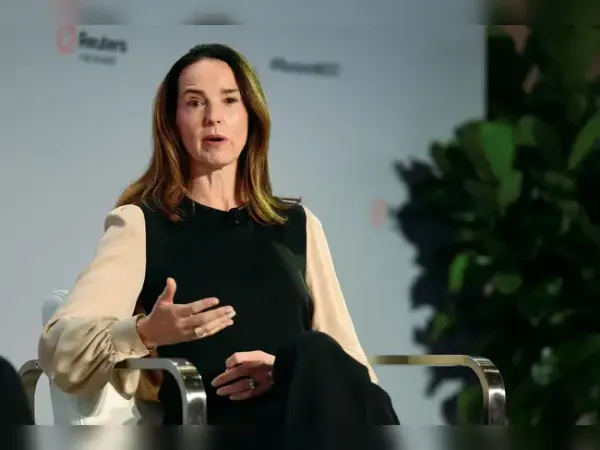
OpenAI plans to reserve a portion of its shares from an initial public offering for individual investors, CFO Sarah Friar told CNBC on Wednesday, as the ChatGPT maker gears up for a highly anticipated US stock market listing.
The AI startup is laying the groundwork for an IPO that could value it at up to $1 trillion and may file with securities regulators as soon as the second half of 2026, Reuters reported last year.
Friar told CNBC that the AI startup started testing the waters with retail in its latest funding round and saw "really strong demand" from individuals. While she did not comment on the IPO timeline, she said it's "good hygiene" for a company of OpenAI's size to "look and feel and act ... like a public company."
OpenAI raised over $3 billion from individual investors in its latest funding round. It closed the round with $122 billion in committed capital at a post-money valuation of $852 billion.
The company initially targeted $1 billion from individual investors via private placements through banks such as JP Morgan, Morgan Stanley and Goldman Sachs, but ended up securing three times that amount in the largest private placement those banks have ever done, Friar told CNBC.
Large institutional investors have historically been the primary recipients of IPO allocations, with retail investors typically receiving only 5% to 10% of shares in public offerings.
However, billionaire Elon Musk is planning to allocate as much as 30% of SpaceX's IPO to individual investors - at least three times the usual retail slice.
SpaceX confidentially filed for a US market debut earlier this month.
The AI startup is laying the groundwork for an IPO that could value it at up to $1 trillion and may file with securities regulators as soon as the second half of 2026, Reuters reported last year.
Friar told CNBC that the AI startup started testing the waters with retail in its latest funding round and saw "really strong demand" from individuals. While she did not comment on the IPO timeline, she said it's "good hygiene" for a company of OpenAI's size to "look and feel and act ... like a public company."
OpenAI raised over $3 billion from individual investors in its latest funding round. It closed the round with $122 billion in committed capital at a post-money valuation of $852 billion.
The company initially targeted $1 billion from individual investors via private placements through banks such as JP Morgan, Morgan Stanley and Goldman Sachs, but ended up securing three times that amount in the largest private placement those banks have ever done, Friar told CNBC.
Large institutional investors have historically been the primary recipients of IPO allocations, with retail investors typically receiving only 5% to 10% of shares in public offerings.
However, billionaire Elon Musk is planning to allocate as much as 30% of SpaceX's IPO to individual investors - at least three times the usual retail slice.
SpaceX confidentially filed for a US market debut earlier this month.