
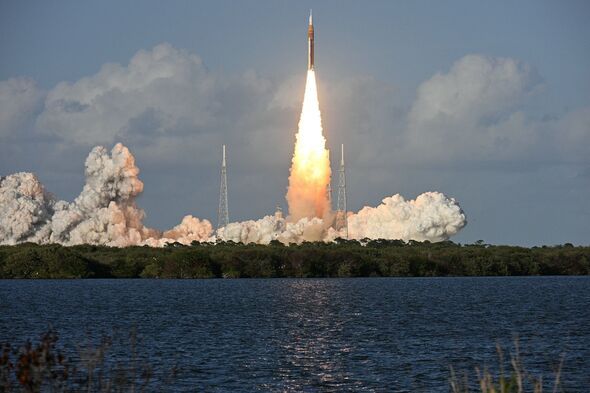
The astronauts who joined the Artemis 2 mission are now on their way back to Earth after venturing further into space than any humans have ever gone. The mission included the use of innovative technologies to explore more of the lunar surface than ever before and was also launched to establish the first long-term presence on the Moon.
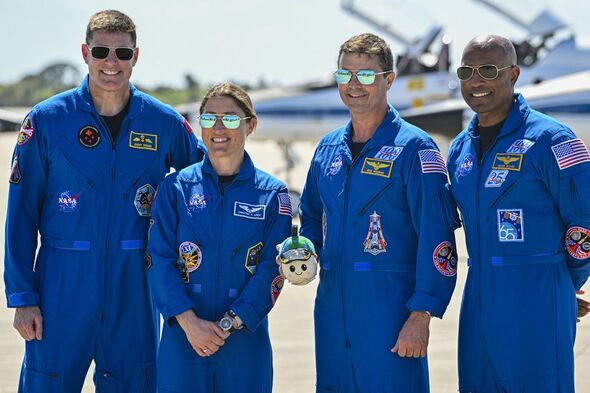
On their last full day in space, the Artemis II crew began the morning with "Lonesome Drifter" by Charley Crockett as they approached Earth at 147,337 miles. NASA astronauts Reid Wiseman, Victor Glover, and Christina Koch, and CSA (Canadian Space Agency) astronaut Jeremy Hansen are preparing for their return to Earth, set for Friday (April 10), including reviewing re-entry and splashdown procedures and conducting a return trajectory correction burn, the NASA website explained.
As Artemis 2 nears its return to Earth, NASA teams on the ground are completing final preparations for Orion's re-entry and splashdown. Within two hours after splashdown, the crew will be extracted from Orion and flown to the USS John P. Murtha.
Recovery teams will retrieve the crew using helicopters, and once aboard the ship, the astronauts will undergo postmission medical evaluations before returning to shore to board an aircraft bound for NASA's Johnson Space Center in Houston.
The mission started on April 1. Less than two hours before launch, however, an issue on the flight termination system (FTS) arose, which prompted fears the moon mission had to be delayed once again. NASA then announced the FTS issue has been fixed, with all system still go.
The Orion's re-entry and splashdown are scheduled for around 8.07pm (5.07pm PDT) on Friday (April 10).
During re-entry, the service module will separate about 20 minutes before Orion reaches the upper atmosphere southeast of Hawaii.
If needed, a final trajectoryadjustment burn will finetune the flight path before the spacecraft begins a series of roll maneuvers to safely distance itself from departing hardware.
Orion will reach its maximum speed - approximately 23,864 mph - just before entry interface, NASA explained.
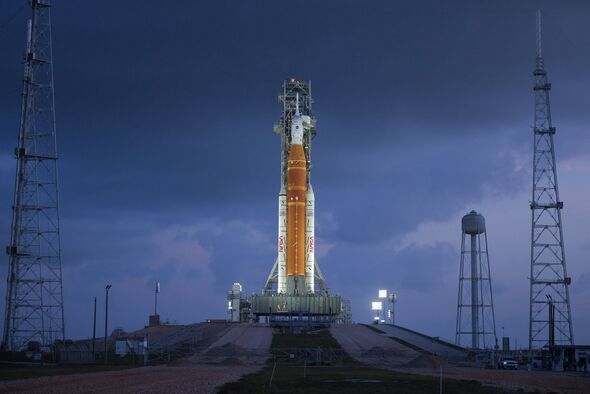
Orion will land off the coast of San Diego, California. On its website, NASA explained: "As Orion descends through about 400,000 feet, the spacecraft will enter a planned sixminute communications blackout as plasma forms around the capsule during peak heating. The crew is expected to experience up to 3.9 Gs in a nominal landing profile.
After emerging from blackout, Orion will jettison its forward bay cover, deploy its drogue parachutes near 22,000 feet, and then unfurl its three main parachutes around 6,000 feet to slow the capsule for splashdown.
After that, within two hours after splashdown, the crew will be extracted from Orion and flown to the USS John P. Murtha.
Recovery teams will retrieve the crew using helicopters, and once aboard Orion, the astronauts will undergo postmission medical evaluations before returning to shore to board an aircraft bound for NASA's Johnson Space Center in Houston.
The Daily Express will bring you all the updates on the splashdown with a live blog. You can also watch the event live here.
NASA will also have its own live stream.