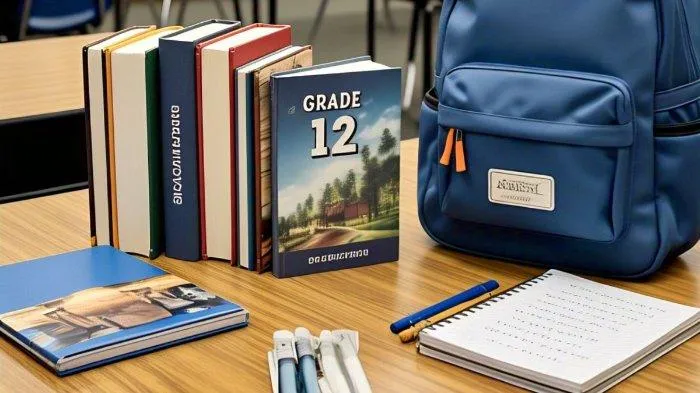
BANGKAPOS.COM -- Berikut ini terdapat soal dan kunci jawaban mata pelajaran Bahasa Inggris kelas 12 SMA Kurikulum Merdeka edisi tahun 2022 yang berjudul Life Today.
Siswa diminta untuk menjawab sejumlah soal di halaman 29 tentang Reading: Activity 6.
Pada Unit 1 yang berjudul Narrative Text: The Story of a Friendly Future, siswa diminta untuk mengerjakan Activity 6 tentang inexistence of electricity in the village of Gunung Mali.
Baca juga: Kunci Jawaban Bahasa Inggris Kelas 12 Halaman 58 59 60 Kurikulum Merdeka: Cash or Electronic Money
Selanjutnya di halaman 30 terdapat Unit 1 yang berjudul Narrative Text: The Story of a Friendly Future, siswa diminta untuk menjawab sejumlah soal pada Activity 3 tentang renewable energy used in Sumba.
Dan terakhir di halaman 31 32 pada Unit 1 yang berjudul Narrative Text: The Story of a Friendly Future, ada soal di kegiatan Activity 3B tentang matching the phrases with their meanings.
Sebelum melihat kunci jawaban, siswa harus mengerjakan tugas secara mandiri terlebih dahulu.
Reading
Baca juga: Kunci Jawaban Bahasa Inggris Kelas 12 SMA Semester 1 Halaman 4 5 6 7 Kurikulum Merdeka
Activity 6
Discuss the questions in a group of 3 or 4.
1. Who are the characters?
Jawaban:
Nayau and friends.
2. When did the story take place?
Jawaban:
Baca juga: Kunci Jawaban Bahasa Inggris Kelas 12 SMA Halaman 181 182 183 Kurikulum Merdeka, Unit 5: Todays Life
Sometime in the past.
3. Where did the story take place?
Jawaban:
The village of Gurung Mali in Sintang district of West Kalimantan.
4. What happened to the characters?
Jawaban:
The inexistence of electricity in his village.
5. What challenges did the characters encounter in the story?
Jawaban:
Some people did not agree with the characters’ idea to build micro hydropower for their village.
6. How did the characters solve the problem?
Jawaban:
He convinced others to support his idea for their village’s goodness.
7. How was the ending of the story?
Jawaban:
It ended in a happy ending when the village enjoyed the electricity.
8. What do you learn from the story?
Jawaban:
I learned that togetherness can break through limitations that we have.
Viewing
Activity 3
Video 1
A. Let’s watch and observe the video entitled Transforming Indonesia’s Sumba into an Iconic Green Energy Island. You may click on the following link.
B. Please discuss the following questions about the video with your partner.
1. What benefits could people gain from renewable energy used in Sumba?
Jawaban:
Making their lives better in terms of energy supply, night activities, low-cost production.
2. What do you think you could do to help people in Sumba empower their renewable energy for lives?
Jawaban:
By empowering them to increase their quality of life by using renewable energy effectively.
3. How could the government support their energy diversification?
Jawaban:
By trying to find other sources of renewable energy, switching energy forms, and funding the renewable energy production.
Transkrip Video 1:
Transforming Indonesia’s Sumba into an Iconic Green Energy Island
The island of Sumba in eastern Indonesia is culturally distinct from the rest of the country with unique burial traditions, animist religions and its own unique language.
But it shares many of the same problems as other isolated regions: poverty, high infant mortality and diseases like malaria, common.
Access to power for the 650,000 islanders is a huge problem. Nearly half have no access to electricity and use kerosene and wood fires for lighting and cooking.
It’s expensive, unsafe and unhealthy. Meanwhile, the island has an abundance of renewable energy with plentiful solar and biomass resources and significant potential for hydropower and wind.
To harness this green energy for Sumba, the Dutch NGO Hevos began working with the government.
They set an ambitious goal to extend electricity to the vast majority of Sumba’s population using 100 percent renewable energy.
(interview)
This initiative to turn Sumba into an iconic island of clean energy has since attracted additional support from other development partners, the private sector and most recently the ADB.
Progress has already been made in rolling out renewable energy. The village of We Potendo benefits from a government-sponsored small-scale solar project.
It brings power to 36 houses for a small monthly fee, much lower than the household kerosene bill. For village headman, Lede Dauga, having electricity at home has changed his life.
(interview)
And for the rest of the village, it means the chance to work and study after dark and access to things like television for the first time.
ADB joined the initiative in 2013 with a technical assistance grant worth one million dollars. It’s aimed at scaling up renewable energy access in Sumba and in other areas of eastern Indonesia.
This was later increased to two million dollars with a grant from the government of Norway.
ADB’s involvement can help leverage this model across other geographies within Indonesia and outside of Indonesia by supporting the overall development of the program and the subsequent implementation that can provide a model that can be replicated elsewhere.
This ambitious energy experiment on Sumba is important. If it’s a success on the island, it could enable Indonesia to widen cost-effective energy access across many other poor isolated communities.
Viewing
Activity 3
B. Vocabulary
Match the phrases with their meanings.
Jawaban:
1. to subsidize (Verb) = g
To pay part of the cost of something
2. a side effect (Noun) = h
Something unplanned and usually unpleasant that happens in addition to the main effects of that situation
3. the grid (Noun) = e
A network of cables or pipes for distributing power, especially high-voltage transmission lines for electricity
4. fossil fuels (Noun) = i
A natural fuel such as coal or gas, formed in the geological past from the remains of living organisms
5. a commodity market (Noun) = b
Buying, selling, or trading a raw product, such as oil, gold, or coffee.
6. to plummet (Verb) = j
A steep and rapid fall or drop
7. abundant (Adjective) = a
Existing or available in large quantities; plentiful
8. greenhouse gasses (Noun) = c
A gas that contributes to the greenhouse effect by absorbing infrared radiation, e.g., carbon dioxide and chlorofluorocarbons
9. fumes (Noun) = d
Gas, smoke, or vapor that smells strongly or is dangerous to inhale.
10. to bend the curve of emissions (Verb) = f
To flatten the upward trajectory of human-caused warming trends
Discussion Questions
Answer the following questions individually and write your answers in your book.
1. What are the two conditions of a world without fossil fuels like?
Jawaban:
(a) You never need to smell the fumes of a passing car, bus or truck and where traffic noise is massively reduced
(2) The world is powered by something you can’t touch
(3) Every single home has electricity, no matter how far it is from the grid.
2. What kind of industry will be undermined by fossil fuels soon?
Jawaban:
The coal-fired power industry.
3. What should people do to welcome ‘the new world’?
Jawaban:
To harness the power of the sun and work at the speed of light.
Disclaimer
Kunci jawaban diatas bersifat alternatif jawaban sehingga para siswa bisa memberikan eksplorasi jawaban lain.
Kunci jawaban soal diatas bisa saja berbeda sesuai dengan pemahaman tenaga pengajar atau murid.
(Bangkapos.com/TribunBali.com)