


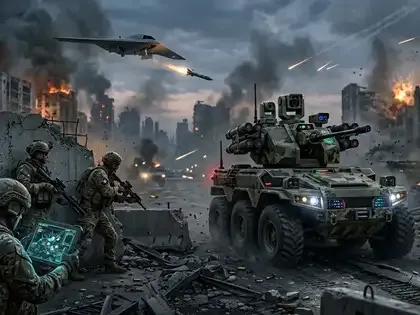
AI-driven warfare can significantly reduce the cost of disruption.
The escalating confrontation involving the US–Israel alliance and Iran has once again reminded the world that warfare is evolving at a pace few could have imagined even a decade ago. While geopolitical tensions and military manoeuvres dominate headlines, a quieter yet far more transformative force is reshaping the battlefield: artificial intelligence.
For decades, technological innovation has influenced warfare, from radar systems and satellite reconnaissance to precision-guided munitions. However, artificial intelligence represents a far more profound shift. It is not merely a supporting tool; it is rapidly becoming a central driver of military decision-making, intelligence gathering and operational execution.
Recent developments demonstrate how AI is being integrated into military operations with unprecedented speed. Advanced targeting systems, data fusion algorithms and automated surveillance platforms are now capable of processing massive streams of battlefield information in real time. Infrared signals, radio-frequency emissions, satellite imagery and communication intercepts can all be analysed simultaneously to generate predictive insights about enemy movements and strategic vulnerabilities.
Such capabilities dramatically compress decision-making timelines. Military commanders no longer need days or even hours to analyse intelligence. AI systems can generate actionable insights within minutes, enabling faster and more precise operations.
Also read | DRDO chief explains why transfer of technologies wont help India
Yet this technological leap also introduces new risks.
One striking example is the growing integration of AI-driven targeting systems into modern military platforms. These systems combine large-scale data analytics with machine learning models to identify potential targets, assess threat levels and recommend operational responses. While such capabilities can significantly enhance military effectiveness, they also raise concerns about algorithmic errors, unintended escalation and the ethical implications of automated warfare.
Artificial intelligence is also influencing the economics of warfare.
Traditional military power requires massive financial resources, aircraft carriers, fighter jets, missile systems and large standing armies. AI-driven warfare, however, can significantly reduce the cost of disruption. Relatively inexpensive technologies such as autonomous drones, AI-guided reconnaissance systems and algorithmic targeting platforms can neutralise extremely expensive military assets.
This “cost inversion” is already visible in modern conflicts. Swarms of inexpensive drones can overwhelm sophisticated air defence systems designed to intercept traditional threats. In such scenarios, technology does not merely enhance military capability, it fundamentally alters the cost-benefit equation of warfare.
The implications for India are significant.
As a rapidly digitising nation with a growing defence technology ecosystem, India must recognise that artificial intelligence will play an increasingly central role in future conflicts. AI will influence everything from surveillance and logistics to battlefield coordination and strategic intelligence.
However, reliance on foreign AI ecosystems poses serious risks.
Today, the most powerful large language models and advanced AI systems are largely controlled by a handful of global technology players, many of them based in the United States. While these systems offer remarkable capabilities, dependence on external AI platforms in sensitive domains could create vulnerabilities for national security.
India must therefore accelerate the development of sovereign AI capabilities.
Building indigenous large language models and defence-oriented AI platforms will be essential to ensure that India retains strategic autonomy in critical technologies. This effort must involve collaboration between defence institutions, research laboratories, technology companies and academic institutions.
Equally important is the need for global governance frameworks governing the military use of AI. The rapid weaponisation of AI risks triggering an arms race in autonomous systems and algorithm-driven warfare. India should play an active role in shaping international norms that regulate the development and deployment of fully autonomous weapons.
Another dimension that deserves attention is the growing threat of AI-driven disinformation. AI can now generate highly convincing synthetic media, deepfake videos and automated propaganda campaigns. Such capabilities could be used to manipulate public opinion, create confusion during crises or undermine national morale. Safeguarding information integrity will therefore become as important as defending physical infrastructure.
As an armed forces veteran who has witnessed the evolution of military technology over decades, I believe the message is clear: artificial intelligence will define the next era of strategic competition and India must prepare accordingly.
This preparation must include investments in indigenous AI research, stronger cyber security frameworks, robust regulatory mechanisms and deeper collaboration between defence establishments and technology innovators.
Peace, after all, is not maintained merely through diplomacy or deterrence. It is sustained through preparedness.
For decades, technological innovation has influenced warfare, from radar systems and satellite reconnaissance to precision-guided munitions. However, artificial intelligence represents a far more profound shift. It is not merely a supporting tool; it is rapidly becoming a central driver of military decision-making, intelligence gathering and operational execution.
Recent developments demonstrate how AI is being integrated into military operations with unprecedented speed. Advanced targeting systems, data fusion algorithms and automated surveillance platforms are now capable of processing massive streams of battlefield information in real time. Infrared signals, radio-frequency emissions, satellite imagery and communication intercepts can all be analysed simultaneously to generate predictive insights about enemy movements and strategic vulnerabilities.
Such capabilities dramatically compress decision-making timelines. Military commanders no longer need days or even hours to analyse intelligence. AI systems can generate actionable insights within minutes, enabling faster and more precise operations.
Also read | DRDO chief explains why transfer of technologies wont help India
Yet this technological leap also introduces new risks.
One striking example is the growing integration of AI-driven targeting systems into modern military platforms. These systems combine large-scale data analytics with machine learning models to identify potential targets, assess threat levels and recommend operational responses. While such capabilities can significantly enhance military effectiveness, they also raise concerns about algorithmic errors, unintended escalation and the ethical implications of automated warfare.
Artificial intelligence is also influencing the economics of warfare.
Traditional military power requires massive financial resources, aircraft carriers, fighter jets, missile systems and large standing armies. AI-driven warfare, however, can significantly reduce the cost of disruption. Relatively inexpensive technologies such as autonomous drones, AI-guided reconnaissance systems and algorithmic targeting platforms can neutralise extremely expensive military assets.
This “cost inversion” is already visible in modern conflicts. Swarms of inexpensive drones can overwhelm sophisticated air defence systems designed to intercept traditional threats. In such scenarios, technology does not merely enhance military capability, it fundamentally alters the cost-benefit equation of warfare.
The implications for India are significant.
As a rapidly digitising nation with a growing defence technology ecosystem, India must recognise that artificial intelligence will play an increasingly central role in future conflicts. AI will influence everything from surveillance and logistics to battlefield coordination and strategic intelligence.
However, reliance on foreign AI ecosystems poses serious risks.
Today, the most powerful large language models and advanced AI systems are largely controlled by a handful of global technology players, many of them based in the United States. While these systems offer remarkable capabilities, dependence on external AI platforms in sensitive domains could create vulnerabilities for national security.
India must therefore accelerate the development of sovereign AI capabilities.
Building indigenous large language models and defence-oriented AI platforms will be essential to ensure that India retains strategic autonomy in critical technologies. This effort must involve collaboration between defence institutions, research laboratories, technology companies and academic institutions.
Equally important is the need for global governance frameworks governing the military use of AI. The rapid weaponisation of AI risks triggering an arms race in autonomous systems and algorithm-driven warfare. India should play an active role in shaping international norms that regulate the development and deployment of fully autonomous weapons.
Another dimension that deserves attention is the growing threat of AI-driven disinformation. AI can now generate highly convincing synthetic media, deepfake videos and automated propaganda campaigns. Such capabilities could be used to manipulate public opinion, create confusion during crises or undermine national morale. Safeguarding information integrity will therefore become as important as defending physical infrastructure.
As an armed forces veteran who has witnessed the evolution of military technology over decades, I believe the message is clear: artificial intelligence will define the next era of strategic competition and India must prepare accordingly.
This preparation must include investments in indigenous AI research, stronger cyber security frameworks, robust regulatory mechanisms and deeper collaboration between defence establishments and technology innovators.
Peace, after all, is not maintained merely through diplomacy or deterrence. It is sustained through preparedness.
(Disclaimer: The opinions expressed in this column are that of the writer. The facts and opinions expressed here do not reflect the views of www.economictimes.com.)


Lt Gen Dr SP Kochhar
Lieutenant General Dr. S. P. Kochhar AVSM & bar, SM, VSM, ADC, KIGA is currently the Director General of COAI