
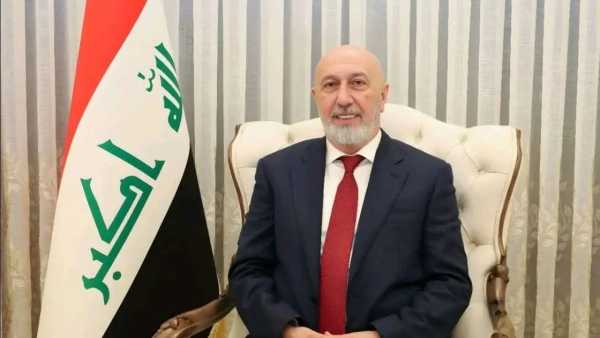
Iraq's parliament on Saturday elected Kurdish leader Nizar Amidi as the country's new president. This decision was taken about five months after the general elections, because no party had got a clear majority in the elections and there was a delay in forming the government. Amidi becoming President is being considered a political blow for America, because Amidi comes from the Patriotic Union of Kurdistan (PUK), which is generally considered closer to Iran, while his rival party KDP is considered closer to America.
Amidi had also defeated the current Foreign Minister Fuad Hussain. Hussein was supported by the Kurdistan Democratic Party (KDP), the main rival party to the PUK. After Amidi becomes President, the balance of power may go against America. The biggest reason is that the process of forming a government in Iraq is now in the hands of a coalition, which is called the pro-Iran Shia Coordination Framework.
This alliance has already hinted at making Henouri al-Maliki, whose relations with Iran are considered strong, as the Prime Minister. Amidst the US-Iran tension and the impact of the war, if Iraq's new government moves closer to Iran, it could weaken America's military and strategic position.
There is a tradition in Iraq that the President is from the Kurdish community, while the Prime Minister is from the Shia community and the Speaker of the Parliament is from the Sunni community. This election took place much later than scheduled. According to the Constitution, the President should have been elected within 30 days of the new Parliament session, but this voting was delayed by more than two months.
Amidi was born in Dohuk area of northern Iraq and is an engineer by profession. He has previously been an advisor to two former presidents, Jalal Talabani and Fouad Masoom. In the first round of voting, no candidate got the required two-thirds majority. Amidi got 208 votes, while Muthanna Amin Nader, who stood second, got only 17 votes. After this, the second round of voting took place, in which Amidi got 227 votes and Nader got 15 votes.
According to Iraqi law, now the President will have to call the leader of the largest parliamentary coalition to form the government within 15 days. The largest alliance at present is the Shia Coordination Framework, which has already talked about making former Prime Minister Nouri al-Maliki the Prime Minister again, although America has been opposing it. Now it has to be seen whether this alliance takes Maliki forward or gives a chance to some other leader.