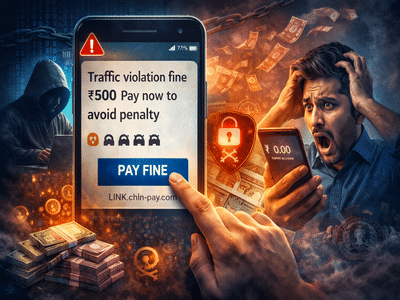
A shocking cyber fraud case from Hyderabad has once again highlighted the growing threat of SMS-based scams in India. A man reportedly lost ₹6 lakh after clicking on a fraudulent traffic challan link sent via SMS. The incident serves as a strong warning for millions of mobile users who may unknowingly fall prey to such sophisticated digital traps.
How the Scam UnfoldedAccording to reports, the victim received a text message claiming he had violated traffic rules and needed to pay a fine of ₹500. The message included a link that appeared to lead to an official payment portal. Trusting the message, he clicked on the link and was redirected to a webpage that closely resembled a genuine government challan payment site.
Without suspecting foul play, he entered his personal and banking details to complete the payment. However, within a short time, a massive ₹6 lakh was siphoned off from his bank account. What seemed like a minor fine turned into a major financial loss.
Cybercrime authorities have now launched an investigation into the incident, revealing how scammers are increasingly using fake government-like websites to deceive unsuspecting users.
Why These Scams Are So DangerousExperts warn that such frauds are carefully designed to look authentic. Fraudsters often replicate official portals like the Ministry of Road Transport and Highways e-challan system to gain users’ trust.
In many cases, simply clicking on the link can expose your device to malware. This malicious software may allow scammers to gain access to sensitive data, including banking credentials, OTPs, and even remote control of your phone.
Once access is granted, hackers can transfer money without your knowledge. Since these attacks are often executed quickly, victims usually realize the fraud only after significant financial damage has already occurred.
What Cyber Police Are SayingCybercrime officials have issued a clear warning: traffic authorities never send direct payment links via SMS, email, or messaging platforms like WhatsApp.
They emphasize that no legitimate authority pressures users for immediate payment through unofficial channels. Fraudulent messages often create urgency, pushing users to act quickly without verifying the source.
Authorities also point out that these scam messages frequently come from unknown or suspicious numbers and may contain spelling errors or unusual formatting—clear red flags that users should not ignore.
How to Verify a Genuine ChallanTo stay safe, users are advised to check traffic fines only through official government platforms such as the Parivahan eChallan Portal.
Instead of clicking on links in messages, manually visit the official website and enter your vehicle details to verify if any fine is pending. This simple step can prevent you from falling into a cyber trap.
Essential Tips to Protect Yourself from SMS ScamsIf you receive a suspicious message or become a victim of cyber fraud, report it immediately on the National Cyber Crime Portal or call the helpline number 1930.
Prompt reporting can help authorities track down fraudsters and may even increase the chances of recovering lost money.
Stay Alert, Stay SafeWith cybercriminals adopting new and advanced tactics, awareness is your first line of defense. Always verify before you trust any message related to payments or penalties. A single careless click can lead to devastating financial consequences—so staying cautious is no longer optional, it’s essential.