Most people think originality comes from endless freedom. The role-playing game Dungeons and Dragons suggests the opposite. It gives players a small number of races, classes and backgrounds and somehow produces characters that feel endlessly distinct. A half-elf paladin might be an immediately recognisable type, yet no two half-elf paladins ever feel the same once play begins. This is because identity in Dungeons & Dragons is not created by escaping structure, but by working through it.
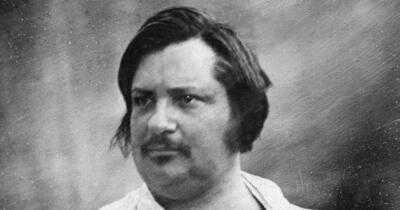
19th-century readers encountered something strikingly similar in the novels of the French novelist Honoré de Balzac. His vast fictional project, The Human Comedy (1829–1848), is built on a limited repertoire of social “types” that recur as characters across nearly 100 novels and short stories.
The individual and the universalThere are provincial newcomers arriving in Paris (Father Goriot, 1835), ambitious social climbers seeking rapid ascent, journalists willing to trade principles for influence (Lost Illusions, 1837–1843), dandies whose elegance masks insecurity (The Splendours and Miseries of Courtesans, 1838–1847), courtesans navigating power through intimacy (Cousin Betty, 1846), speculators driven by risk (The Firm of Nucingen, 1837), and the many “30-year-old women” seeking to break out of provincial monotony (The Muse of the Department, 1843). These figures are immediately legible, yet the characters who emerge from them feel uncannily alive. Far from producing stereotypes, Balzac’s work generates...
Read more