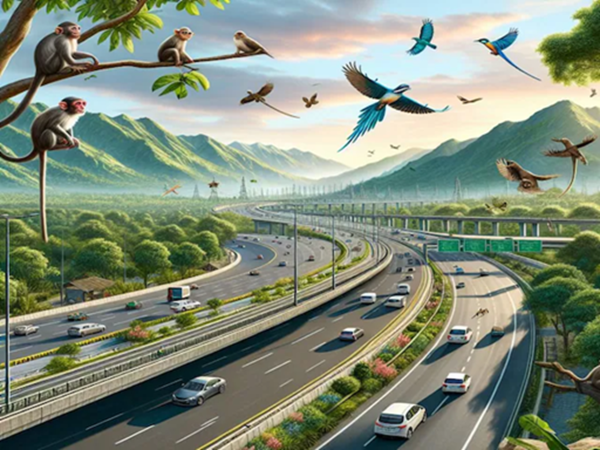
Delhi-Dehradun Expressway Opening: If you are planning to invest in property in 2026, this is not merely the time to buy a home, but rather the time to identify the right opportunity. The Delhi-Dehradun Expressway is no longer just a road; it is evolving into an economic corridor capable of transforming the landscape of the cities, towns, and villages situated along its route. Those who invest in these locations today stand to reap the greatest benefits over the next 3 to 5 years.
The Expressway: From Infrastructure to Economic Growth
Spanning approximately 210 kilometers, this expressway—once operational in 2026—will reduce the travel time between Delhi and Dehradun from 6–7 hours to just about 2.5 hours. However, the true transformation will not be limited to travel time alone; it will be evident in the economy of the entire region.
• Investment exceeding ₹12,000 crore
• Direct connectivity to multiple cities
• Boost to logistics, tourism, and industry sectors
• Robust connectivity with the Eastern Peripheral Expressway
Beyond Cities: The Entire Corridor Becomes the Foundation for Investment
Real estate trends are shifting rapidly. People are no longer limiting their investment horizons to just Delhi, Noida, or Gurugram; instead, they are looking to invest across the entire corridor.
The entire stretch extending from East Delhi all the way to Dehradun is now emerging as a "Growth Belt."
Which Areas Present Major Opportunities?
East Delhi: Serving as the entry point to the corridor, this region already boasts robust infrastructure. In the near future, the demand for retail spaces, office areas, and rental housing here is expected to witness rapid growth.
Baghpat: Despite its proximity to Delhi, this area remains highly affordable. It is fast becoming a prime location for plotted developments, farmhouses, and low-rise residential projects.
Muzaffarnagar and Shamli: These cities are rapidly transforming into new hubs for logistics and warehousing. The growing interest from e-commerce companies and supply chain networks is clearly evident in these regions.
Saharanpur: This city is being hailed as the "Dark Horse" of this corridor. Significant investment opportunities are emerging here within the industrial and warehousing sectors.
Dehradun: No longer merely a tourist destination, the city is rapidly evolving into a major hub for "second homes" and weekend living. Areas such as Mussoorie Road and Sahastradhara Road are witnessing rapid development.
**Development to Reach the Villages**
The impact of this expressway will not be limited solely to major cities; it is poised to bring about transformative changes in the surrounding villages as well.
• Improved connectivity for over 50 villages
• Direct market access for farmers
• New opportunities for small-scale traders
• Easy access to education and healthcare services
**What Do the Experts Say?**
Yash Miglani, MD of the Migsun Group, states that viewing the Delhi-Dehradun Expressway merely as a road would be to underestimate the true significance of this project. It is, in fact, a comprehensive economic corridor that will simultaneously accelerate growth across the real estate, retail, hospitality, and industrial sectors in the coming years. Specifically, demand for warehousing and logistics facilities is expected to surge rapidly in mid-corridor cities such as Muzaffarnagar, Shamli, and Saharanpur. This will not only lead to a 20–30% appreciation in land values but also generate new employment opportunities. For investors, now is the opportune moment to enter the market during the initial phase of infrastructure development to ensure superior returns in the future.
Sanchit Jain, Director at Sarvottam India, observes that the Delhi-Dehradun Expressway represents an emerging growth corridor currently offering early-stage investment opportunities. The year 2026 presents an ideal window for investors seeking to enter the market at lower price points and secure higher returns in the future. As infrastructure and connectivity continue to strengthen, this corridor is expected to witness a sharp appreciation in property values. Long-term investors—particularly those focusing on the mid-corridor regions and areas like Dehradun—stand to reap direct benefits from this trend.
Kushagra Ansal, Director at Ansal Housing, remarks that infrastructure development has historically served as the primary catalyst for real estate growth, and the Delhi-Dehradun Expressway stands as the latest testament to this fact. In the coming times, integrated townships, plotted developments, and mixed-use projects will rapidly emerge along this corridor. A key highlight is that development will no longer be confined solely to major cities; rather, projects featuring modern amenities will also be seen in smaller cities and towns. This will create new opportunities for both end-users and investors.
Disclaimer: This content has been sourced and edited from TV9. While we have made modifications for clarity and presentation, the original content belongs to its respective authors and website. We do not claim ownership of the content.