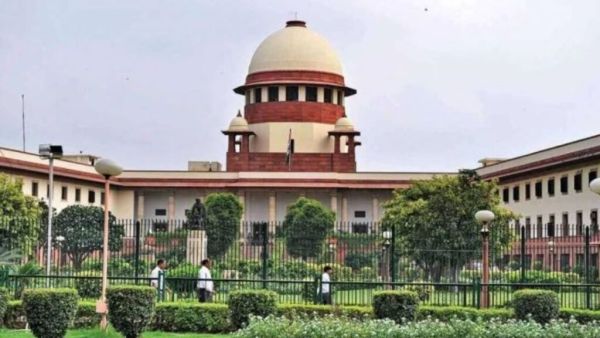
The Supreme Court has disposed of a PIL challenging the permission to sell liquor in tetra packs in Uttar Pradesh. However, the court did not completely dismiss the petition, but gave the petitioner the freedom to represent himself to the concerned authorities of the state government.
A bench headed by Chief Justice Surya Kant made it clear in this case that the court will not comment on the issues raised in the petition at this time, because it is not clearly permitted in the excise policy.
The Supreme Court has currently refused to intervene on the PIL seeking ban on the sale of liquor in tetra packs in Uttar Pradesh. The court has given liberty to the petitioner to present his objections and demands in the form of representation before the concerned state authorities.
This petition was filed by Meenakshi Tiwari, a resident of Uttar Pradesh. The petition mainly questioned the permission to sell liquor in tetra packs, claiming that the small and easily hidden packs could prove dangerous for children and students. The counsel appearing for the petitioner argued that the packaging of Tetra Pak looks like milk or juice cartons, due to which students can easily carry them in their school or college bags. This may increase unwanted access to alcohol in educational institutions and have a negative impact on the younger generation. However, the court cited the example of cities like Ahmedabad and asked whether any specific problems due to such packaging had been reported there.
During the hearing on this matter, Chief Justice Surya Kant remarked that people buying liquor can buy it in any packaging. He also questioned whether there were any concrete examples where packaging like Tetra Pak had led to interference or disciplinary issues on school or college campuses. “Those who want to buy liquor can buy it in any form,” he remarked.
During the hearing, the court observed the excise policy of Uttar Pradesh. The court found that the official excise policy of the state did not explicitly permit the sale of liquor in tetra packs. However, sale of liquor in small packs was allowed through an administrative decision in February 2025, which is available on record. The court said, “It would not be appropriate to comment on this issue at this time.” The court made it clear that the concerns raised in the petition, especially the potential impact on students and the educational environment, are serious, but can be better raised with state level authorities. In the end, the court gave the liberty to the petitioner that they can give written representation by sending a copy of their petition to the concerned government officials.
Let us tell you that under the excise policy of the year 2025-26, the Uttar Pradesh government had given permission to sell some categories of liquor, especially country liquor, in tetra packs. Its purpose was to reduce harm from glass bottles, make packaging safer, and prevent potential adulteration. The convenience of smaller packs was expected to ease access to rural areas and lower income groups.
However, the Supreme Court has already expressed concern regarding tetra pack liquor across the country. During the hearing of a trademark dispute in November 2025, a bench of Justices Surya Kant and Joymalya Bagchi had described Tetra Pack as “like a juice box”, saying it could be dangerous for children as it could be easily hidden in school bags and parents could be deceived. The court had then asked the states why public health was being ignored in the greed for revenue.