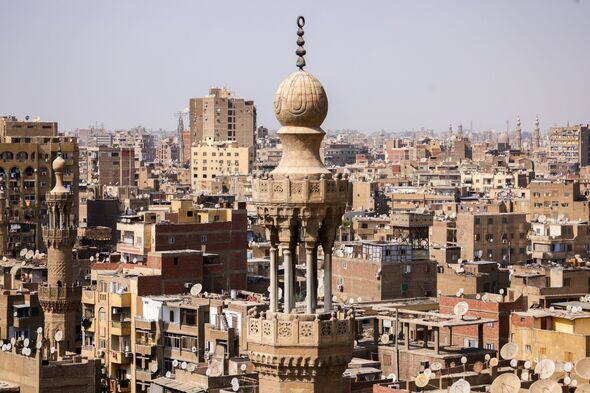
Rising from the desert 28 miles (45km) east of Cairo, the New Administrative Capital (NAC) has officially taken over as Egypt's functional seat of power. Once a barren stretch of sand, the site is now home to Africa's tallest skyscraper and a high-tech government district that has seen tens of thousands of civil servants relocate from the historic capital.
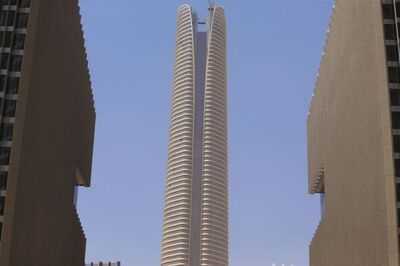
The new city, roughly the size of Singapore at 270 square miles (700 km²), is being marketed as a "fourth-generation" smart hub. It features an AI-driven command centre monitoring more than 6,000 surveillance cameras, alongside automated waste management and smart utility grids. At the heart of the development sits the Iconic Tower, Africa's tallest building, which reaches a height of 1,289 feet (393m). Nearby, the Ministry of Defense's new headquarters, known as "The Octagon", covers several square miles and is reported to be even larger than the Pentagon in the US.
As of April 2026, several major infrastructure projects have reached operational status to support the population's migration. The Monorail is now fully active, connecting East Cairo to the new city across a 35-mile (56 km) elevated track. Complementing this is the Light Rail Transit (LRT), a 65-mile (105 km) electric rail system that is currently shuttling thousands of workers daily between Cairo's outer suburbs and the new Government District.
On top of this, the Green River park system is undergoing extensive landscaping, a central park designed to stretch for 22 miles (35 km) and aims to provide a vast green space for the city that will eventually be twice the size of New York's Central Park.
The project has an estimated total price tag of approximately £43 billion ($58 billion). According to the Administrative Capital for Urban Development (ACUD), the state-owned entity managing the site, the development is designed to be self-financing through the sale of land to private developers, rather than drawing directly from the primary state budget. However, the sheer scale of the investment - equivalent to a significant portion of the nation's GDP - has been criticised by international observers over its impact on national debt.
While high-end residential and commercial districts in the first 62 square miles (100 km²) have generated substantial revenue, the government continues to balance the high costs of smart-city infrastructure with the need to keep the city accessible to the 6.5 million residents it is intended to house.
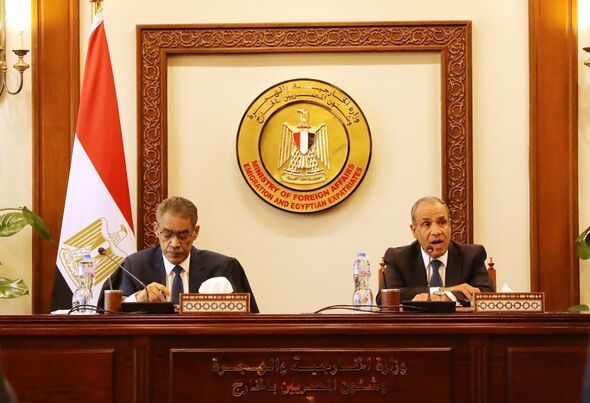
Despite the grand scale, the city faces challenges in meeting its ultimate goal of 6.5 million residents. While the government moved its headquarters and parliament to the site in 2024, many employees still commute roughly 30 miles (48 km) from Cairo daily due to the high cost of local luxury housing.
To combat this, developers have officially broken ground on Phase Two this year. This latest expansion covers another 62 square miles (160 km²) and focuses on more affordable "social housing" projects and a dedicated Diplomatic District, which has already seen agreements for 20 foreign embassies to move their operations to the desert site.
Critics remain wary of the project's impact on Egypt's national debt, but officials insist the city is essential to prevent a "total collapse" of Cairo, where the population has swelled past 22 million.