Washington: India is a “tough nut to crack”, United States Trade Representative Jamieson Greer said here as a delegation from New Delhi wrapped up negotiations on the bilateral trade agreement with Washington.
The 12-member delegation, led by Darpan Jain, Additional Secretary in the Department of Commerce, held talks on the fine print of the trade deal with the US team led by Brendan Lynch, Assistant USTR for South and Central Asia.
The three-day talks concluded on Wednesday, April 22.

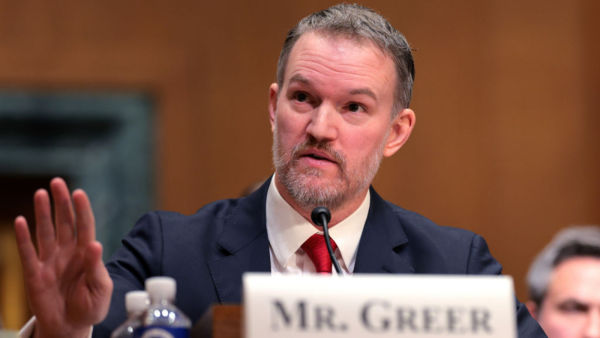
“India is a tough nut to crack… they’ve protected their agricultural markets for a very long time,” Greer told the Committee on Ways and Means of the US Congress on Wednesday.
“As part of this deal, they want to protect a lot of that. There are things, though, where I think we can find mutual agreement. DDGs (distillers dried grains) is a good example of this,” he said.
Greer was responding to questions by lawmakers on exports of DDGs, which are used as high-protein livestock feed, soybean meal, and ethanol.
The USTR said the US negotiators were discussing specific issues, such as DDGs, with their counterparts from India.
“Indian trade negotiators are in town this week. So we’ve been talking this week about these issues, including these specific commodities you talked about, DDGs,” Greer said.
India and the US announced the framework of the bilateral trade agreement on February 2 and released the text of the deal on February 7.
India is seeking preferential access to the US markets as part of the agreement, as the two countries eye the target of achieving bilateral trade of USD 500 billion by 2030.
According to that framework, the US had agreed to reduce tariffs on India to 18 per cent, from 50 per cent. It had removed the 25 per cent tariffs on Indian goods for buying Russian oil and was to cut the remaining 25 per cent to 18 per cent under the pact.
But on February 20, the US Supreme Court ruled against Trump’s reciprocal tariffs, which were imposed under the 1977 International Emergency Economic Powers Act (IEEPA).
In the wake of the Supreme Court order, India is seeking to recalibrate and redraft the agreement to ensure that its interests are protected under the new global tariff framework.