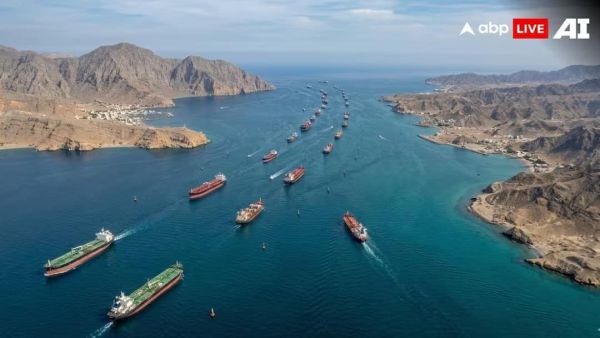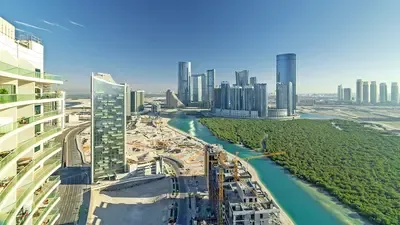
There is a certain expectation that uncertainty slows things down. That markets hesitate, projects pause, and investors wait for clarity before making their next move. The UAE’s real estate sector is doing the opposite.
Across Dubai, Abu Dhabi, Ras Al Khaimah, and Sharjah, cranes continue to rise, launches continue to roll out, and transactions continue to close. Even as geopolitical tensions shape global sentiment and risk remains elevated across sectors, the region’s property market has shown little sign of stopping. What is emerging is not a market ignoring uncertainty, but one that has learned how to operate through it.
Momentum in motion
The numbers alone tell part of the story. In the first quarter of 2026, Dubai recorded nearly 48,000 real estate transactions worth Dh176.7 billion, reflecting a 5.5 per cent increase in volume and a 23.4 per cent rise in value year-on-year. At the same time, market intelligence data shows transaction values exceeding Dh138 billion across more than 44,000 deals, reinforcing the depth and consistency of activity. This is not the behaviour of a market in retreat.
Instead, it reflects a sector that continues to function with underlying confidence, supported by liquidity, investor participation, and long-term demand drivers. While buyers may be more selective, the intent to transact remains firmly in place.
“Rest assured there is still a market,” says Louis Harding, CEO of Betterhomes. His point is not that conditions are unchanged, but that the narrative of slowdown often oversimplifies what is actually a more nuanced shift. Rather than a uniform cooling, the market is fragmenting. Performance now varies significantly by segment, location, and product type.
A market that recalibrates, not retreats
This idea of recalibration is central to understanding the current phase. “What we are witnessing is not a slowdown, but a recalibration,” says Imran Khan, Founder and CEO of PIXL and Invespy. “These are the markers of a mature market, where moments of disruption allow it to bottom out before moving into its next, stronger growth cycle.”
This is consistent with broader market trends. Buyers are taking longer to make decisions, conducting deeper due diligence, and focusing more on long-term value than short-term gains. But this shift in behaviour has not translated into inactivity. Instead, it has led to a more disciplined market, where transactions are still happening, but with greater intent.
Crucially, liquidity remains strong. A significant portion of transactions continues to be cash-driven, reducing exposure to financing risk and supporting stability across the sector.
Projects keep launching
If there is one clear indicator that the market has not slowed, it is the pace of new project launches. Across developers, there has been no meaningful pause in pipeline activity. From large master-planned communities to boutique branded residences, new developments continue to enter the market at scale.
In Dubai, projects such as Serenz by Danube are pushing the boundaries of lifestyle-driven living, offering more than 40 amenities across a 120,000 square foot space. In Al Furjan, BNW Developments has launched Orvessa Residences, marking its expansion from Ras Al Khaimah into Dubai with a design-led, branded residential concept.
Elsewhere, developers are continuing to introduce new inventory across emerging districts. Samana Greenfield in Warsan 4 brings over 300 residential units to the market, while AUM Development’s Ryze Residences reflects growing demand in areas positioned around infrastructure and employment hubs.
In Abu Dhabi, Aldar’s Yas Park Place introduces a garden-led community concept in the heart of Yas Island, reinforcing the trend towards integrated, lifestyle-focused developments. Even beyond Dubai, activity remains consistent. In Ras Al Khaimah, projects such as The Unexpected Al Marjan Island Hotel & Residences have not only launched successfully but achieved strong pricing benchmarks and rapid sell-outs. Developers, for now, are continuing to build and launch with little visible hesitation.
Confidence built on fundamentals
This continued activity is not driven by optimism alone. It is supported by structural fundamentals that continue to underpin the market. Population growth remains a key driver, with the UAE attracting talent, entrepreneurs, and investors from across the world. Infrastructure investment continues at scale, shaping demand and expanding the footprint of viable residential communities.
At the same time, the diversity of the buyer base has strengthened. Alongside international investors, there is increasing participation from GCC buyers, contributing to market depth and resilience.
“Dubai’s underlying demand drivers and institutional stability continue to support long-term real estate investment,” says Deepak Batra, Founder and CEO of AUM Development. This confidence is also reflected in pricing behaviour. Despite external pressures, there is no evidence of widespread distressed selling. Prices have remained broadly stable across most segments, supported by disciplined developer strategies and strong liquidity.
Segmented performance, not a single market
One of the biggest misconceptions about the current environment is the idea that the market moves uniformly. In reality, performance varies significantly. Apartments in high-supply areas are more exposed to price sensitivity, while villas and townhouses have shown greater resilience, supported by limited supply and strong end-user demand. Larger units and mature communities continue to hold value, driven by owner equity and scarcity.
This segmentation is also visible in transaction distribution. Mid-market properties remain the most active, while both entry-level and premium segments continue to attract consistent interest. For investors, this means strategy matters more than timing. Understanding micro-markets, supply dynamics, and buyer behaviour is increasingly critical.
Role of infrastructure and planning
Another factor sustaining momentum is the scale of infrastructure investment across the UAE. From transport networks to integrated communities, development is being driven by long-term planning rather than short-term cycles. This creates a pipeline of demand that supports real estate growth beyond immediate market conditions.
Master-planned communities such as Dubai Hills Estate, Dubai South, and Dubai Creek Harbour continue to attract both investors and end-users, reflecting their alignment with broader urban development strategies. This approach reinforces one of the UAE’s key advantages. The market is not reacting to change. It is being built to absorb it.
Sentiment vs reality
While headlines often focus on uncertainty, the actual impact on real estate has been more measured. According to Moody’s, geopolitical developments are more likely to affect sentiment and transaction volumes in the short term rather than prices. The baseline expectation is for limited credit impact, supported by strong liquidity and revenue visibility among major developers.
This distinction is important. Sentiment may fluctuate, but the underlying structure of the market remains intact. Developers continue to launch projects. Buyers continue to transact. Construction continues on schedule. For many in the industry, this consistency is itself a sign of resilience.
The machine that does not stop
What ties all of this together is continuity. Projects are being launched, sold, and built simultaneously. Transactions are being completed across segments. New communities are being planned even as existing ones are being delivered. This is not accidental. It reflects a system that has been designed to keep moving, even when external conditions are uncertain.
There is also a growing recognition that stopping is not always an option. In a market driven by long-term planning, delays can have ripple effects across supply chains, investor confidence, and economic activity. Instead, the focus has shifted towards managing through disruption rather than avoiding it.
A different kind of resilience
The resilience of the UAE’s real estate sector is not defined by the absence of risk. It is defined by its ability to function despite it. This is a market that has moved beyond reactive cycles. It does not shut down and restart based on external conditions. It recalibrates, adjusts, and continues forward.
For investors, this creates a different kind of opportunity. Periods of uncertainty may introduce short-term hesitation, but they also create entry points in a market supported by strong fundamentals. For developers, it reinforces the importance of discipline. Pricing strategies, payment plans, and project timelines are being managed carefully to maintain stability. For the broader economy, it highlights the role of real estate as a key driver of growth, investment, and confidence.
No pause, only progression
The expectation that uncertainty slows markets does not fully apply here. Across the UAE, projects are still being launched, construction continues on schedule, and transactions are still closing. What has changed is not activity, but how it is managed. The market has become more deliberate, more selective, and more disciplined. But it has not stopped. And that may be the clearest signal of all.