A Reddit user has shared an account describing the challenges of working in trucking and warehouse roles in Europe, countering the perception that moving abroad guarantees easy income and a better lifestyle.
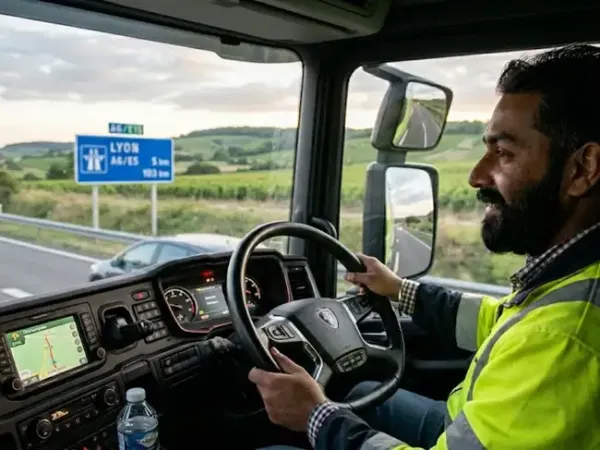
The user, who said they previously worked as a truck driver and now in a warehouse, stated that the work involves continuous physical effort with little opportunity for rest, leading to strain and fatigue.
According to the post, workers are required to remain active throughout their shifts, with minimal breaks. The user said the physically intensive nature of the job has already affected their health, particularly their back, and that daily work often feels like pushing the body to its limits.
The user compared the experience with job conditions in India, stating that finding work there feels relatively more manageable due to existing support systems, familiarity and connections. In contrast, they described working abroad as isolating, with individuals largely dependent on themselves.
The post also highlighted the difficulty of adapting to a new language, which the user said is essential for daily life and work. They noted that learning a language can take years, making initial adjustment significantly harder.
While not discouraging others from moving abroad, the user advised against assuming that such opportunities offer an easy path to financial stability or an ideal lifestyle. The post emphasised that both physical and mental demands come with a significant cost.
The user concluded by asking if others have faced similar experiences.
Another user argued that the issue should be viewed in terms of long-term economic mobility, stating that opportunities remain relatively higher in Europe compared to India due to better minimum wages and greater savings potential.
The user said that while it may take about a decade to move out of poverty in Europe, the same process could take significantly longer in India, where wage growth often struggles to keep pace with inflation. They added that unless individuals have generational wealth, relocating to regions such as Nordic countries may offer better prospects.
However, the user noted that economies including the US, UK, Canada and parts of Europe have also faced rising inflation and stagnant wages in recent years.
Drawing comparisons, the user highlighted differences in pay, working conditions and safety standards between India and Europe. They cited the example of high-risk electrical work, stating that despite the dangers involved, workers in India may receive lower wages and limited safety protections compared to counterparts abroad.
The user added that many people form opinions based on partial information and suggested gaining firsthand experience of working conditions in India for a clearer perspective.
They also pointed to broader social issues, including caste-based disparities and lack of respect for physical labour in India, contrasting it with what they described as relatively better treatment of such workers in Europe.
A separate user said such posts do not significantly influence migration trends, noting that many people continue to move abroad for education and work despite similar concerns.
“I am seeing these kind of posts every now and then, but the reality is totally different. People still come and study or work here and after 2-3 years, start complaining. The numbers of Indians immigrating to foreign countries, especially EU, is increasing really fast. So, I feel these kind of posts doesn’t make any difference tbh.”
The user, who said they previously worked as a truck driver and now in a warehouse, stated that the work involves continuous physical effort with little opportunity for rest, leading to strain and fatigue.
According to the post, workers are required to remain active throughout their shifts, with minimal breaks. The user said the physically intensive nature of the job has already affected their health, particularly their back, and that daily work often feels like pushing the body to its limits.
The user compared the experience with job conditions in India, stating that finding work there feels relatively more manageable due to existing support systems, familiarity and connections. In contrast, they described working abroad as isolating, with individuals largely dependent on themselves.
The post also highlighted the difficulty of adapting to a new language, which the user said is essential for daily life and work. They noted that learning a language can take years, making initial adjustment significantly harder.
While not discouraging others from moving abroad, the user advised against assuming that such opportunities offer an easy path to financial stability or an ideal lifestyle. The post emphasised that both physical and mental demands come with a significant cost.
The user concluded by asking if others have faced similar experiences.
Reactions
"I used to hear alot from friends. Oh truck driving is like playing a game snd you earn good but when i tried those job i came to know the reality and how the local people molest outsiders with heavy tasks! This post is for people who thinks it s easy life outside. If you are given a good role outside india thn its different."Another user argued that the issue should be viewed in terms of long-term economic mobility, stating that opportunities remain relatively higher in Europe compared to India due to better minimum wages and greater savings potential.
The user said that while it may take about a decade to move out of poverty in Europe, the same process could take significantly longer in India, where wage growth often struggles to keep pace with inflation. They added that unless individuals have generational wealth, relocating to regions such as Nordic countries may offer better prospects.
However, the user noted that economies including the US, UK, Canada and parts of Europe have also faced rising inflation and stagnant wages in recent years.
Drawing comparisons, the user highlighted differences in pay, working conditions and safety standards between India and Europe. They cited the example of high-risk electrical work, stating that despite the dangers involved, workers in India may receive lower wages and limited safety protections compared to counterparts abroad.
The user added that many people form opinions based on partial information and suggested gaining firsthand experience of working conditions in India for a clearer perspective.
They also pointed to broader social issues, including caste-based disparities and lack of respect for physical labour in India, contrasting it with what they described as relatively better treatment of such workers in Europe.
A separate user said such posts do not significantly influence migration trends, noting that many people continue to move abroad for education and work despite similar concerns.
“I am seeing these kind of posts every now and then, but the reality is totally different. People still come and study or work here and after 2-3 years, start complaining. The numbers of Indians immigrating to foreign countries, especially EU, is increasing really fast. So, I feel these kind of posts doesn’t make any difference tbh.”