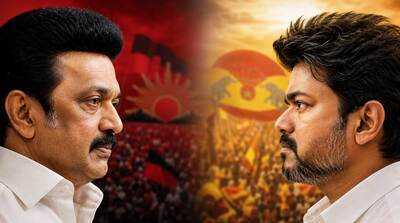
(Ground report by Balakrishnan from Tamil Nadu)
Chennai: Vote counting for the Tamil Nadu Assembly elections is underway, and early trends point to a dramatic political shift. Actor Vijay’s TVK is leading on 109 seats, while the ruling DMK+ is ahead on 72 and AIADMK+ on 53. The numbers clearly indicate that M. K. Stalin’s DMK government is unlikely to return to power.
In what analysts are calling a historic upset, Vijay’s relatively new party has outpaced a decades-old political giant. So why did voters turn away from the DMK? Here’s a ground-level analysis of the key reasons:
Key Reasons Behind DMK’s Defeat
1. Disconnect with the Public
After coming to power in 2021, the leadership under M.K. Stalin appeared increasingly disconnected from ground realities. Advisors and internal feedback reportedly painted an overly optimistic picture, leaving growing public anger and dissatisfaction unaddressed.
2. Dynastic Politics and Corruption Allegations
Allegations of widespread corruption and family dominance weakened the government’s credibility. Reports of pressure on officials and governance concerns further fueled public resentment.
3. Rising Drug Abuse Among Youth
The increasing availability of narcotics, including ganja, emerged as a serious concern. A growing number of young people reportedly fell into addiction, leading to a spike in crime. Critics say the government failed to respond effectively, angering both youth and their families.
4. Concerns Over Women’s Safety and Policing
Cases of crimes against women and allegations of police excesses added to public discontent. Reports of custodial deaths and misconduct created a perception of a system lacking accountability, particularly impacting women voters.
5. Unfulfilled Promises and Crackdown on Protests
Several electoral promises remained unmet. Protests by sanitation workers, support staff, and teachers were reportedly suppressed, sometimes with police action, adding to the perception of an unresponsive government.
6. Vijay’s Aggressive Campaign
Actor-turned-politician Vijay launched a sharp campaign against the DMK. His strong statements against the ruling party 'Evil Force DMK' went viral and resonated with voters already disillusioned with the government.
7. Negative Social Media Campaigning
The alleged use of aggressive and offensive language by some party supporters online for TVK and Vijay backfired. Instead of weakening opponents, it alienated neutral voters and contributed to growing resentment.
8. Overconfidence and Welfare-Heavy Strategy
The DMK leadership appeared confident that welfare schemes and financial benefits would secure voter loyalty. However, voters seemed to prioritize governance issues over freebies, turning this strategy into a miscalculation.
The Voter Verdict
Young voters, women, minorities, and even sections of traditional DMK supporters appeared to back change this time. Many placed their trust in Vijay’s TVK and its “whistle” symbol.
2026 Election A Lesson For DMK
The 2026 election serves as a major lesson for the DMK. A mix of governance issues, corruption allegations, rising social concerns, and disconnect from voters contributed to its downfall.
On the other hand, Vijay managed to channel public anger into political momentum within just two years—signaling a clear shift in Tamil Nadu’s political landscape. The message from voters is unmistakable: traditional politics alone is no longer enough.