The world of smartphones is evolving rapidly. There was a time when almost every phone looked identical—straight, slim, and featuring a glass body—but now, fold and flip phones have completely transformed this perception. Your phone is no longer merely a device; it has become an experience—one that unfolds to become a tablet or folds down to become compact and stylish.
However, as attractive as this new form factor appears, it is equally expensive and somewhat complex. Consequently, if you are considering purchasing a flip or fold phone, basing your decision solely on design would be unwise. It is crucial to determine whether or not this type of phone truly aligns with your specific needs.
**Necessity vs. Luxury**
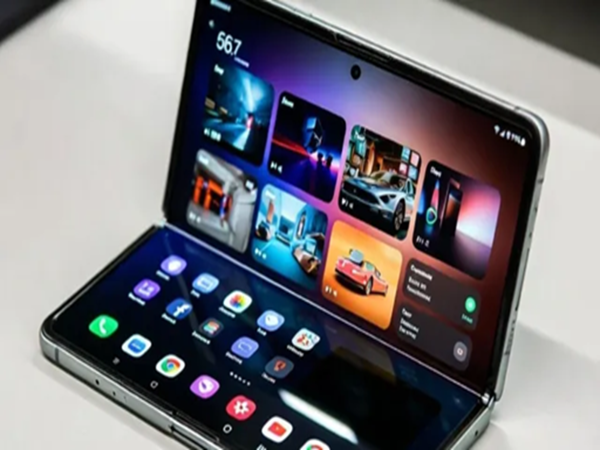
First, ask yourself honestly: are you purchasing this phone out of necessity, or simply for the allure of owning a premium gadget? Book-style fold phones are, in essence, designed to enhance productivity. They feature a large screen that allows you to run multiple applications simultaneously—for instance, displaying emails on one side, a document on the other, and a web browser in a third window.
This proves particularly beneficial for individuals who rely heavily on their phones for work-related tasks. Flip phones, on the other hand, prioritize style and portability. They are compact, lightweight, and possess a distinctive aesthetic. If you are seeking a unique and premium look, a flip phone is sure to appeal to you.
**Repair Costs**
When purchasing a foldable phone, people often focus solely on the upfront price; however, the true cost often reveals itself later in the form of repair expenses. The most distinctive components of these phones—the folding screen and the hinge—are significantly more delicate than those found in standard smartphones. If the internal screen sustains damage, replacing it can be an extremely costly affair—sometimes amounting to as much as half the original price of the phone.
Furthermore, not every service center is equipped to repair these devices. You are typically required to visit an authorized service center designated by the manufacturer, a process that often entails longer turnaround times. Therefore, before making a purchase, ensure that you are prepared to shoulder these potential additional costs.
**Apps and Screen Experience**
The most significant advantage of a foldable phone is its expansive screen; however, not every application is optimized to fully utilize this unique display format. Often, while watching videos, black bars appear at the top and bottom of the screen because the content has a different aspect ratio.
This can slightly detract from your viewing experience. Similarly, some apps do not function properly in full-screen mode and appear distorted or "stretched." Therefore, before making a purchase, it is crucial to verify whether the apps you use daily will function correctly on this specific phone.
**Weight and Thickness**
Book-style foldable phones are generally heavier and thicker than standard smartphones. When folded, they feel even bulkier, which can make carrying them in a pocket somewhat uncomfortable. Holding and using the phone for extended periods can also feel tiring due to its weight—especially if you have smaller hands.
Flip phones fare better in this regard, as they are lighter and more compact; nevertheless, before buying, it is still advisable to hold the device in your hand to gauge how comfortable it feels to you personally.
**The Importance of the Cover Display**
Both foldable and flip phones feature an external screen—known as the cover display—designed to streamline your user experience. On book-style foldable phones, this external screen functions much like a standard smartphone display, allowing you to handle calls, messages, and apps without having to open the device.
In the case of flip phones, while the cover screen used to be quite small in earlier models, it has now evolved to become significantly larger and more functional. You can use it to check notifications, control music playback, and even run certain apps. Therefore, it is essential to ensure that the cover display meets your specific needs.
**Battery Life**
Despite featuring large screens, foldable phones often do not house equally large batteries, as a significant portion of the internal space is occupied by the hinge mechanism. This implies that when you utilize the larger internal screen, the battery tends to drain more rapidly. If you are a "heavy user"—engaging in activities such as gaming, video streaming, or multitasking—you may find yourself needing to recharge the device frequently. Consequently, overlooking the aspect of battery life could prove to be a major mistake.
**Camera**
Foldable phones generally offer good camera quality, though it does not always match that of top-tier flagship devices. Book-style foldable phones typically feature superior camera setups due to the greater internal space available, whereas flip phones face certain limitations owing to their compact design. If you are a photography enthusiast, be sure to verify that the camera performance meets your specific expectations.
**Hinge and Build Quality**
The true strength of a foldable phone lies in its hinge. This critical component facilitates the repeated opening and closing of the device. Newer models are equipped with improved and more robust hinges that offer greater durability. Additionally, it is essential to check for protection against water and dust (indicated by an IP rating). Nevertheless, these phones still require more careful handling compared to standard smartphones.
**Software and Update Support**
The user experience on a foldable phone depends not only on the hardware but also significantly on the software. High-quality software facilitates seamless multitasking and ensures smooth transitions between applications. Furthermore, it is crucial to consider the duration for which the manufacturer commits to providing software updates; long-term update support ensures that your phone remains secure and up-to-date.
Ultimately, fold and flip phones represent a new era in mobile technology. While they offer a distinct user experience, they may not be a necessity for everyone. If your primary requirements involve a larger screen for work and enhanced multitasking capabilities, a fold phone would be the right choice for you.
Conversely, if your priorities are style and portability, a flip phone might be the better option. Most importantly, rather than blindly chasing trends, prioritize your own specific needs and budget; after all, the ideal phone simplifies your life, not merely one that looks different.
Disclaimer: This content has been sourced and edited from Dainik Jagran. While we have made modifications for clarity and presentation, the original content belongs to its respective authors and website. We do not claim ownership of the content.