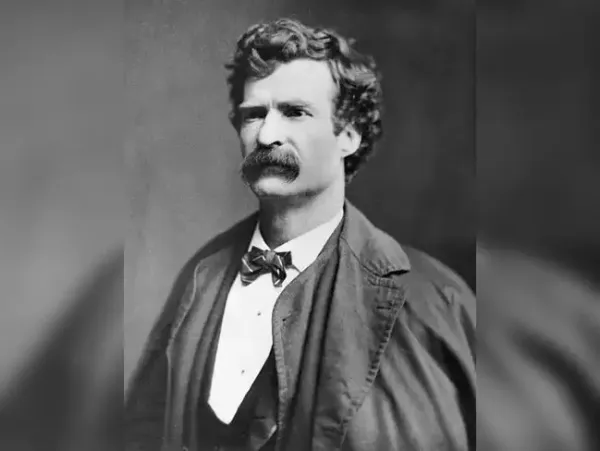
Mark Twain. (File image representative of Quote of the Day)
Almost everyone has experienced that moment after sending a message, speaking during an argument, or writing an important email, the feeling that one wrong word changed the entire meaning. A sentence meant to comfort suddenly sounds cold. A joke becomes offensive. A speech loses its impact because the exact feeling could not be captured properly.
Be it writers, poets, politicians, or lovers, they have wrestled with this problem for centuries. Language looks simple on the surface, but choosing the precise word often decides whether something becomes unforgettable or instantly forgotten. Mark Twain, known for his sharp observations about language, society, and human behavior, understood little hesitation after sending a message like no other.
Quote of the Day by Mark Twain: “The difference between the almost right word and the right word is really a large matter. ’tis the difference between the lightning bug and the lightning.”
The quote is widely associated with Mark Twain and appears in The Wit and Wisdom of Mark Twain: A Book of Quotations. It remains deeply relevant today because modern life depends heavily on communication, through social media, work emails, public speeches, relationships, journalism, and even short text messages. Twain’s words remind people that precision in language is not a small detail. It can completely shape understanding, emotion, and influence.
Quoted by Goodreads, Twain’s quote highlights the enormous difference between being “close enough” and being exactly right. A lightning bug glows softly. Lightning can light up the entire sky. Both involve light, but their impact is completely different. Twain uses that image to explain language. Two words may seem similar, but the correct one carries power, emotion, clarity, and truth in a way the weaker one cannot.
This applies far beyond writing books. In daily life, the wrong phrase during an emotional conversation can damage trust. A careless comment at work can create conflict. A politician using vague language can confuse millions. Even encouragement loses value if it sounds insincere.
Twain’s idea is also about thoughtfulness. He believed words should not be thrown around carelessly. Good communication requires observation, patience, intelligence, and honesty. The right word often reveals that someone truly understands what they are trying to say.
At a deeper level, the quote also reflects how human beings search for meaning. People constantly struggle to express emotions, ideas, fears, and desires accurately. Twain understood that language shapes reality itself. The better people communicate, the better they understand one another.
Mark Twain was born as Samuel Clemens on November 30, 1835, in Florida, Missouri, during a period when the United States was rapidly expanding westward and wrestling with slavery, conflict, and national identity. Raised in the frontier town of Hannibal along the Mississippi River, Twain grew up surrounded by river culture, storytelling traditions, and the harsh realities of slavery, experiences that later shaped much of his writing.
After his father died when he was 11, Clemens left school and worked as a printer’s apprentice for a newspaper, where he developed a habit that would define his life: observing everything around him. As a young adult, he worked across newspapers in cities like New York and Philadelphia before becoming a riverboat pilot on the Mississippi River.
The Civil War disrupted that career and pushed him westward to Nevada and California, where he began writing under the pen name “Mark Twain.” His breakthrough came in 1865 with the publication of “Jim Smiley and His Jumping Frog,” which made him nationally known for his humor and storytelling.
Over the following decades, Twain became one of America’s most influential writers through works such as The Adventures of Tom Sawyer, Adventures of Huckleberry Finn, Life on the Mississippi, and The Gilded Age. His books combined humor with sharp criticism of racism, greed, hypocrisy, imperialism, and political corruption.
Twain also experienced deep personal tragedy and financial ruin. Bad investments pushed him into bankruptcy, forcing him into exhausting worldwide lecture tours to repay debts. He later became openly critical of imperialism and government abuses, serving as vice president of the Anti-Imperialist League.
In his later years, his writing grew darker and more cynical as he wrestled with grief, human cruelty, and disappointment with society. Yet through all those experiences, Twain remained one of history’s sharpest observers of human behavior and language.
Twain believed that words mattered because truth mattered. Often regarded as the 'father of American literature' much of his writing mocked dishonesty, pretension, political hypocrisy, and fake morality. He used humor not simply to entertain people but to expose uncomfortable truths about society.
His writing style depended heavily on precision. Twain carefully captured regional dialects, speech patterns, and everyday language to make his characters feel authentic and human. That is especially visible in Adventures of Huckleberry Finn, where speech becomes central to character identity and realism.
Twain also distrusted vague or overly polished language. He believed language should feel alive, direct, and honest. The quote about lightning and lightning bugs reflects his larger philosophy that communication is powerful only when it is exact and genuine.
His life as a journalist, traveler, lecturer, and social critic sharpened this belief. Twain spent decades watching politicians manipulate language, businesses hide behind polished words, and society use euphemisms to avoid confronting difficult truths. For him, choosing the right word was not just literary skill; it was probably intellectual honesty.
Twain’s quote feels even more relevant in the digital age, where people communicate constantly but often without enough care or clarity. Social media rewards fast reactions rather than thoughtful language. Misunderstandings spread quickly online because a poorly chosen sentence can instantly spark outrage, confusion, or conflict. In workplaces, relationships, and public life, communication mistakes can damage reputations or trust within seconds.
The quote also matters because modern culture often values speed over precision. People rush emails, arguments, speeches, and posts without considering how their words may affect others. Twain’s warning reminds people that details in language are not trivial. A single word can inspire confidence, destroy trust, comfort someone in pain, or deepen misunderstanding.
For students, writers, leaders, parents, and professionals, the lesson remains timeless: saying something “almost right” is sometimes not enough. Because in human relationships, just like in Twain’s metaphor, the difference between a small flicker and a powerful strike can change everything.
Be it writers, poets, politicians, or lovers, they have wrestled with this problem for centuries. Language looks simple on the surface, but choosing the precise word often decides whether something becomes unforgettable or instantly forgotten. Mark Twain, known for his sharp observations about language, society, and human behavior, understood little hesitation after sending a message like no other.
Quote of the Day by Mark Twain: “The difference between the almost right word and the right word is really a large matter. ’tis the difference between the lightning bug and the lightning.”
The quote is widely associated with Mark Twain and appears in The Wit and Wisdom of Mark Twain: A Book of Quotations. It remains deeply relevant today because modern life depends heavily on communication, through social media, work emails, public speeches, relationships, journalism, and even short text messages. Twain’s words remind people that precision in language is not a small detail. It can completely shape understanding, emotion, and influence.
What the quote is actually suggesting
Quoted by Goodreads, Twain’s quote highlights the enormous difference between being “close enough” and being exactly right. A lightning bug glows softly. Lightning can light up the entire sky. Both involve light, but their impact is completely different. Twain uses that image to explain language. Two words may seem similar, but the correct one carries power, emotion, clarity, and truth in a way the weaker one cannot.
This applies far beyond writing books. In daily life, the wrong phrase during an emotional conversation can damage trust. A careless comment at work can create conflict. A politician using vague language can confuse millions. Even encouragement loses value if it sounds insincere.
Twain’s idea is also about thoughtfulness. He believed words should not be thrown around carelessly. Good communication requires observation, patience, intelligence, and honesty. The right word often reveals that someone truly understands what they are trying to say.
At a deeper level, the quote also reflects how human beings search for meaning. People constantly struggle to express emotions, ideas, fears, and desires accurately. Twain understood that language shapes reality itself. The better people communicate, the better they understand one another.
About Mark Twain: The thinker behind the idea
Mark Twain was born as Samuel Clemens on November 30, 1835, in Florida, Missouri, during a period when the United States was rapidly expanding westward and wrestling with slavery, conflict, and national identity. Raised in the frontier town of Hannibal along the Mississippi River, Twain grew up surrounded by river culture, storytelling traditions, and the harsh realities of slavery, experiences that later shaped much of his writing.
After his father died when he was 11, Clemens left school and worked as a printer’s apprentice for a newspaper, where he developed a habit that would define his life: observing everything around him. As a young adult, he worked across newspapers in cities like New York and Philadelphia before becoming a riverboat pilot on the Mississippi River.
The Civil War disrupted that career and pushed him westward to Nevada and California, where he began writing under the pen name “Mark Twain.” His breakthrough came in 1865 with the publication of “Jim Smiley and His Jumping Frog,” which made him nationally known for his humor and storytelling.
Over the following decades, Twain became one of America’s most influential writers through works such as The Adventures of Tom Sawyer, Adventures of Huckleberry Finn, Life on the Mississippi, and The Gilded Age. His books combined humor with sharp criticism of racism, greed, hypocrisy, imperialism, and political corruption.
Twain also experienced deep personal tragedy and financial ruin. Bad investments pushed him into bankruptcy, forcing him into exhausting worldwide lecture tours to repay debts. He later became openly critical of imperialism and government abuses, serving as vice president of the Anti-Imperialist League.
In his later years, his writing grew darker and more cynical as he wrestled with grief, human cruelty, and disappointment with society. Yet through all those experiences, Twain remained one of history’s sharpest observers of human behavior and language.
Mark Twain’s thinking and philosophy behind the quote
Twain believed that words mattered because truth mattered. Often regarded as the 'father of American literature' much of his writing mocked dishonesty, pretension, political hypocrisy, and fake morality. He used humor not simply to entertain people but to expose uncomfortable truths about society.
His writing style depended heavily on precision. Twain carefully captured regional dialects, speech patterns, and everyday language to make his characters feel authentic and human. That is especially visible in Adventures of Huckleberry Finn, where speech becomes central to character identity and realism.
Twain also distrusted vague or overly polished language. He believed language should feel alive, direct, and honest. The quote about lightning and lightning bugs reflects his larger philosophy that communication is powerful only when it is exact and genuine.
His life as a journalist, traveler, lecturer, and social critic sharpened this belief. Twain spent decades watching politicians manipulate language, businesses hide behind polished words, and society use euphemisms to avoid confronting difficult truths. For him, choosing the right word was not just literary skill; it was probably intellectual honesty.
Why this idea still matters today
Twain’s quote feels even more relevant in the digital age, where people communicate constantly but often without enough care or clarity. Social media rewards fast reactions rather than thoughtful language. Misunderstandings spread quickly online because a poorly chosen sentence can instantly spark outrage, confusion, or conflict. In workplaces, relationships, and public life, communication mistakes can damage reputations or trust within seconds.
The quote also matters because modern culture often values speed over precision. People rush emails, arguments, speeches, and posts without considering how their words may affect others. Twain’s warning reminds people that details in language are not trivial. A single word can inspire confidence, destroy trust, comfort someone in pain, or deepen misunderstanding.
For students, writers, leaders, parents, and professionals, the lesson remains timeless: saying something “almost right” is sometimes not enough. Because in human relationships, just like in Twain’s metaphor, the difference between a small flicker and a powerful strike can change everything.