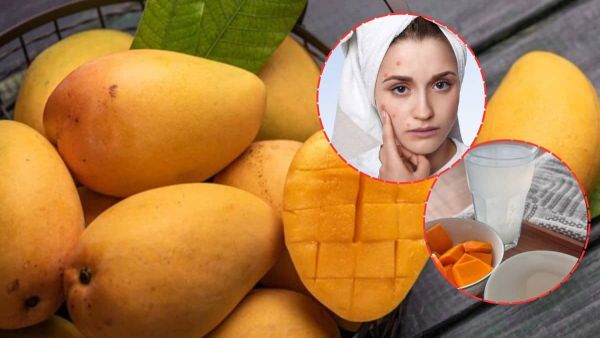
Come the summer season, and Indian markets flood with a variety of mangoes. From early April to late July, the various varieties of the king of fruits rule Indian households. However, despite being a unanimous favourite, some people are forced to maintain their distance from mangoes. The reason? acne. For several people, eating too many mangoes during peak summer leads to acne breakouts, oily skin, or heat boils. While there is no proven causation of the fruit causing the skin conditions, consuming too many mangoes can cause a spike in blood sugar levels, which eventually leads to a breakout-like condition.
Coconut water is often called nature’s electrolyte drink. It is loaded with potassium, magnesium, and hydrating minerals that help the body stay cool during extreme heat. Since dehydration can worsen acne and make the skin appear dull, combining mango with coconut water can help maintain hydration levels. Instead of making thick mango shakes with sugar and milk, try blending ripe mango pulp with chilled coconut water. The drink feels lighter on the stomach and may reduce the feeling of heaviness that some people experience after consuming mangoes. Coconut water also supports digestion, which is often linked to healthier skin. You can simply have a glass of coconut water alongside mango.
Tadgola or ice apple is another underrated summer ingredient known for its cooling properties. Popular in many parts of South India and Maharashtra, the translucent fruit contains high water content and is considered soothing for the body during heatwaves. When paired with mango, tadgola can help create a balanced summer snack. Dice both fruits together for a fruit bowl or add them to smoothies for a naturally sweet dessert. Tadgola is light, hydrating, and gentle on digestion, making it a smart addition for those prone to summer acne or heat rashes.
Apart from this, experts have also suggested pairing mango with cooler food items like curd or soaked nuts.