Among the southern states, the highest demand for gold is in Tamil Nadu.
Prime Minister Narendra Modi has appealed to the people of the country not to buy gold for the next one year. The PM has made this appeal with the intention of strengthening the economic condition of the country. After his appeal, the gold market became disappointed. Its negative impact is also being seen on the stock market. Only time will tell how the common people will react to the PM's appeal. People are assuming that gold provides security. A habit of saving is formed. Even in the marriages of sons and daughters, rich and poor buy gold ornaments as per their capacity. It is seen more in South Indian states than in North and Central India.
In the name of this appeal of PM, let us know why South Indian states buy more gold? In South India, gold is not just jewellery. This is also a tradition. This is also a saving. It is also a symbol of respect. It is also emergency capital for many families. The demand for gold has been very high for a long time in states like Tamil Nadu, Kerala, Karnataka, Andhra Pradesh and Telangana. If reports are to be believed, about 40 percent of the country's domestic gold is present in South India.
In South India, gold is a part of religious, social and family life. Be it a wedding, naming ceremony, festival or any auspicious occasion, gold is often bought or given. Many families consider gold auspicious. Buying gold on the occasions of Akshaya Tritiya, Dhanteras, marriage and temples is considered a good start. Because of this, the demand is not only market but also emotional. This is why buying gold becomes a habit. One generation passes on this tradition to the other.

In Kerala a bride usually wears 320 grams of gold.
Gold has great importance in South Indian weddings. In many communities, gold at the time of marriage is associated with the security, honor and family status of the bride. Gold is not considered just decoration. It is also considered a future asset.
A report by the World Gold Council says that a bride in Kerala usually wears 320 grams of gold. In Tamil Nadu and Andhra Pradesh this figure is 300 grams. About 800 to 900 tonnes of gold is consumed every year in India. The report also says that about 2 to 2.5 tonnes of gold is purchased every day in India. South Indian states have a big participation in this purchase.
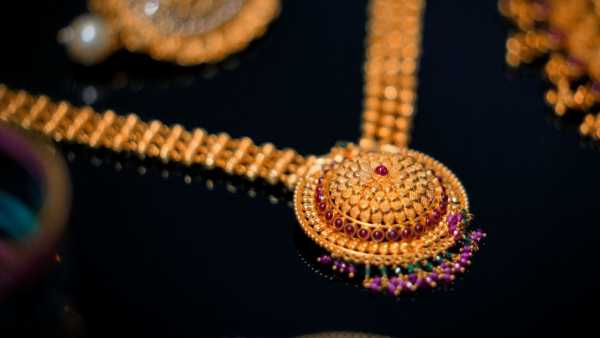
South Indian states have a major role in the purchase of gold.
Many families in South India consider gold as a floating savings. Not everyone understands bank deposits, shares or mutual funds, but everyone understands gold. Gold is visible in the hand. Can be kept in the house. Gold can be sold as per need or a loan can be taken in exchange for it. A report says that Indian families are estimated to have about 25 thousand tonnes of gold. The families of South India have more gold than the average of the country. Its meaning is clear. In South India, gold is not just a thing to wear. This is the backup capital of the family.
Women in India have a huge amount of gold. It has been claimed in many reports that Indian women have about 11 percent of the total gold in the world. In South India, the thinking is stronger that gold is a woman's personal security. This is the first thing that comes in handy in difficult times, so families keep adding gold gradually. This social thinking has also kept the demand continuously high.

Cities like Chennai, Kochi, Bengaluru, Hyderabad and Coimbatore are big centers of gold.
Where there is a big market, there is more purchasing. Cities like Chennai, Kochi, Bengaluru, Hyderabad and Coimbatore are big centers of gold. There are also traditional jewelers here. All the big brands of the country are also there. A lot of variety of designs is also available. In Tamil Nadu, Kerala and Karnataka, customers get more choices due to strong supply chain, jewelery business and more competition. Many reports also show that proximity to ports reduces transportation costs in many places. When the market is organized, there are more options and purchasing is easy, then the demand increases.
The final price of gold is not the same in every state. Many things affect this. Local demand, supply, logistics, tax, making charges and market competition etc. Transport costs may be reduced in cities near ports. This reduces the total cost of gold slightly in some places. The jewelery market is so active in many cities of South India that customers compare rates every day. This habit also strengthens the purchase.
The largest sources of gold imports for India are Switzerland, about 40 percent, then UAE, more than 16 percent.
India imports most of the gold it needs. This means that the demand within the country is very high. According to the report, India's gold import reached $71.98 billion in 2025-26. The report also said that the largest sources of gold imports for India are Switzerland, about 40 percent, followed by UAE at more than 16 percent and South Africa at about 10 percent. These figures show how big the appetite for gold is in India, and South India's share in that demand is considered to be quite strong.
In many families, sleep is associated with social identity. The display of gold has also become a cultural element during festivals, family gatherings and weddings. It is not the same everywhere, but this tradition is clearly visible in many parts of South India. Gold here is more a mixture of respect and security than show off. For this reason people avoid selling gold. They keep it safely and buy it again when they get a chance.
In this way, it can be said that wealth is not the only reason for excess purchase of gold in South India. There is culture behind this. There is a tradition of marriage. There is a concern about women's safety. Have a habit of saving. There is a strong jewelery market and the mentality built over generations that gold never goes waste. This is the reason why gold is still counted among the most preferred assets in the southern states.