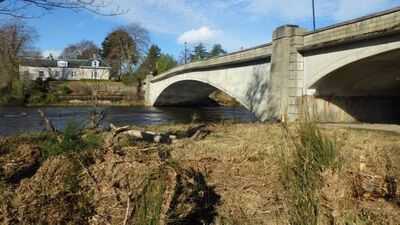
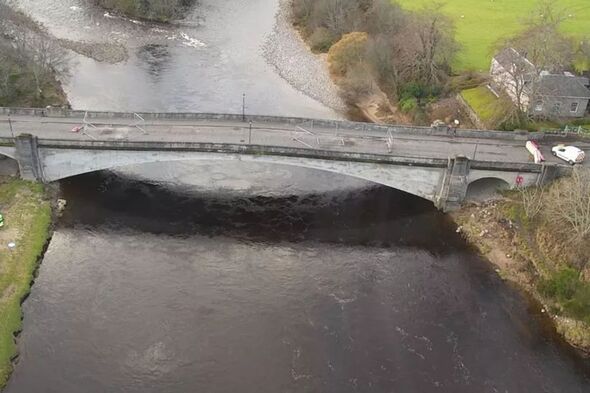
A bridge in Scotland is set to see £10million invested in it over the next six years. Aboyne Bridge in Aberdeenshire will be repaired after the local authority's roads and infrastructure programme of works across the region went before councillors earlier this month.
A report outlining the work explained the activities that have been prioritised for action over the next 12 months despite an £83,000 cut to the infrastructure budget. The paper included an updated bridge priority list, which revealed the local authority's plan to spend the huge sum on the Aboyne structure.
Meanwhile, the report also gave updates on road maintenance, drainage and lighting, as well as flood risk and coast protection works.
The 90-year-old Marr bridge was abruptly closed to vehicles in November 2023 due to concerns that the structure couldn't cope with heavy traffic.
Plans to repair the bridge over the River Dee were taking shape two years on from its sudden closure, Aberdeenshire Council halted these in December after engineers discovered it is in a worse condition than they previously believed.
Councillors voted in March this year to carry out strengthening work, which would have enabled it to reopen with an 18-tonne weight limit.
Head of Roads and Infrastructure, Philip McKay, explained that recent investigations "threw up some issues" and revealed the bridge was in a worse condition than previously thought.
But going forward, money will be spent on Aboyne Bridge until 2031 on an option review, as well as design and enabling works to allow it to finally reopen.
This year alone, the council is looking to splash out £525,000 on initial steps to get the bridge back in action.
As the initial repair is no longer possible, officers have three alternative options to consider.
The first is a full strengthening and repair of the crossing, which could cost up to £15m.
Or they could install a temporary crossing, sometimes referred to as a bailey bridge, next to the current structure at a cost of up to £8m.
Demolishing the existing bridge and building a new one in its place could also be done, but this would set the council back around £30m.