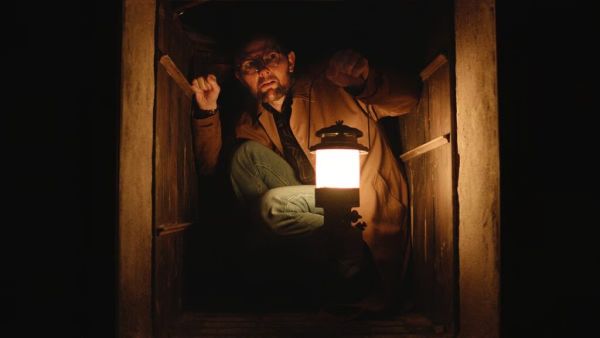
One of the most provocative theories of the film concerns the existence of dark forces. A character tells Ohm that demons exist; only, they become visible only when one is on a psychedelic high. Ohm laughs off the notion initially, but his belief is put to the test as he navigates the dark and claustrophobic nooks and corners of the hotel. The screenplay keeps the audience guessing as to whether it is only the odd characters that believe in the existence of the unknown, or whether this is part of the film’s larger conceit.
Technically, Hokum is an absolute masterclass in gothic atmosphere. With the help of his cinematographer Colm Hogan and composer Joseph Bishara, director Damian McCarthy crafts an immersive film that keeps the audience waiting with bated breath in anticipation of the macabre that unfolds onscreen. It is commendable how inventively McCarthy uses traditional horror film tropes, such as a clock with an inbuilt figure that automatically rings a bell in the suite that can be heard at the front desk. Hogan’s framing and Bishara’s score add to the tension and excitement before all hell breaks loose, literally and figuratively, in the film’s terrifying final act.
Hokum is also a film that adheres to a strict ‘less is more’ principle, treating silence as its biggest weapon. While some of the ‘gotcha’ jump scares appear slightly derivative, the film earns the existential sense of dread and paranoia it steeps the characters in and rewards our patience with many unsettling moments.
Off the cast, Wilmot, Scott, and Peter Coonan deserve special mentions for embodying the traits of their characters perfectly. Wilmot maintains the mystery and dignity of his character throughout. Coonan serves as a chilling presence, raising the stakes and elevating Hokum beyond a standard haunted house thriller. As novelist Ohm, Scott makes everything palpable, including his conflicted feelings for his parents, his fear of the unknown, and his occasional contempt for the hotel staff. When Ohm goes through a hellhole, Scott acts as the force guiding the audience through its layers of subtext and mystery, allowing McCarthy to narrate the story with little to no expository hand-holding.