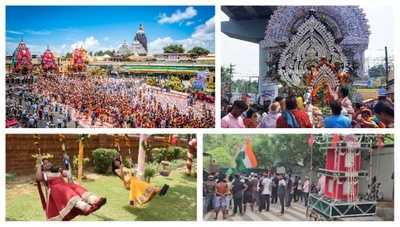
Bhubaneswar: Odisha, with its rich tapestry of culture and traditions, celebrates festivals that are as vibrant as its landscapes. Even in the sweltering summer or early monsoon months, the state comes alive with events that blend devotion, folklore and community spirit. These celebrations often mark seasonal changes, agricultural cycles, and mythological events, offering a glimpse into the state’s deep-rooted heritage.
From the unique festival which celebrates fertility, to the grand spectacle of thousands of devotees in Puri at a car festival, let us take a look at the popular festivals of Odisha in June and July.
Raja Parba (June 14-16)
Raja Parba, pronounced “Raw-jaw” and also known as Mithuna Sankranti, is a vibrant three-day festival unique to Odisha that celebrates womanhood, fertility, and the regenerative power of Mother Earth. It coincides with the onset of the monsoon, when rains rejuvenate the parched land, mirroring the fertile and life-giving essence of nature and womankind. The name “Raja” derives from the Sanskrit word rajas, meaning “menstruation,” with a menstruating woman traditionally called rajasvala. The festival honours the belief that Goddess Bhudevi (Bhumi or Mother Earth), consort of Lord Vishnu (and locally linked to Jagannath), undergoes her annual menstrual cycle during these days, symbolising rest, renewal, and fertility.
Unlike most Indian festivals tied to the lunar calendar, Raja Parba falls on fixed solar dates, typically celebrated from June 14 to 16 each year.
The first day of Raja Parba is known as Sajabaja when homes, kitchens, and grinding stones are thoroughly cleaned, and spices are prepared for the festival. This sets a fresh, auspicious tone. The second day, Raja Sankranti, marks the solar transition into the month of Mithuna and the eagerly awaited arrival of the monsoon. Women and girls dress in new sarees and ornaments, apply alta (red dye) on their feet, and enjoy leisure. A distinctive custom is that women refrain from walking barefoot and limit physical labour during the three days, mirroring the Earth’s rest. No ploughing or digging occurs, respecting nature’s cycle. Swings, traditional sweets (pithas), fruits, and songs add to the joyous atmosphere.
The ‘day after’ is called Basi Raja when festivities continue unabated. On the last day of the festival, Basumati Snana is organised during which a ritual bath is given to Bhudevi, symbolised by a grinding stone or murti,using turmeric paste, flowers, and vermilion (sindoor). Offerings of seasonal fruits, sweets, and other items are made to seek her blessings for prosperity and a bountiful harvest.
Muharram (June 16)
Muharram marks the start of the Islamic New Year (Hijri 1448) and ushers in the first month of the lunar Hijri calendar. Because the Islamic calendar follows the lunar cycle, exact dates depend on the sighting of the new crescent moon and may vary by a day or two across regions.
Muharram is one of the four sacred months highlighted in the Quran, during which warfare is traditionally prohibited. Its name derives from the Arabic root meaning “forbidden” or “sacred,” underscoring a time set apart for reflection, heightened devotion, and restraint from conflict. It is also referred to as the “Month of Allah,” emphasizing its special spiritual status.
The 10th day of Muharram, known as Ashura, holds deep significance but is observed differently by Sunni and Shia Muslims. For Sunni Muslims, Ashura is a day of gratitude and fasting. It commemorates the occasion when Allah saved Prophet Moses (Musa) and the Israelites by parting the Red Sea, allowing them to escape Pharaoh’s tyranny. For Shia Muslims, Ashura is a solemn day of mourning and remembrance. It marks the martyrdom of Imam Hussein ibn Ali, the grandson of Prophet Muhammad, and his small group of companions at the Battle of Karbala in 680 CE (61 AH). They honour his stand for justice against tyranny through gatherings (majalis), processions, recitations, and expressions of grief, reflecting on themes of sacrifice, resilience, and moral integrity.
Sitala Sasthi (June 18-19)
Held in the month of Jyestha (typically May–June) on the sixth day of the bright fortnight, Sital Sasthi marks the union of Purusha and Prakriti. It symbolises the transition from summer’s heat (embodied by Shiva) to the cooling monsoon rains (brought by Parvati), invoking blessings for fertility and prosperity.
Siba Bibaha forms the heart of Sital Sasthi festival, a vibrant celebration of the divine marriage between Lord Shiva and Goddess Parvati. This grand, theatrical community event blends deep devotion with lively folk traditions in a uniquely immersive way.
A local couple symbolically adopts Goddess Parvati as their daughter, assuming the sacred role of her parents and performing the cherished kanyadaan (giving away the bride). Since Lord Shiva is regarded as Swayambhu (self-manifested), no family adopts him. Instead, Lord Shiva is carried in a majestic groom’s procession (baraat) from the temple to the bride’s home, led by figures like Lord Narasimha and accompanied by other deities.
Devotees enthusiastically join as members of the bride’s or groom’s side, turning the streets into a living wedding drama. The marriage rituals unfold at Parvati’s adopted home with full traditional solemnity. Thereafter, the celestial couple embarks on a spectacular procession through the town, joined by thousands of devotees, energetic folk dancers, musicians, and colourful troupes.
Primarily observed in Western Odisha, especially in Sambalpur as the renowned Sital Sasthi Yatra and Bargarh — the festival stretches for a week, featuring folk performances like Dalkhai, Rasarkeli, and Bai Nach, along with elaborate floats and processions.
It is also celebrated with grandeur at the Lingaraj Temple in Bhubaneswar.
Rath Yatra (July 16)
Rath Yatra, widely regarded as the world’s largest and one of the oldest chariot festivals, takes place annually in the Pilgrim Town of Puri, Odisha, home to the revered Shree Jagannath Temple (Srimandir). It commemorates the annual journey of Lord Jagannath along with his elder brother Balabhadra and younger sister Subhadra, as they travel from their main abode to the Gundicha Temple, the residence of their aunt, located about 3 km away.
Each year, three magnificent chariots are freshly constructed by skilled artisans using specially selected sacred woods, following ancient traditions and precise measurements. This intricate process begins months in advance. The largest chariot, Nandighosa carries Lord Jagannath and features 16 wheels. Lord Balabhadra rides Taladhwaja (14 wheels), while Goddess Subhadra’s chariot is Darpadalana with 12 wheels. These towering structures, standing around 43–45 feet high and adorned with vibrant fabrics and intricate carvings, resemble moving temples.
The grand procession begins after elaborate rituals and the ceremonial Pahandi Bije when the deities are taken from the 12th-century shrine to their respective chariots. Hundreds of thousands of devotees from across the world enthusiastically pull the thick ropes attached to the chariots, creating an awe-inspiring spectacle of faith and unity.
This timeless festival transcends mere ritual, symbolising Lord Jagannath’s accessibility to all devotees, regardless of background, and stands as a profound expression of devotion, equality, and cultural heritage.
The deities reside at the Gundicha Temple for about a week before returning to the Jagannath Temple in the Bahuda Yatra. The day after the return journey, the deities are adorned in elaborate gold ornaments during the magnificent Suna Besha ceremony.