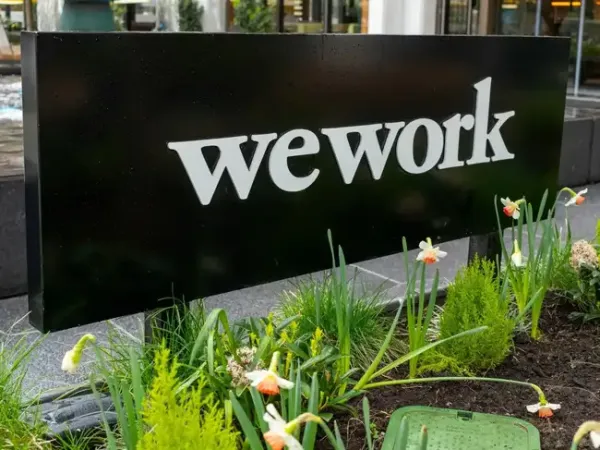
New Delhi: WeWork India Management Ltd has reported Rs 2,477.4 crore revenue in FY2025-26, an increase of 23.4% YoY.
WeWork India closed FY26 with 8.6 million sq ft across 76 centres in 8 cities, and a total committed footprint of 11.6 million sq ft including signed leases and LOIs (+39% YoY). Operational desk capacity stood at 126.9k desks (+15.8% YoY), with 110.2k members (+31% YoY). Portfolio occupancy reached an all-time high of 86.9% (mature centres at 88.9%), and member growth expanded nearly 2x faster than capacity additions, underscoring strong demand momentum across centres.
Also Read: IndiQube reports Rs 1,469 crore revenue in FY26, a growth of 37% Y-o-Y
“Adoption of flex deepened across enterprise segments. During the year, we listed on the stock exchanges, more than doubled PAT, turned net debt negative for the first time in our history, and continued expanding our footprint with pricing discipline and strong occupancy across centres,” said Karan Virwani, Managing Director & CEO, WeWork India.
Enterprises continued to anchor the portfolio, contributing 77% of core revenue in Q4 FY26. In FY26 the company sold 48,000 new desks, its highest ever, with over 50% of new desk sales driven by existing members expanding within the network.
During Q4 FY26 the revenue rose to Rs 709.9 crore, up 28.6% YoY and 10.9% QoQ while EBITDA grew 42.8% YoY to Rs 164.7 crore at a 23.2% margin (+231 bps YoY), and PAT grew 141.9% YoY to Rs 79.6 crore at an 11.2% margin (+525 bps YoY).
The company closed the year in a net debt negative position for the first time at Rs 11.7 crore compared to a net debt of Rs 215.3 crore a year ago. The company also generated Rs 126 crore in Free Cash Flow to Firm (FCFF), up 8.4% YoY, despite significant capex investments towards growth and expansion.
Also Read: GCC boom pushes Hyderabad office rents to all-time high, at par with Bengaluru
Cost of borrowing fell 225 bps YoY to 8.5%, with the credit rating upgraded from A− to A+.
“AI is not replacing the office; it is intensifying collaboration, innovation and talent density, making flexibility even more critical to how companies operate. We enter FY27 from the strongest opening position in our history, with deep demand visibility, strong operating leverage, and growing confidence in the long-term monetisation potential of the platform we are building,” Virmani said.
India’s flex stock is on track to 4× to 324 MSF by 2030, with GCC flex leasing growing at a 28% CAGR, 1.7× the rest of the market.
WeWork India closed FY26 with 8.6 million sq ft across 76 centres in 8 cities, and a total committed footprint of 11.6 million sq ft including signed leases and LOIs (+39% YoY). Operational desk capacity stood at 126.9k desks (+15.8% YoY), with 110.2k members (+31% YoY). Portfolio occupancy reached an all-time high of 86.9% (mature centres at 88.9%), and member growth expanded nearly 2x faster than capacity additions, underscoring strong demand momentum across centres.
Also Read: IndiQube reports Rs 1,469 crore revenue in FY26, a growth of 37% Y-o-Y
“Adoption of flex deepened across enterprise segments. During the year, we listed on the stock exchanges, more than doubled PAT, turned net debt negative for the first time in our history, and continued expanding our footprint with pricing discipline and strong occupancy across centres,” said Karan Virwani, Managing Director & CEO, WeWork India.
Enterprises continued to anchor the portfolio, contributing 77% of core revenue in Q4 FY26. In FY26 the company sold 48,000 new desks, its highest ever, with over 50% of new desk sales driven by existing members expanding within the network.
During Q4 FY26 the revenue rose to Rs 709.9 crore, up 28.6% YoY and 10.9% QoQ while EBITDA grew 42.8% YoY to Rs 164.7 crore at a 23.2% margin (+231 bps YoY), and PAT grew 141.9% YoY to Rs 79.6 crore at an 11.2% margin (+525 bps YoY).
The company closed the year in a net debt negative position for the first time at Rs 11.7 crore compared to a net debt of Rs 215.3 crore a year ago. The company also generated Rs 126 crore in Free Cash Flow to Firm (FCFF), up 8.4% YoY, despite significant capex investments towards growth and expansion.
Also Read: GCC boom pushes Hyderabad office rents to all-time high, at par with Bengaluru
Cost of borrowing fell 225 bps YoY to 8.5%, with the credit rating upgraded from A− to A+.
“AI is not replacing the office; it is intensifying collaboration, innovation and talent density, making flexibility even more critical to how companies operate. We enter FY27 from the strongest opening position in our history, with deep demand visibility, strong operating leverage, and growing confidence in the long-term monetisation potential of the platform we are building,” Virmani said.
India’s flex stock is on track to 4× to 324 MSF by 2030, with GCC flex leasing growing at a 28% CAGR, 1.7× the rest of the market.