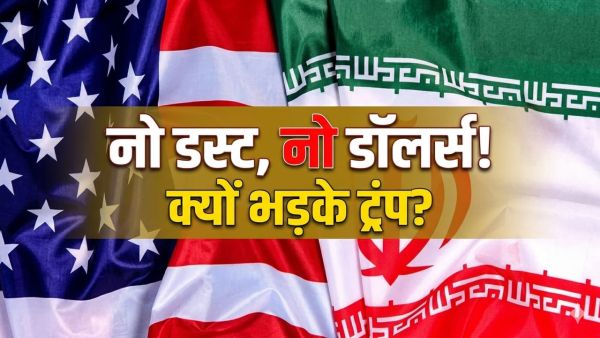
US Iran Talks 2026: The delicate ceasefire brokered by America on April 8, 2026 is now taking its last breaths. More than 50 days have passed since the treaty came into force, but hopes for peace are stuck in a diplomatic maze from which no one can find a way out. As quiet as the backchannel talks in Qatar are, the rhetoric on the public platforms of Washington and Tehran has become equally aggressive. Hidden behind this great impasse are those 5 dreadful disputes, which are pushing the whole world towards a major crisis:

The insistence on nuclear enrichment remains the most dangerous part of this diplomatic war. US President Donald Trump has made a demand that has shocked Tehran, calling Iran's highly enriched uranium "nuclear dust". Trump's stance has changed this time; They are considering destroying this material inside Iran under strict international monitoring. Some analysts are calling it Trump's 'soft stance', while others are considering it a big trap. On the other hand, Iranian official Ibrahim Azizi has made it clear that uranium enrichment is their "inalienable right" and they will not allow this 'red line' to be crossed at any cost.
The suspense deepened when Iran's state media claimed that Iran and Oman were jointly preparing a joint framework for controlling maritime traffic and toll collection through the Strait of Hormuz. The White House immediately dismissed the report as "complete fabrication." Trump thundered at his Cabinet meeting, "Nobody's going to control this!" The US is strongly against any territorial sovereignty or transit fees in the shipping corridor. This fight for control of this strategic waterway can turn into a gunpowder war at any time.
Scroll to load tweet…
On the economic front, the game of blackmailing and manipulation is at its peak. According to Iran's semi-official news agency Tasnim, Iranian negotiators have set a condition that a portion of their $24 billion frozen assets be immediately released before the diplomatic train can move forward. But Trump has kept the key of this safe with him. He said bluntly, "When they behave properly and do what is right, then we will give them their money." This war of money and sovereignty has brought the talks to the brink of ending inconclusively.
Iran wants all restrictions on its oil exports and global financial transactions to be lifted immediately so that its gasping economy can get oxygen. But the Trump administration has adopted a tough stance and has flatly refused to provide initial economic relief. Trump's new slogan is: "No sanctions will be lifted, no money will be lifted, no anything else." Unless a final agreement is reached, this deadly noose of sanctions will not be loosened.
The most unexpected and shocking turn in this entire conversation came when Trump linked this bilateral peace agreement to the expansion of the 'Abraham Accords'. Claiming to have spoken to Saudi Arabia, UAE, Qatar, Pakistan, Turkey, Egypt, Jordan, Bahrain and Israeli PM Netanyahu, Trump said the US "owes it" to these powers to recognize Israel. Trump has threatened that if these countries do not sign, the US will completely withdraw from reconciliation efforts with Iran.
However, this last move of Trump seems to be backfiring. Pakistan, a backchannel broker, has publicly rejected the idea, and Saudi Crown Prince Mohammed bin Salman has made clear that it is impossible to recognize Israel without an independent state of Palestine. This impasse is now not just between two countries but has taken the form of a global crisis.