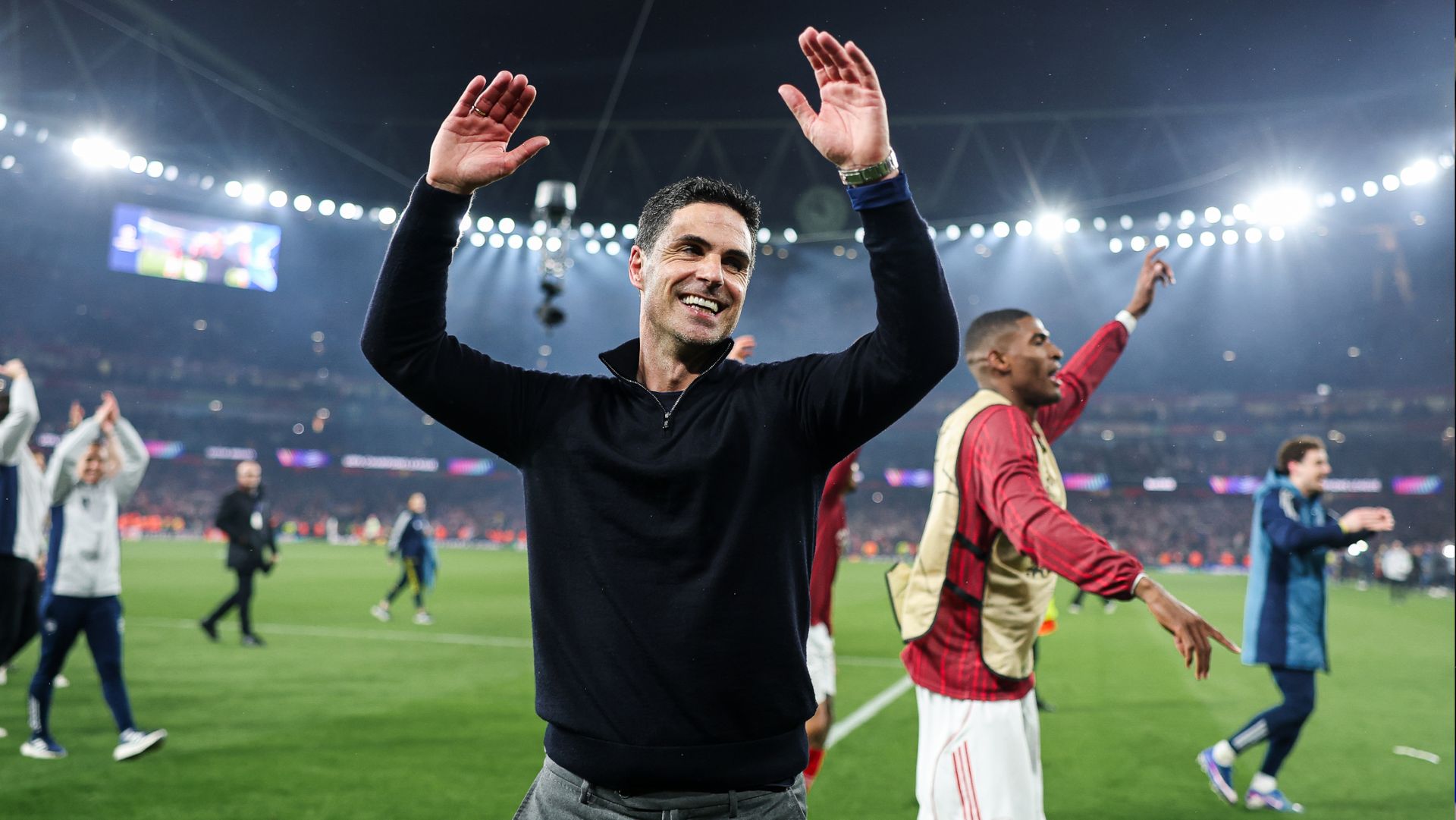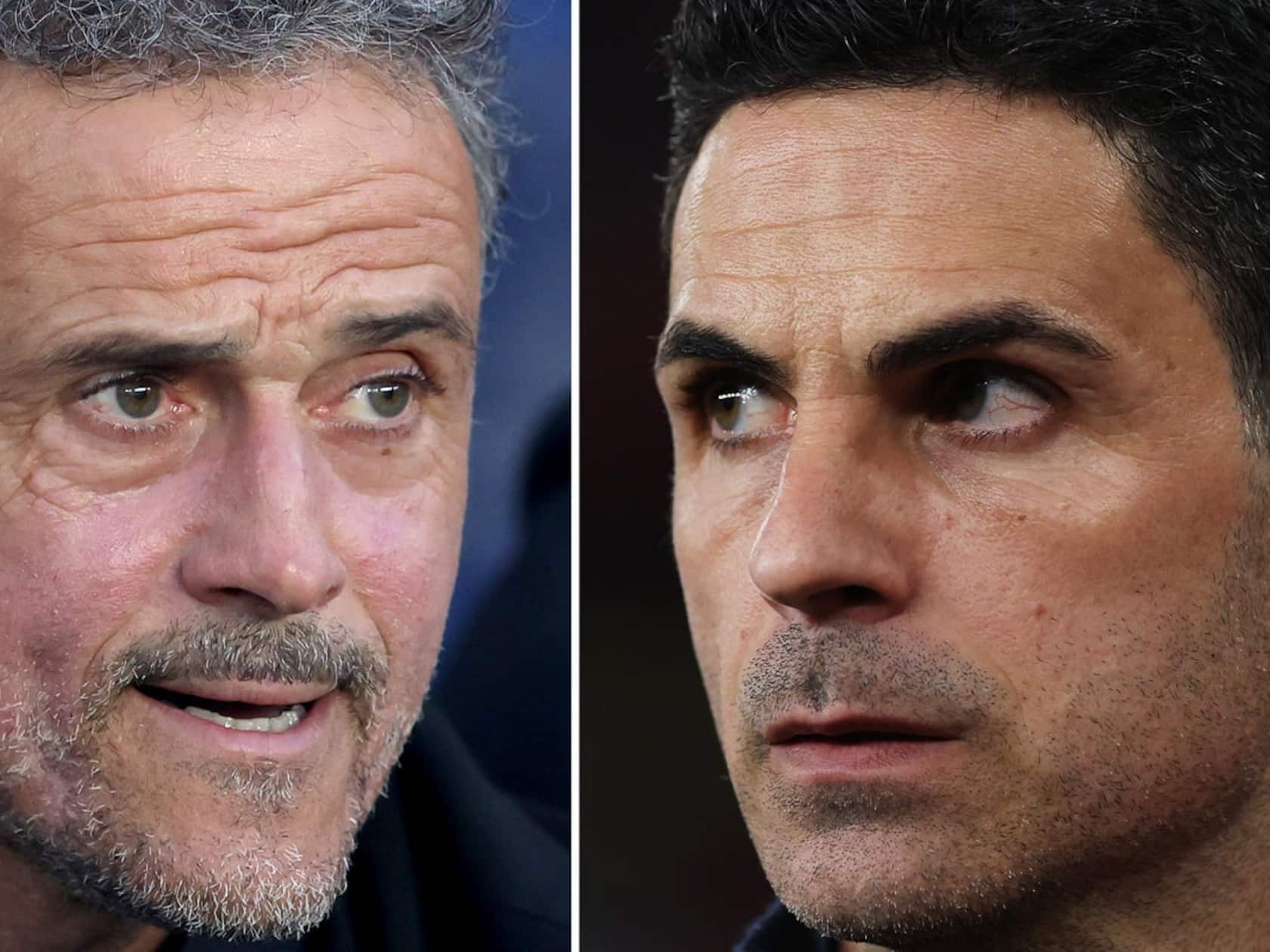
In the relaxed setting of Budapest, the Arsenal camp may appear calm, but Mikel Arteta and his coaching staff are already focused on a crucial tactical principle ahead of the Champions League final.
Before stepping onto the Puskas Arena turf, Arsenal players will have a clear instruction drilled into them — when attacking, every move must be finished. As Arteta’s staff put it, “complete the action.” That means no loose balls, no half-hearted efforts. Every sequence must end with a decisive outcome, because leaving the play open is how Paris Saint-Germain punish you.
For nearly two years, PSG’s devastating counter-attacking quality has been Europe’s biggest nightmare. Few teams in modern football — perhaps ever — have been as ruthless in transitioning from one end of the pitch to the other as the reigning European champions.
This tactical detail adds another intriguing layer to the 71st Champions League final, a clash filled with striking contrasts. Above all, it’s a meeting of two distinct footballing ideologies — a showdown that has only intensified since the semi-finals.
PSG look to expand the pitch with their thrilling, high-speed attack, while Arsenal, under Arteta, operate with precision and control, focusing on compactness and calculated moves. As Luis Enrique aptly described it, “the same idea, but different.”
Throughout the season, much discussion has centred on whether these stylistic differences stem from the financial disparity between the two sides. Once again, Arsenal face a state-backed opponent in pursuit of a major trophy. While Arsenal’s corporate ownership draws its own scrutiny, the contrast in scale is immense — Qatar’s state wealth could once again dictate European dominance.
As PSG’s Vitinha, Khvicha Kvaratskhelia, and Achraf Hakimi trained under the Budapest sun, the contrast between the two clubs came sharply into focus. PSG aim to confirm their supremacy by retaining the trophy — a feat achieved only eight times since 1955 and once in the Champions League era — while Arsenal are chasing their first ever title.
For a club of Arsenal’s stature, their European record remains surprisingly modest. Those close to Arteta say he believes it’s his “destiny” to deliver the Champions League to north London.
This season already carries a sense of fulfilment for Arsenal, having finally reclaimed the Premier League crown. While calling this final a “free hit” would be an exaggeration — especially given the fans’ deep yearning — it’s as close to one as a Champions League final can get. Whatever happens, winning the domestic title ensures a successful season, allowing the squad to approach this high-pressure game with rare composure.
Whether that freedom helps or hurts them will be revealed on match night.
Arteta’s challenge is to outwit Luis Enrique’s well-oiled PSG machine through tactical unpredictability. Arsenal must not let their success cloud their focus — this is their chance to define a new era. The potential reward is monumental: not just a maiden Champions League, but a historic double, which would be only the sixth in English football history. Astonishingly, this is only Arsenal’s second final appearance, and the first in two decades.
Arteta dismissed any notion of a relaxed approach, insisting that he feels “the edge,” and senses “such a desire” within his team to “write a new history.”
This final fittingly features Europe’s two best teams, something rarely seen since 2009. PSG have been likened to that legendary Barcelona side from 17 years ago — and if they defend their crown, it would cement a remarkable legacy, albeit one with geopolitical undertones.
Budapest’s Puskas Arena provides a grand setting, though its limited capacity — just 67,155 seats — falls short of UEFA’s preferred Wembley Stadium. The Hungarian capital, with only 26,000 hotel rooms, is overflowing with travelling fans, particularly from Arsenal. The city is buzzing with anticipation, marking the scale of the occasion.
This event was long desired by Viktor Orban, though political changes have made his absence notable — an ironic twist for a leader often accused of democratic backsliding, now watching from outside power.
As Europe’s elite prepare for battle, expectations are soaring. Not since 2005 has a Champions League final promised such balance and spectacle. Despite PSG being widely viewed as favourites, both camps consider this a true 50-50 contest. PSG may boast the world’s most dangerous attacking trio and a dazzling system, but Arsenal counter with the game’s most cohesive defensive unit.
While Luis Enrique is hailed as perhaps the best coach in the world, Arteta might be the perfect strategist to challenge him, presenting problems he hasn’t yet faced. Their semi-final encounter last season, when Arsenal were weakened by injuries, still left the Gunners believing they should have progressed. That experience fuels a desire for redemption — and a healthy respect for PSG’s ability to punish even a momentary lapse.
PSG’s attacking rhythm, led by the elusive Vitinha, can shred any press. Luis Enrique has revitalised individual flair within his structured system, giving Pep Guardiola’s tactical philosophy a new dimension. Yet Arteta, a Guardiola disciple himself, has evolved the model further — building defensive layers meticulously tailored to counter opponents’ movements.
Jurrien Timber’s intelligence and adaptability make him vital in this setup. Despite being sidelined for 70 days, his potential return could be decisive against Kvaratskhelia, arguably the world’s most in-form winger. Timber’s inclusion could be a gamble comparable to Harry Kane’s selection in 2019 or Dietmar Hamann’s inspired substitution in 2005. Arteta confirmed his fitness but faces a major decision — whether to risk playing him in such a monumental fixture.
Arsenal’s need is clear. With Ben White injured, the right-back position is exposed, and that flank is where Kvaratskhelia thrives. The Georgian’s brilliance is breathtaking, though he often fades late in games.
That pattern underscores another key contrast: PSG start matches at blistering speed but often struggle to sustain intensity. Their dominance in Ligue 1 hides occasional European fatigue. Arsenal, meanwhile, possess arguably the deepest squad in world football, giving Arteta flexibility to adjust mid-game — a tactical luxury he has long sought.
That unpredictability may be Arsenal’s greatest weapon. PSG might not know which version of Arsenal they will face, just as Arsenal can’t predict what Ousmane Dembele might do when fit. In a sport increasingly defined by analysis, Luis Enrique’s inability to anticipate Arsenal’s lineup could be decisive.
Arsenal also hold a physical advantage. They are bigger, stronger, and more dangerous from set-pieces — areas where PSG are known to be vulnerable. Declan Rice’s presence could be crucial, and there’s expectation that Myles Lewis-Skelly’s energy may be preferred to Martin Zubimendi’s composure.
Breaking PSG’s press will be vital. Once an opponent bypasses one of their midfield pressers, space opens up across the pitch — though achieving that is far easier said than done. Vitinha’s agility and technical skill can undo even the most physical setups, stretching defences in seconds.
That’s why Arsenal’s mantra — “complete your actions” — is so critical. Every attack must end decisively, with a shot, a save, or a stoppage. Anything less, and PSG will counter with lethal precision.
For Arteta’s men, this final message could define their season: complete your actions, and complete the double. “The ambition is bigger,” Arteta declared. Few matches in modern football carry stakes quite like this one.