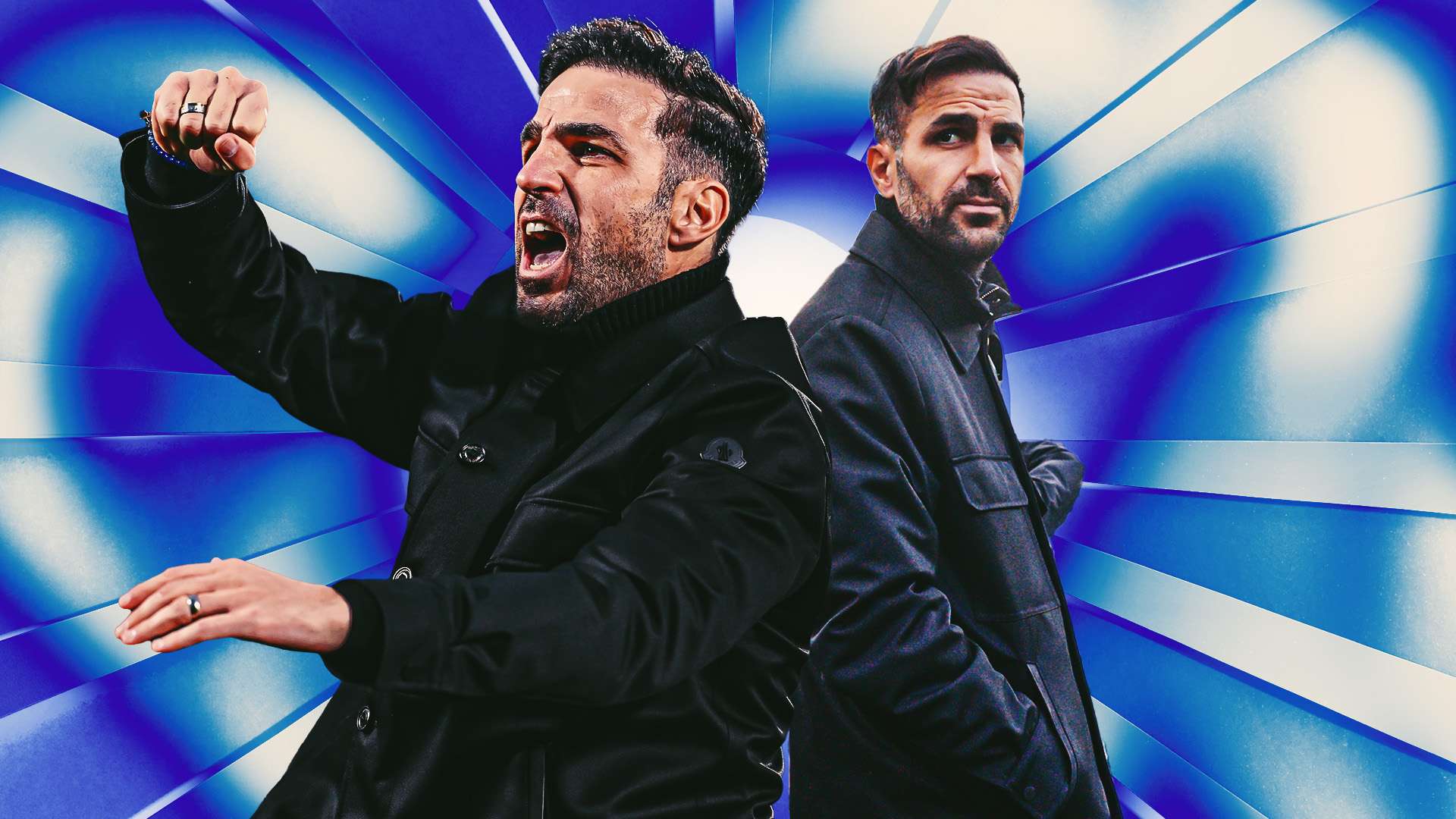
Cesc Fabregas, once among the finest midfielders of his era, made his Arsenal debut at just 16 and, by 23, had already lifted both the European Championship and the World Cup with Spain. Therefore, when Como’s sporting director Carlalberto Ludi claims that Fabregas is “even better as a coach” than he was as a player, it certainly carries weight.
There’s little doubt that Fabregas has all the attributes to become a brilliant manager, which is why the 38-year-old is already being linked to some of Europe’s biggest clubs — potentially sooner than many expected.
But what exactly makes Fabregas so highly regarded at Como? And is he truly ready to take charge of one of world football’s top sides? Let’s take a closer look at one of Serie A’s most intriguing success stories and its central figure.
“Didn’t care about the money”
It’s vital to recognise that Como’s rise from Italy’s fourth division in 2019 to seventh in Serie A today would have been impossible without the massive investment from the Djarum Group, led by the Hartono brothers, Robert Budi and Michael Bambang, two of the wealthiest men globally.
The club also enjoys a picturesque setting, with its stadium located on the shores of the stunning Lago di Como — a magnet for tourists and celebrities alike.
However, what truly convinced Fabregas to join Como in 2022 wasn’t the money but the opportunity to play a pivotal role in an ambitious long-term project — not just as a player, but also as a shareholder.
“I didn’t care about the money,” Fabregas said. “I just wanted to be part of a project that inspired me. I see a long-term future for this club.”
“Basically started from zero”
Crucially, Como’s vision also included a clear pathway into coaching for Fabregas. Arsene Wenger, his former Arsenal manager, had long predicted that the intelligent and adaptable midfielder would one day step into management. Even so, his elevation to Como’s senior setup came faster than anyone expected.
After retiring in the summer of 2023, Fabregas immediately began working with Como’s Under-19 and B teams. But when the club dismissed Moreno Longo less than three months into the new season, Fabregas had yet to complete his UEFA coaching qualifications. As a result, Osian Roberts was named caretaker manager, with Fabregas serving as his assistant.
Despite the title, Fabregas was effectively in charge, wielding considerable influence and control — reminiscent of Pep Guardiola’s authority at Manchester City, albeit on a smaller stage.
“At Como, we basically started from zero,” he explained. “We didn’t even have a proper training ground. The club’s structure was very poor. So, I thought carefully about how we could improve things, not just for the first team but for the academy as well.”
“As many solutions as possible”
Fabregas devoted immense time and energy to refining his football philosophy.
“We analysed every tactical system in football and asked ourselves what the best way was to attack each one,” he said. “We built a database of ideas on how to exploit different formations. I don’t want to be a coach who plays the same way all the time. Yes, you have your principles, but to dominate, you need as many solutions as possible.”
“It’s not the same to attack a team defending deep in a 4-5-1 as it is to face a side that presses man-to-man, like Atalanta.”
That meticulous approach has yielded results. In his first season as head coach, Fabregas guided Como to promotion to Serie A after finishing second in Serie B — with a promised team trip to Ibiza proving a motivational masterstroke.
Following a challenging start to their first top-flight campaign in 21 years, Como finished 10th. Inter Milan even approached Fabregas, but Como’s president, Mirwan Muwarso, refused to let him go. “Our journey is long and centred around Cesc Fabregas, who will not leave this club,” he declared.
Although rumours suggested Fabregas was open to succeeding Simone Inzaghi at San Siro, he had no intention of forcing his way out of a club he remains personally and financially committed to. Staying at Sinigaglia has clearly benefited his growth, with Como now within reach of European qualification for the first time in their history.
Heading into Wednesday’s clash with AC Milan, the Lariani sit seventh in Serie A, just a point behind Atalanta in the Conference League position. They’re also in the Coppa Italia semi-finals, preparing for a two-legged showdown with Inter.
Testing himself against Allegri
The meeting with Massimiliano Allegri’s Milan offers another test of Fabregas’ tactical sharpness and managerial maturity. When the two sides met at Sinigaglia a month earlier, Como dominated possession and territory, outperforming Milan in nearly every metric except the scoreline.
After the 3-1 defeat, Fabregas sounded frustrated. “Those who only look at results will enjoy this game,” he said. “But those who love football will think Como wins eight times out of 10. We made 700 passes, they made 200 — incredible.”
Allegri, known for his pragmatic approach, didn’t appreciate the implication that Milan’s win was fortunate. “Luck is part of life, but it’s disrespectful to reduce our success to chance,” he responded. “Fabregas is a young coach with great potential, but in football, ‘ifs’ and ‘buts’ don’t count.”
Learning from his mistakes
To his credit, Fabregas had already acknowledged before the match that, compared to a Champions League-level coach like Allegri, he was still at a Serie D level. He later admitted he needed to better “manage my emotions” after games.
He’s far from one of Italy’s fiery coaches — in fact, Allegri himself is more prone to outbursts — and his calm reaction to last weekend’s defeat to Fiorentina showed growing composure.
Although he criticised veteran striker and former teammate Alvaro Morata for a needless red card, Fabregas also accepted full responsibility for the loss. “I’m frustrated that I couldn’t help the team understand the importance of this match,” he told DAZN. “We need to show more hunger and be sharper in attack if we want to play our football.”
“Doing things the right way”
Fabregas’ Como side are known for their possession-based, attack-minded 4-2-3-1 system — a style that technically gifted players relish. Under his guidance, young talents like Nico Paz and Jacobo Ramon have flourished, potentially earning moves back to Real Madrid.
“Having a legend as a coach is amazing,” Paz said. “He makes you feel comfortable and teaches you so much about football and life.”
Some Italian analysts have accused Fabregas of being overly devoted to the possession-heavy philosophy that defined Spain’s golden era. After a 4-0 loss to Inter in December, he was asked if he’d considered a more defensive setup. “I did think about it,” he admitted, “but my head said no. I’m fine with that. Maybe it makes me look foolish, but I believe we grew as a team today. You learn more from a heavy defeat than an easy win. Como are doing things the right way. I’d rather lose 4-0 than play with six defenders.”
Still, Fabregas isn’t as rigid as that might suggest. He later revealed he attended an Inter vs. Liverpool match at San Siro to study what he could have done better, and he frequently highlights the tactical variety he experienced under different coaches during his playing career.
“I won with Antonio Conte, Mourinho, Wenger, and Guardiola,” he told The Coaches’ Voice. “Each had a different style, and I’d never say one was better than another.”
“When I joined Como, the owners spoke about the lifestyle, the lake, and their wish for an attacking identity. They didn’t just say ‘win’; they said, ‘win while building an identity and attracting players who want to play here.’”
Fabregas has certainly achieved that. Como is no longer only a celebrity retreat — it’s now one of football’s most admired projects, guided by a manager who could soon prove every bit as exceptional in the dugout as he once was on the pitch.