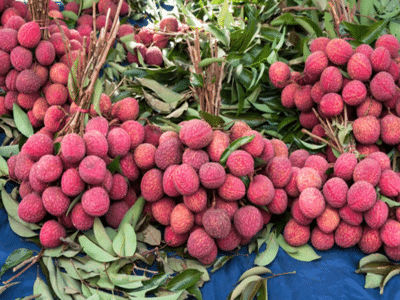
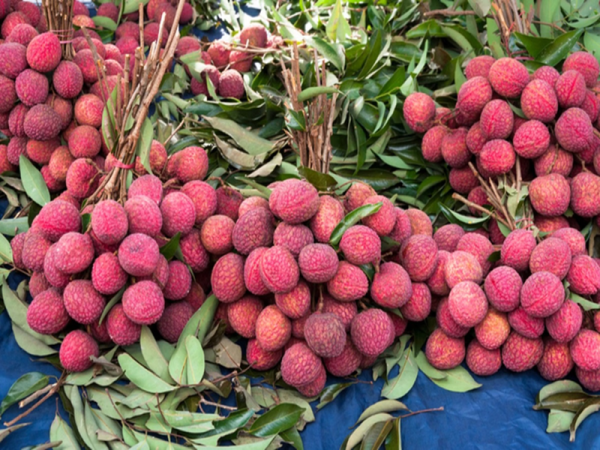
During the summer season, the market sees a high demand not only for mangoes, watermelons, and muskmelons but also for litchis. Litchis are primarily cultivated in Bihar, Jharkhand, Bangladesh, Punjab, and Assam, and it is from these regions that they are distributed across the entire country. Sweet to the taste and resembling a strawberry in appearance, this fruit is also highly beneficial for one's health. Consuming it helps protect against dehydration. Furthermore, it is rich in Vitamin C, making it an excellent choice for skin health and overall well-being.

However, most people harbor misconceptions regarding its true color, which provides unscrupulous profiteers with an opportunity to adulterate the fruit. Consequently, if you are purchasing litchis from the market, it is essential to exercise caution. Here, you can learn several methods to identify organic—that is, naturally grown and ripened—litchis.
**Identifying Organic Litchis**
**Pay Attention to Color**
A litchi is never entirely red—a sight often observed in the market, which serves as a tell-tale sign of artificial litchis. Authentic litchis feature a mixed coloration, appearing pink in some spots while displaying shades of red, brown, or pale yellow in others. A vivid, bright red hue is often artificially applied to litchis solely to attract customers; however, such chemical treatments can be detrimental to health.
**Aroma and Taste**
The natural sweetness of fruits that have ripened on the tree is often evident simply through their aroma. Therefore, when purchasing litchis, always take a moment to smell them; buy them only if you can detect a faint, sweet fragrance. Additionally, it is always advisable to taste a litchi before purchasing, as litchis ripened using chemicals tend to have a slightly astringent or bitter aftertaste.
**This Method is Also Effective**
If you wish to distinguish between artificial and authentic litchis, you can perform a "water test." To do this, simply place the litchis in a glass of water and let them sit for a while, or wrap them in a damp tissue paper and set them aside. If it has been colored on the surface, you will see evidence of it on the water and the tissue paper.
PC Social Media