With the conclusion of the IPL 2026 season, the focus of Indian sports enthusiasts has swiftly shifted towards the upcoming FIFA World Cup.
The forthcoming edition will be historic, featuring 48 teams — the highest ever — and offering Asia an increased number of qualification slots.
Despite the expansion, Team India has never participated in a FIFA World Cup, and the gap between India and the continent’s elite football nations still appears daunting.
To even come close to qualifying, India needs transformative changes across its footballing ecosystem.
Building from the Grassroots
India’s struggle begins right at the grassroots level. Except for a few standout players, the country has found it difficult to consistently develop footballers capable of competing at the top level in Asia.
Currently, India ranks outside the top 20 in Asia according to FIFA rankings. In contrast, nations that regularly qualify for the World Cup have spent decades nurturing robust youth development systems.
Although Indian youth teams have started to show improvement in recent years, they still have a considerable journey ahead before matching continental standards.
Inspiration from Mohali’s Minerva Academy
The rise of Mohali’s Minerva Academy demonstrates the promise that lies within Indian football. Earlier this year, the academy’s Under-15 team stunned the football community by defeating Liverpool’s U-15 side 6–0 at the Mediterranean International Cup in Spain. It also became the first Indian club to take part in the prestigious MIC Cup.
Under the leadership of Ranjit Bajaj, the academy showcased that Indian youngsters can compete fearlessly against elite global opposition when provided with the right training and infrastructure.
Administrative Instability Hindering Progress
Since its inception in 2014, the Indian Super League (ISL) has given Indian football unprecedented visibility and commercial growth. Yet, administrative instability continues to plague the sport.
Recent disputes, including the controversy surrounding Churchill Brothers’ promotion from the I-League and ongoing disagreements over the ISL’s structural framework, have exposed persistent inefficiencies within the system.
Additionally, internal conflicts and governance issues within the All India Football Federation (AIFF) have compounded these challenges, slowing down the game’s overall development.
Current Ranking and the Road Ahead
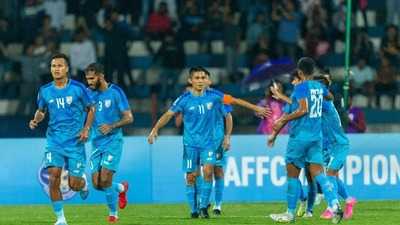
Under head coach Khalid Jamil, India currently sits at 136th in the FIFA Men’s Rankings.
The Blue Tigers’ most notable moment in global football remains their qualification for the 1950 FIFA World Cup — a tournament they ultimately did not participate in.
In their most recent World Cup qualifying campaign, India endured another disappointment, finishing third in their second-round group behind Qatar and Kuwait, thereby missing out on the next stage.
For India to turn its long-cherished World Cup dream into reality, a clear vision, consistent youth development, and a stable footballing structure will be essential moving forward.