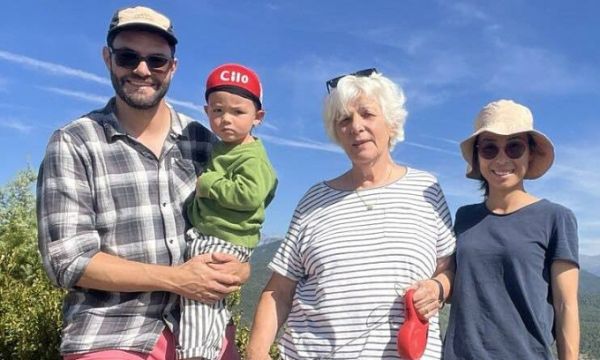
When Hoang Quynh Anh, 37, left the central Vietnamese province of Nghe An to settle in the European country, she carried with her the deeply ingrained belief that women should put family first and accept a supporting role.
She never imagined that her Swiss mother-in-law, a former teacher who views independence as a way of life, would become an unexpected mentor, transforming her understanding of happiness, sacrifice, and what it means to be a woman.
|
Hoang Quynh Anh and her family live with her in-laws in Switzerland. Photo courtesy of Anh |
Anh grew up watching her mother devote herself entirely to her husband and children, something common in family-first Asia. So, as a young woman, she was skeptical of marriage. Getting married meant that women had to step back, shoulder household responsibilities, and live for others rather than themselves, she feared.
But things changed when she met Jörg Strehler, a Swiss man who would later become her husband. More than four years after moving to Switzerland, Anh now runs the TikTok and YouTube channels “Anh in Switzerland,” where she shares snapshots of life in a multicultural marriage.
While viewers enjoy glimpses of European scenery, what attracts the most attention is her close relationship with her mother-in-law, a woman who completely reshaped her views on a woman’s worth and role in society.
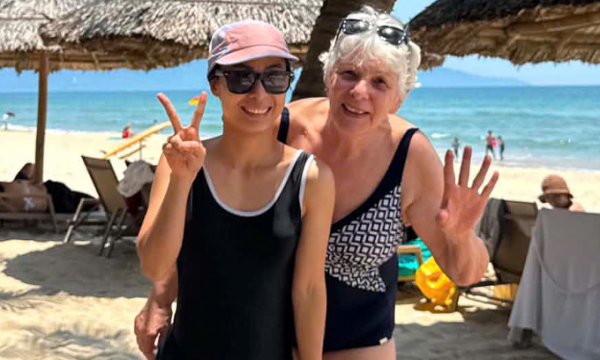
Hoang Quynh Anh often confides in her mother-in-law about everything from marriage and beauty care to personal growth and emotional well-being. Photo courtesy of Anh
Looking back on her early days in Switzerland, Anh recalls being surprised by the clear cultural boundaries.
In Vietnam, visiting relatives often means immediately offering to help in the kitchen as a sign of warmth and hospitality. In Switzerland, however, even entering someone else’s kitchen to get a glass of water or using the bathroom may require asking first.
Rather than trying to become the model daughter-in-law according to traditional Asian expectations, she chose to observe and adapt, helping when appropriate instead of taking on responsibilities that felt unnatural to her.
The most significant difference between her and her mother-in-law did not arise from daily routines but from conversations that challenged her assumptions. A turning point came when she and her husband began discussing whether to have children: She was not ready while he loved the idea of becoming a father.
Wondering whether women in Switzerland face criticism for choosing not to have children, she asked her mother-in-law for advice. “It’s your body, and you have the right to make every decision about it. Whether you have children or not is entirely your choice. Neither your husband nor anyone else has the right to decide for you,” she said.
Anh says at that moment she felt as though she had awakened, realizing for the first time that she was an independent individual with complete agency.
 |
|
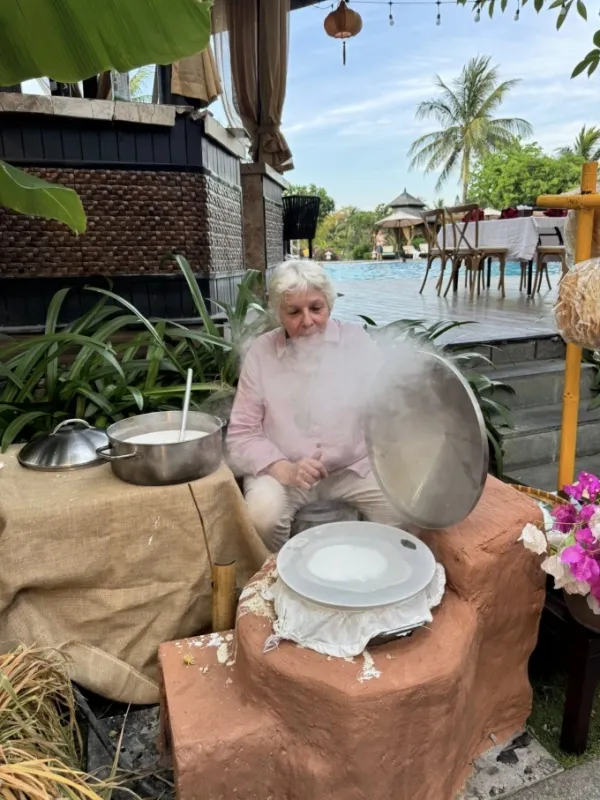
Hoang Quynh Anh’s mother-in-law experiences making traditional banh cuon (Vietnamese steamed rice rolls) while visiting Vietnam with her daughter-in-law. Photo courtesy of Anh |
Learning to sacrifice without losing happiness
What her mother-in-law said helped Anh let go of the need to become the perfect wife or daughter-in-law. She describes the older woman as someone who leads a rich personal life, with hobbies that include reading, dancing, learning to play the flute, and spending time with friends.
Instead of imposing her beliefs, she chooses to support and encourage, always first asking whenever they meet: “How are you today?”
She does not ask if Anh’s husband is happy or how the children are doing; she asks about Anh.That helped the Vietnamese woman understand that self-love is not selfishness. To bring happiness to others, she says, one must first learn to value and care for oneself.
In her family now, childcare is no longer viewed as a woman’s responsibility. There are days when she goes out to meet friends or enjoy personal time while her husband stays home caring for their child. Their willingness to share responsibilities helps maintain a harmonious family atmosphere, free from the resentment that can arise when sacrifice is treated as an obligation
 |
|
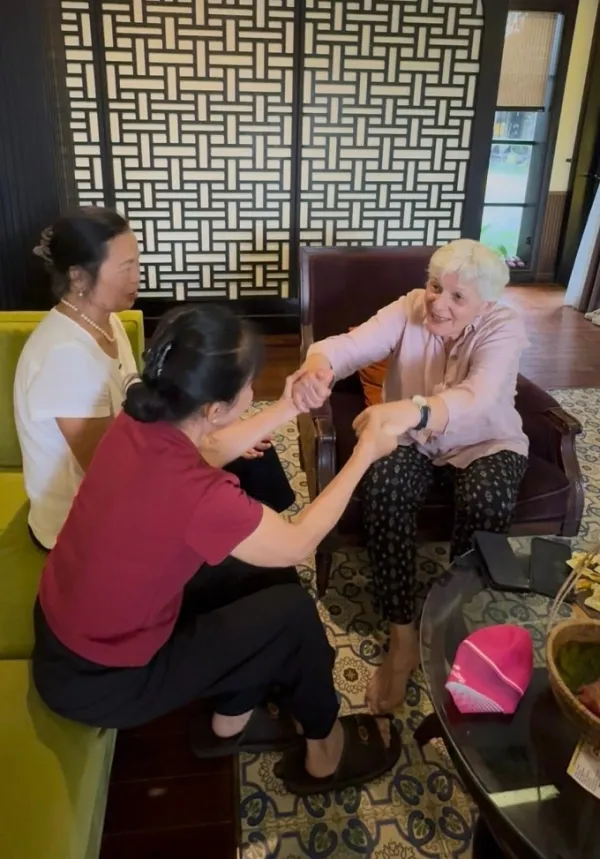
Hoang Quynh Anh’s mother and mother-in-law grew close despite not sharing a common language. Photo courtesy of Anh |
Recently, Anh brought her mother-in-law to Vietnam for a 10-day visit. The trip left her with many unforgettable memories, particularly the sight of the Swiss woman and her aunt in Nghe An sitting side by side, holding hands, and chatting despite the language barrier.
Throughout their journey through Hanoi, Ninh Binh, Nghe An, Da Nang, and Hoi An, her mother-in-law embraced local life and enthusiastically sampling Vietnamese dishes though her favorite item to eat turned out to be mango.
“Every day she asked whether there were any mangoes because the ones here are so much sweeter and more fragrant than the bland mangoes in Switzerland,” Anh says with a laugh.
After more than four years of navigating cultural differences, she has come to believe that the key to a successful multicultural marriage is not trying to make one culture conform to the other.
Instead, it is about choosing the values that help people live happier and more fulfilling lives. “I think women will always care for and support their families, no matter where they live.
“But if you are going to make sacrifices, they should make you happy. Live for yourself first, not for society’s expectations, because we only live once.”