TRIBUNPEKANBARU.COM, PEKANBARU – The global football fever has once again gripped Indonesia as the countdown begins toward the kick-off of the world’s most prestigious tournament, the 2026 FIFA World Cup. Although the event will take place far away in North America — covering the United States, Mexico, and Canada — Indonesian fans remain as enthusiastic as ever.
This quadrennial spectacle consistently captures the imagination of fans and football observers alike, ranging from television supporters to former national players who analyze the balance of power among the world's top teams.
This World Cup feels uniquely special as it marks a crucial transitional era. On one hand, it is expected to be the final stage for football legends such as Lionel Messi and Cristiano Ronaldo.
On the other hand, the spotlight has shifted toward the explosion of young talents, including Spain’s prodigy Lamine Yamal, who is ready to establish himself as the next global superstar. This phenomenon has sparked discussions about the future of world football and its influence on the domestic football ecosystem in Indonesia.
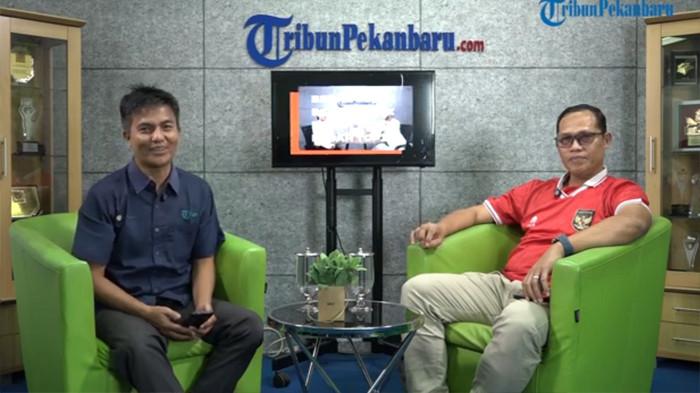
To explore the emerging young stars, potential favourites, and the lessons Indonesia can take from this global event, Tribun Pekanbaru journalist M. Hafiz conducted an exclusive interview with PSPS Pekanbaru legend and former Indonesia national team striker, Bang M. Isnaini.
Tribun Pekanbaru: How do you see the presence of young players in the 2026 World Cup, which will feature a new format of 48 participating nations?
Bang M. Isnaini: With 48 teams, almost every national side will include players under 21 years of age. Their quality is undeniable, as most have matured early and are already competing in elite European leagues.
Tribun Pekanbaru: Which young players do you think have the best potential to shine at this tournament?
Bang M. Isnaini: The most prominent name is Spain’s Lamine Yamal. Then there’s Désiré Doué from France, Silva from Portugal, Nico Paz from Argentina, and several other promising youngsters from the Netherlands squad.
Tribun Pekanbaru: Why do you believe the physical attributes of these young players will be a key factor for coaches at this World Cup?
Bang M. Isnaini: The World Cup schedule is extremely tight, demanding high intensity and frequent matches. Under such conditions, the stamina and speed of players under 21 will be vital for coaches to execute their tactical systems effectively.
Tribun Pekanbaru: Lamine Yamal gained worldwide attention after leading Spain to the Euro 2024 title at the age of 17. What, in your view, sets him apart?
Bang M. Isnaini: His biggest strength is how freely he plays and how much he enjoys himself on the pitch. Combined with individual skills far above average for his age, he has boosted Spain’s performance and become the face of a new generation.
Tribun Pekanbaru: Many people compare Lamine Yamal’s style to Lionel Messi’s and even refer to him as the legend’s successor. Why is that?
Bang M. Isnaini: That’s because Lamine Yamal possesses natural-born talent. His playing attributes are very similar to Messi’s — especially his dominant left foot. Moreover, both came through the Barcelona academy system.
Tribun Pekanbaru: Besides Yamal, France’s squad includes Désiré Doué. How would you compare his quality to Yamal’s?
Bang M. Isnaini: Their playing characteristics differ based on their coaches’ tactical systems. Doué’s advantage is his experience in top-tier competitions like the UEFA Champions League with PSG, which has honed his maturity and composure.
Tribun Pekanbaru: Do you think the presence of senior stars like Kylian Mbappé will help young French talents such as Doué perform better?
Bang M. Isnaini: Absolutely. Mbappé’s presence will create a positive team atmosphere. He is expected to shine again as a top scorer candidate, which will give young players like Doué the freedom to perform without heavy pressure.
Tribun Pekanbaru: In Argentina’s camp, there’s Nico Paz. How do you assess his chances of standing out among seasoned players?
Bang M. Isnaini: Nico Paz’s quality has been evident since his time with Madrid and his role in helping Como earn promotion. Even though Argentina remains dominated by veterans, Messi as captain will surely guide and give room for emerging players like Nico Paz to display their abilities.
Tribun Pekanbaru: Is it true that the 2026 World Cup will serve as a crucial transition, marking the final appearance for the generation of Messi, Ronaldo, and Neymar?
Bang M. Isnaini: That’s correct. This will be the farewell stage for legends of their stature to showcase their brilliance one last time. After this tournament, their era will officially end, and the spotlight will fully shift to the younger generation.
Tribun Pekanbaru: Beyond national pride, is the World Cup also seen as a global marketplace for young players to raise their profiles?
Bang M. Isnaini: Definitely. There’s an industrial motive behind it. Young players will give their all to boost their market value. The tournament is full of scouts from major European clubs, so even impressive group-stage performances can significantly raise a player’s price tag.
Tribun Pekanbaru: Based on your analysis, which teams do you predict will reach the final and possibly win the title?
Bang M. Isnaini: From my analysis, Spain has the biggest chance to reach the final. However, France and the Netherlands are also strong contenders that must not be underestimated.
Tribun Pekanbaru: What makes the current Spanish national team appear stronger than other top teams?
Bang M. Isnaini: Spain’s advantage lies in their tactical consistency, evenly distributed individual skill levels, and the cohesiveness of their team strategy. These strengths are further reinforced by their domestic league, which remains one of the best in Europe.
Tribun Pekanbaru: This Spanish squad has made history by not including a single Real Madrid player. What’s your take on this decision?
Bang M. Isnaini: It shows that the coach is being objective. He doesn’t focus on big club names but rather on players’ actual contributions, performance, and fitness to fit the national team’s tactical needs.
Tribun Pekanbaru: What about the Netherlands? They don’t have many global superstars but are still predicted to be a surprise package this year.
Bang M. Isnaini: Under Ronald Koeman’s management, the Netherlands have a very well-organized structure. With their classic 4-3-3 formation and the Total Football philosophy, their teamwork and tactics make them a legitimate dark horse for the title.
Tribun Pekanbaru: There’s an old belief that European teams struggle to win when the World Cup is held in the Americas. Does that still hold true today?
Bang M. Isnaini: That myth has long been broken — one example being when a European team triumphed in South America. In modern football, with advanced technology and climate adaptation methods, geographic challenges are no longer a major issue for top teams.
Tribun Pekanbaru: Indonesia always celebrates the World Cup passionately, even though the national team has yet to qualify. What progress do you see in our football that aligns with this global momentum?
Bang M. Isnaini: Indonesian football is on a very positive trajectory. In Southeast Asia, we’ve regained respect, and at the Asian level, we’re starting to be recognized — especially after reaching the third round of the recent World Cup qualifiers.
Tribun Pekanbaru: Do you agree with the Indonesian Football Association (PSSI)’s policy of naturalizing players of Indonesian descent from Europe?
Bang M. Isnaini: I agree. It’s a fast-track approach to strengthening our generation. Bringing in players of Indonesian descent who are used to competing in Europe or Asia is the quickest way to improve mentality, quality, and motivation for our local players.
Tribun Pekanbaru: From the domestic competition perspective, what are the most noticeable differences between today’s Liga 1 and the era when you were still playing?
Bang M. Isnaini: The changes are tremendous. Liga 1 has developed into a well-structured professional industry. Club facilities and the overall quality of competition have improved significantly.
Tribun Pekanbaru: You’ve previously criticized the regulation allowing up to 10 foreign players per team in Liga 1. What is your main concern about this?
Bang M. Isnaini: My biggest concern is the reduced playing time for local players. A footballer’s quality can only improve through consistent match experience, and if locals don’t get enough minutes, their development will stagnate.
Tribun Pekanbaru: What could be the long-term impact on Indonesia’s national team if local talent loses their place in the domestic league due to foreign dominance?
Bang M. Isnaini: Remember that the backbone of any national team comes from its domestic league. If local players rarely get match time, future national team coaches will struggle to find ready and high-quality players. This regulation must be reviewed immediately for the sake of Indonesian football’s future.
(Tribunpekanbaru.com/Alexander)