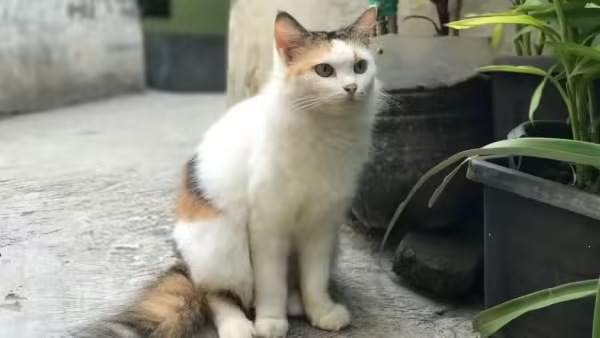
Humans have fingerprints. Cats have “nose prints.”The tiny bumps and patterns on a cat’s nose are unique to that individual cat. No two are exactly alike.
Ever wondered how your cat somehow ended up on top of a cupboard?Cats are incredible jumpers. A healthy cat can leap several times its own body length in one jump. Their powerful back legs do most of the work.That’s why there are very few places in a house that a determined cat can’t reach.
If your cat seems lazy, that’s because cats genuinely sleep a lot.Many cats sleep between 12 and 16 hours every day. Some sleep even longer.In the wild, their ancestors needed to save energy between hunts. House cats may not be hunting dinner anymore, but they still follow the same routine.
Most people hear a purr and assume their cat is having the best day ever.Sometimes that’s true.
But cats can also purr when they’re nervous, scared, uncomfortable, or even injured. Researchers still don’t fully understand all the reasons behind purring.
Take a close look at a cat when it hears a sound.Its ears can move in different directions almost instantly. In fact, cats can rotate their ears to track where a sound is coming from.It’s one of the reasons they’re such good hunters and why they often notice things long before humans do.
Many cat owners have had the same experience.You call your cat’s name. It looks at you for a second. Then it walks away.The funny part is that studies suggest cats can recognize their owners’ voices. They know you’re talking to them.

They just don’t always feel like responding.
Cats have been living alongside humans for thousands of years, yet they still manage to confuse us on a daily basis.Maybe that’s what makes them so fascinating. They’re affectionate but independent, playful but mysterious, and even after all these years, they still seem to have a few secrets left.And if you’re a cat owner, chances are you’ve seen at least one of those secrets in action.Disclaimer: This article is based on publicly available information about cat behaviour and biology. Individual cats may behave differently depending on their breed, age, health, environment, and personality. Images: Canva (for representative purposes only)