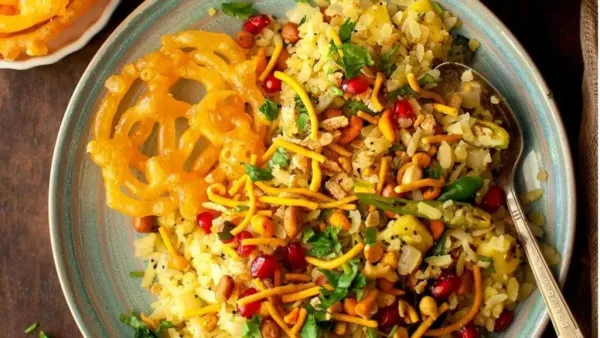
Poha Day 2026: Generally, different types of things are eaten for breakfast, but among these, Poha is considered to be the most famous. Although Poha is eaten in most of the states of India, but in Maharashtra, Gujarat and Madhya Pradesh it is known as a famous breakfast dish.
Although Poha is eaten with great gusto in every corner of the country, it is known by many names in different places, it is called Chivda, Flattened Rice, Chira, Chiura, Chivda, Aval, Atukullu. Poha is so loved everywhere that it is made in different ways, but this poha also has a long history just like its taste. There is an interesting story of Poha (Poha History In India) from Mahabharata to the Scindia rule period, let us know.
Rice was a staple food in ancient India, where rice was boiled and used as food. It involves lightly cooking the rice grains before drying and flattening them. This method started being used to increase the shelf life of rice. It was also used to increase digestibility and nutritional value. With time, this boiled rice in its flattened form, became popular as poha.
It is said that Poha first came into existence in Maharashtra. This dish became popular on a large scale during the rule of Holkar and Scindia. When the rulers came to central India from Maharashtra, they captured Indore and brought with them poha and shrikhand among other things. History tells that these two dishes have been prevalent since the reign of Holkar and Scindia. Both these dishes are indicative of the invasion and rule of Holkar and Scindia in the history of Madhya Pradesh.
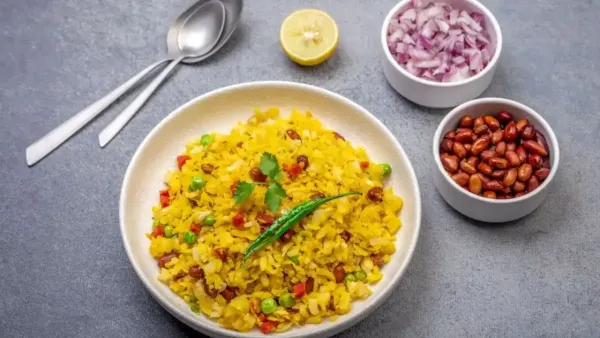
Poha (courtesy social media)
Poha is also mentioned in the epic Mahabharata, when Shri Krishna’s best friend Sudama came to meet him, Sudama’s wife sent him pounded rice i.e. Poha as a gift to Krishna. Sudama was hiding this poha and Shri Krishna became emotional after seeing this flattened rice.
According to another story, in 1846, whenever Indian soldiers were sent somewhere by ship, they used to have Poha in their food. Poha is prepared from chiwda and peanuts, curry leaves and mustard seeds are used to enhance the taste. However, the way of serving Poha is different in many states. In Rajasthan, spicy bhujiya is added to poha and in Madhya Pradesh, nukti-sev is molded on top of poha and eaten with jalebi. Maharashtrian poha consists of potatoes topped with sev and served with chutney.
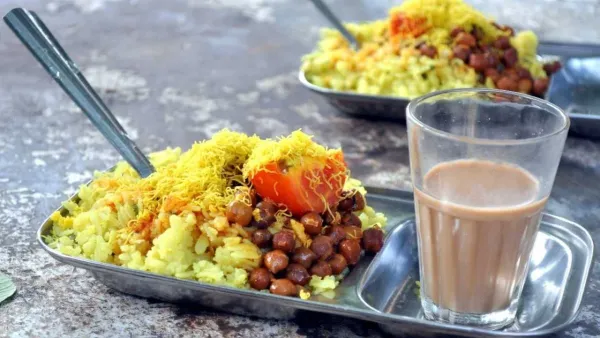
Poha (courtesy social media)
The British rulers considered Poha as the complete diet of the soldiers. Besides, it was also easy to make. You will be surprised to know that Poha has also been banned in independent India. In fact, due to shortage of rice in 1960, the government had to ban the making of Poha.
The credit for giving commercial recognition to Poha in Indore is given to Purushottam Joshi ji. It is said that after independence, he reached Indore from Nizampur in Raigarh district of Maharashtra in search of employment. After working for some time, he decided to start his own business. In the year 1948-49, Purushottam Joshi started selling Poha under the name ‘Uphaar Grih’ in Tilakpath area of Indore. At that time Poha was available for a few rupees.
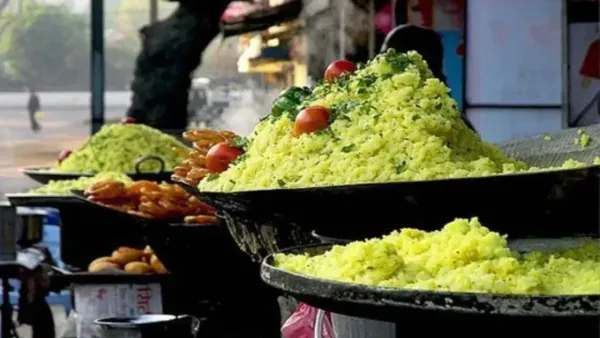
Indori Poha (courtesy.social media)
Today, 90 tonnes of Poha is consumed daily in Indore, which increases further on Sundays. Poha is sold daily at more than 1200 places in Indore.
The special thing about Poha is that it is not only easy to make but is also very healthy. Apart from being a good source of carbohydrates, it is also rich in iron and fiber, so after eating Poha, you will feel full for a long time. Poha is very light to eat and easily digested. Apart from this, people who are on gluten free diet can also eat poha. To enhance its quality, add lots of peanuts and lemon to it.