Lionel Messi is gearing up for his record-setting sixth World Cup appearance, yet the player who will take the field now bears little resemblance to the teenage prodigy who first captured global attention. While many football greats adjust their style to manage decline, the Inter Miami superstar has spent two decades constantly evolving to stay ahead of the sport.
The rise of the winger and Guardiola’s revolution
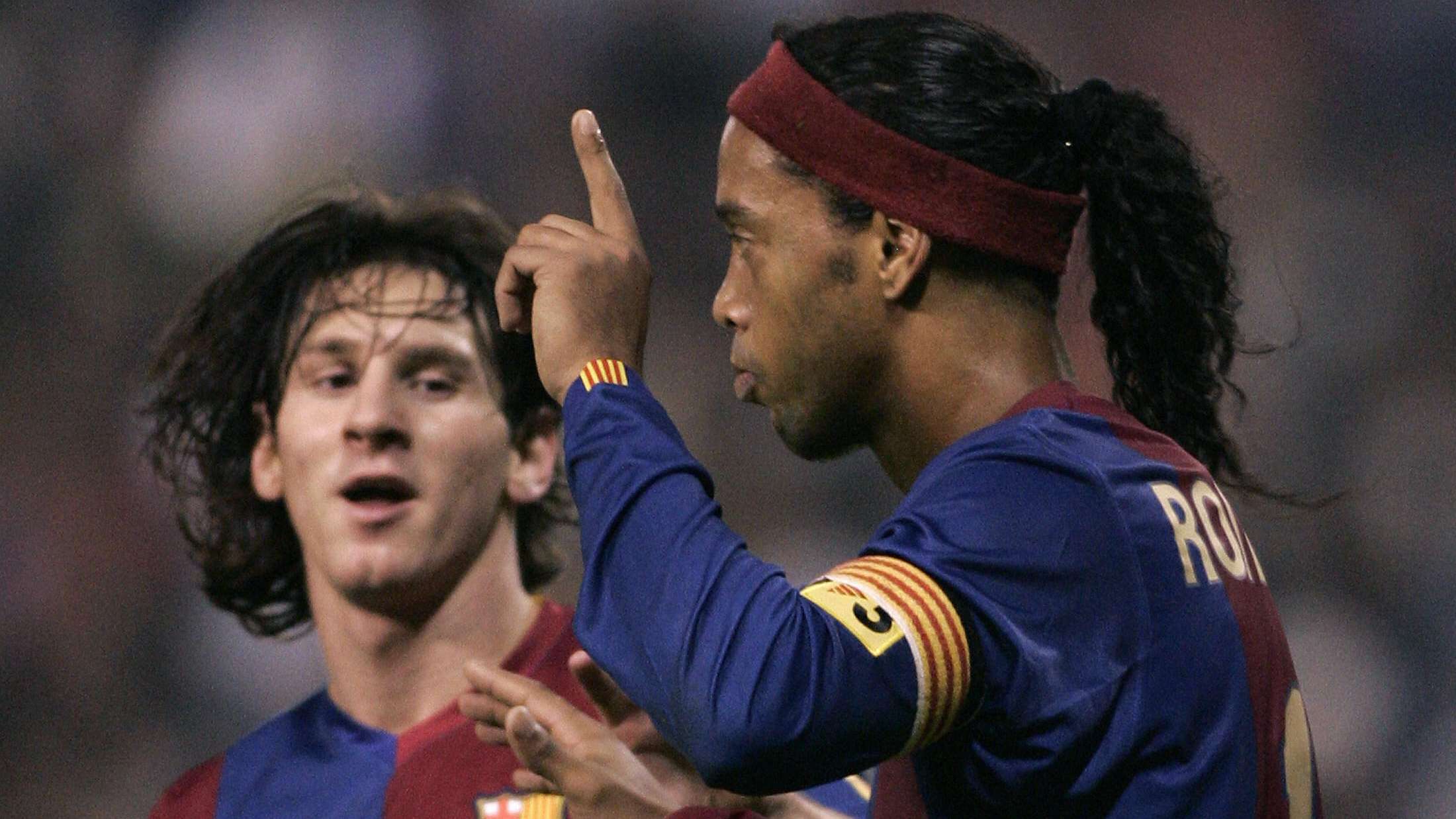
At just 16, Messi made his first appearance for Barcelona in a friendly against Jose Mourinho’s Porto, displaying raw pace and flair as a right-sided winger. His main weapon was a devastating ability to cut inside on his left foot—a quality that instantly caught the attention of Ronaldinho. The Brazilian icon, then widely considered the best in the world, famously predicted that Messi would surpass him. By 2005, after a mesmerizing display against Juventus in the Joan Gamper Trophy, Fabio Capello was reportedly so impressed that he tried to sign Messi immediately.
As Messi matured, his coaches realised that restricting him to the touchline limited his growing influence. Frank Rijkaard observed that the more Messi was involved in play, the better Barcelona performed. When Pep Guardiola took charge in 2008, he initially kept Messi on the right but soon recognised the formation’s defensive weaknesses. As noted in an analysis by BBC Sport, “The first time Guardiola decided to move Messi away from the wing was for defensive reasons.” That tactical shift, born of necessity, would go on to redefine football history.
The false nine and the demolition of Real Madrid
Messi’s most dramatic tactical reinvention came on May 2, 2009, at the Santiago Bernabeu. In a move that stunned Real Madrid during a 6-2 thrashing, Guardiola deployed Messi as a ‘false nine’. By pushing Samuel Eto’o wide and allowing Messi to drop deeper into midfield, Barcelona created chaos for defenders. “I didn’t used to pay much attention to tactics,” Messi told journalist Juan Pablo Varsky in 2024. “But with Guardiola, I learned an enormous amount. I began to understand space, ball control, and how football truly works.”
This incarnation of Messi was a tactical phenomenon. Between 2011 and 2013, he scored an incredible 96 goals in 69 La Liga matches, becoming the centrepiece of a team that revolutionised possession football. During this golden era, he claimed four consecutive Ballons d’Or. His movement between the lines forced defenders into impossible choices—either stay back and allow him time or step out and open gaps for teammates like Thierry Henry. The result was a period of breathtaking dominance, highlighted by two Champions League wins in three seasons.
From finisher to creator – the ‘enganche’ phase
With Xavi and Andres Iniesta departing from Barcelona, Messi once again adapted. No longer just the man to finish plays, he became the orchestrator of the entire system. During his final seasons at Barcelona and later at Paris Saint-Germain, he evolved into the ‘enganche’—the deep-lying playmaker who connected midfield and attack. His incredible blend of vision and precision passing was reflected in his 2019-20 statistics: 22 assists and 25 goals.
His stint in France solidified this transformation. For the first time in his club career, Messi registered more assists than goals in a single season. One Argentine analyst aptly described him as “a goalscorer who became an Iniesta.” He had turned into the conductor of the game’s rhythm, dictating every offensive move. Though his pace had diminished, his understanding of space and timing allowed him to stay three steps ahead of defenders.
The leader’s rebirth and the World Cup pinnacle
Messi’s evolution was not limited to tactics—it extended into leadership. After enduring years of heartbreak with Argentina, including three consecutive final losses, he briefly retired in 2016. His return marked the emergence of a new persona: no longer the quiet genius, but an assertive, emotionally charged captain willing to challenge referees and rally teammates. “The Copa America 2021 was the release,” and by the 2022 World Cup, Messi had seamlessly fused every version of himself into one complete player.
In Qatar, flashes of his younger self reappeared—most memorably when he dribbled past Josko Gvardiol, while his veteran vision set up Nahuel Molina’s goal against the Netherlands. “Football has changed a lot,” Messi told Zinedine Zidane in 2023. “The way of playing, the systems—it’s much more tactical and physical now. Earlier, there were more spaces.” At Inter Miami, he embodies the maestro’s role, pacing himself and striking decisively when needed. As his childhood idol Pablo Aimar once said, “The last Messi is always the best Messi.”
As he prepares for perhaps one final act on the global stage, Messi’s enduring brilliance lies in his capacity to evolve. As Guillem Balague noted for the BBC, he has “reinvented himself at least five times,” and with his unmatched football intelligence, another transformation may yet be on the horizon.