South America boasts some of the world’s most celebrated football institutions. Here’s a detailed look at the biggest and most influential clubs across the continent.
Football reached South American shores in the 1800s with European sailors, and British expatriates established the first club on the continent in 1867.
Buenos Aires Football Club played its inaugural match in June that year, and the sport gradually flourished through the efforts of schools and sports associations.
In Brazil, the game arrived in 1894 thanks to Charles Miller, the son of a Scottish railway engineer and a Brazilian mother of English heritage. Over the next five decades, football became the region’s dominant sport.
Today, South America is synonymous with footballing greatness, passionate supporters, and legendary clubs. Below is an exploration of the continent’s most prestigious and storied teams.
Founded in 1967 and based in Venezuela’s capital, Caracas Fútbol Club stand as the country's most successful side, having secured their 12th national championship in 2019. With nearly nine million fans nationwide, they are Venezuela’s best-supported team and reached the Copa Libertadores quarter-finals in 2009.
Universidad de Chile, established in 1927 and based in Santiago, are the country’s second-most successful team after Colo-Colo. Known as “La U,” they clinched their 18th national title in 2017 and earned continental glory by winning the Copa Sudamericana in 2011. They enjoy the backing of over five million fans.
América de Cali, founded in 1927, are Colombia’s third most popular club after Atlético Nacional and Millonarios, with an estimated following exceeding six million. They won their 15th domestic title in 2020 and remain one of the nation’s most successful sides.
Club Atlético Vélez Sarsfield, founded in 1910, are often considered Argentina’s “sixth biggest club” alongside Newell’s Old Boys, Rosario Central, Estudiantes, and Huracán. Winners of the Copa Libertadores and Intercontinental Cup in 1994, they have claimed ten national titles, the latest in 2013. Notable alumni include Carlos Bianchi, José Luis Chilavert, and Diego Simeone.
Club Universitario de Deportes, founded in 1924 and based in Lima, are Peru’s most decorated club and second in popularity behind Alianza Lima. Known simply as “La U,” they are supported by nearly 10 million fans.
Rosario Central, established in 1889 by railway workers, are among Argentina’s oldest clubs. They were the first team from the country’s interior to win a national championship and have four titles overall. Central also captured the Copa CONMEBOL in 1995. Legends like Mario Kempes and Ángel Di María began their careers here.
Newell’s Old Boys, based in Rosario, are one of Argentina’s most prominent clubs outside Buenos Aires. Famous for nurturing Lionel Messi, they also hosted Diego Maradona for a brief spell. Marcelo Bielsa, a revered figure at the club, guided them to two titles and a Copa Libertadores final in the early 1990s. The club’s stadium has been named Estadio Marcelo Bielsa since 2009.
Botafogo de Futebol e Regatas, founded in 1904, may be the least decorated among Brazil’s “Big Twelve,” yet they are legendary for producing icons like Garrincha, Nilton Santos, Mário Zagallo, and Jairzinho. Dutch midfielder Clarence Seedorf also ended his career there.
Clube Atlético Mineiro, based in Belo Horizonte and founded in 1908, are among Brazil’s major clubs. They triumphed in the 2013 Copa Libertadores, defeating Olimpia on penalties, and have seen stars like Ronaldinho, Cláudio Taffarel, and Gilberto Silva don their colours.
Club Olimpia, Paraguay’s most successful club, have over 40 domestic titles and three Copa Libertadores triumphs (1979, 1990, 2002). Founded in Asunción by a Dutchman, they have also been runners-up four times. Roque Santa Cruz began and concluded his career at Olimpia.
Fluminense, founded in 1902, are one of Brazil’s traditional giants. Their long-awaited Copa Libertadores victory came in 2023, led by returning hero Marcelo. Club legends include Branco, Didi, Rivellino, Carlos Alberto, and Thiago Silva.
Barcelona Sporting Club, established in 1925 in Guayaquil, Ecuador, were named after the Catalan club and are the nation’s most supported team with around seven million fans. They have won over 30 domestic titles and were Copa Libertadores runners-up in 1990 and 1998.
Millonarios, founded in 1937 in Bogotá, are one of Colombia’s most successful and supported clubs. They have claimed 14 national titles and won the 1953 Small Club World Cup with Alfredo Di Stéfano in their ranks.
Sport Club Internacional, founded in 1909 in Porto Alegre, are two-time Copa Libertadores champions (2006, 2010) and 2006 Club World Cup winners. Famous players include Falcão, Dunga, and Cláudio Taffarel.
Grêmio Foot-Ball Porto Alegrense, founded in 1903, are also from Porto Alegre and have won the Copa Libertadores three times (1983, 1995, 2017). Ronaldinho famously started his career here.
Estudiantes de La Plata, Argentina’s top club outside Buenos Aires, famously won three consecutive Copa Libertadores titles (1968–1970) and another in 2009. Their alumni include Carlos Bilardo, Alejandro Sabella, and Juan Sebastián Verón.
Atlético Nacional, founded in Medellín, are Colombia’s most successful and supported club, boasting 11 million fans. Winners of the Copa Libertadores in 1989 and 2016, they have produced legends such as René Higuita and Andrés Escobar.
Alianza Lima, founded in 1901, are Peru’s most popular club with over 12 million supporters. They’ve secured 25 national titles, including at least one per decade since the 1910s. Teófilo Cubillas is among their greatest icons.
Cruzeiro Esporte Club, based in Belo Horizonte and founded in 1921, have won the Copa Libertadores twice (1976, 1997). Tostão, Ronaldo, and Dida are among their most famous players.
Colo-Colo, established in 1925, are Chile’s biggest and most successful team, with over 30 championships and a Copa Libertadores win in 1991. Club legends include Carlos Caszely, Luis Mena, and Iván Zamorano.
San Lorenzo de Almagro, one of Argentina’s “big five,” have won titles in nearly every decade. They became the first Argentine team to complete an unbeaten professional season in 1968 and lifted the Copa Libertadores in 2014.
Vasco da Gama, founded in 1898 in Rio de Janeiro, are historically linked with anti-racism and inclusion. Known for developing stars like Romário and Philippe Coutinho, they won the Copa Libertadores in 1998.
Racing Club, established in 1903 in Avellaneda, were the first team worldwide to win seven consecutive titles (1913–1919). They claimed the Copa Libertadores and Intercontinental Cup in 1967. Their fierce rivalry with Independiente remains one of Argentina’s biggest.
Nacional, founded in 1899, share Uruguayan dominance with Peñarol. They have 49 national titles and three Copa Libertadores wins (1971, 1980, 1988). Legends include José Leandro Andrade and Luis Suárez.
Peñarol, founded in 1891, are Uruguay’s most successful club with over 50 domestic titles and five Copa Libertadores crowns. Their black and yellow stripes are iconic, and greats like Alberto Spencer and Obdulio Varela have represented them.
Club Atlético Independiente, nicknamed “Rey de Copas” (King of Cups), have won the Copa Libertadores a record seven times (1964–1984). They later added Copa Sudamericana titles in 2010 and 2017. Ricardo Bochini and Sergio Agüero are among their legendary figures.
Santos Football Club achieved global fame in the 1950s and 1960s during Pelé’s era, winning two Copa Libertadores and two Intercontinental Cups. Neymar led them to another continental title in 2011. The club was relegated for the first time in 2023 and retired Pelé’s number 10 jersey until their top-flight return.
Palmeiras, founded in 1914 as Palestra Italia, are one of São Paulo’s largest clubs, with over 20 million fans. They have won the Copa Libertadores in 1999, 2020, and 2021. Notable alumni include Roberto Carlos, Rivaldo, and Djalma Santos.
São Paulo Football Club, founded in 1930, are one of Brazil’s most successful and consistent clubs. Nicknamed “Campeão de Tudo” (Champion of Everything), they have won every major title, including the 2005 Club World Cup. Stars like Cafu, Kaká, and Rogério Ceni have graced their ranks.
Sport Club Corinthians Paulista, founded in 1910, are Brazil’s second-most supported club with over 30 million fans. They won the inaugural FIFA Club World Championship in 2000 and the Club World Cup again in 2012. Icons include Rivellino, Sócrates, and Carlos Tevez.
Clube de Regatas do Flamengo, founded in 1895, are Brazil’s most popular team, supported by over 20% of the population. They have won three Copa Libertadores titles (1981, 2019, 2022) and famously beat Liverpool 3-0 in the 1981 Intercontinental Cup. Zico and Vinícius Júnior are among their greatest players.
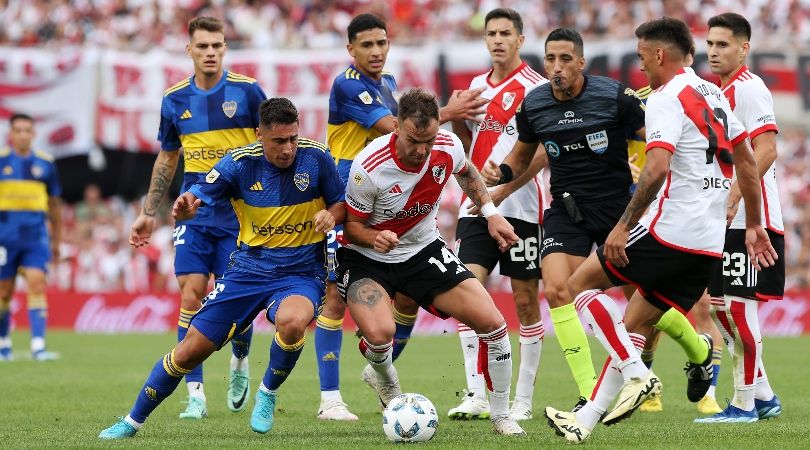
River Plate, Argentina’s most successful club in domestic terms, have won the Copa Libertadores four times and play at the Estadio Monumental, South America’s largest stadium. Legends like Alfredo Di Stéfano, Daniel Passarella, and Enzo Francescoli have worn their shirt.
Boca Juniors, based in Buenos Aires’ La Boca district, are Argentina’s most popular club. Playing at the iconic Bombonera stadium, they have over 70 titles, including six Copa Libertadores crowns. Diego Maradona starred for them in two separate spells during his career.