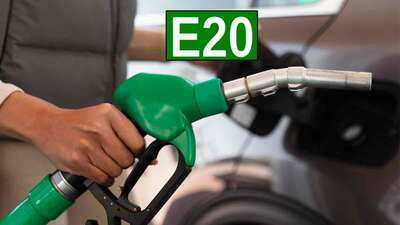
The Centre on Thursday exempted several higher ethanol-blended petrol variants from excise duty, a move aimed at accelerating the adoption of cleaner fuels and reducing the country's dependence on imported crude oil.
According to a notification issued by the Finance Ministry, excise duty has been reduced to 'nil' on petrol blended with 22%, 25%, 27%, and 30% ethanol. The exemption applies to fuel variants marketed as E22, E25, E27, and E30.
The decision comes as the government intensifies efforts to expand ethanol blending across the country, positioning biofuels as a key pillar of India's energy security and environmental strategy.
Why Is the Government Promoting Ethanol Blending?
India imports a large portion of the crude oil required to meet its fuel demand, making the economy vulnerable to global price fluctuations and geopolitical uncertainties. Increasing ethanol use is seen as a way to curb import dependence while supporting domestic agriculture and reducing carbon emissions.
Recently, Union Road Transport and Highways Minister Nitin Gadkari highlighted the multiple benefits of ethanol-based fuels, describing them as a cleaner and more sustainable alternative to conventional petrol.
According to Gadkari, greater ethanol usage can help cut pollution, keep fuel-import spending within the country, and generate economic opportunities for farmers, rural youth, labourers, tribal communities, and the agricultural sector.
What Does It Mean For Consumers?
For the average vehicle owner, the immediate impact is likely to be limited.
The newly exempted fuel variants contain ethanol concentrations above 20%, and such fuels can only be used in vehicles specifically designed and certified to operate on higher ethanol blends.
Under Automotive Industry Standard (AIS) 171, the approval framework covers passenger vehicles, three-wheelers, and certain categories of commercial vehicles. Only vehicles certified for higher ethanol concentrations can safely use E22, E25, E27, or E30 fuels.
Most petrol-powered vehicles currently running on Indian roads are engineered for blends up to E20. Using fuels with higher ethanol content in non-compatible vehicles could potentially affect engine performance, fuel system components, and manufacturer warranty coverage.
As a result, a large section of motorists may not experience any direct benefit from the duty waiver in the near term.
E85 Fuel Marks the Next Stage of India's Biofuel Push
The excise-duty exemption comes days after the launch of E85 fuel, one of the highest ethanol-blended fuels currently available in India.
Union Petroleum and Natural Gas Minister Hardeep Singh Puri unveiled E85 on World Environment Day, June 5, in New Delhi. The fuel contains 85% ethanol and is intended for flex-fuel vehicles capable of operating on high-ethanol blends.
The initial rollout covers 48 fuel stations operated by public-sector oil marketing companies across the country.
Government officials have indicated that the network will expand rapidly, with 50 to 100 E85 dispensing stations expected within weeks. The target is to increase the number to 500 outlets by the end of 2026 and 5,000 by the end of 2027.
Cheaper Fuel for Compatible Vehicles
One of the key attractions of E85 fuel is its pricing. According to Puri, E85 is expected to be sold at around Rs. 20 per litre less than E20 petrol.
For owners of flex-fuel vehicles, this could translate into meaningful fuel-cost savings while also supporting India's broader environmental and energy-security objectives.