If 1966 marked a golden chapter in England’s football history, it also represented a milestone for Portugal. Sixty years later, their best World Cup finish still remains the third place from their debut appearance. Yet, to call the following decades a stretch of disappointment would not be entirely fair. Portugal became European champions in 2016, and in the 21st century, few nations have exported as many high-quality players and managers relative to their size as Portugal.
However, their World Cup story hasn’t mirrored that success. They made it to another semi-final in 2006, though that campaign was defined by just two goals scored across four knockout matches. Their best opportunity to reach a third semi came in 2022, but a quarter-final loss against Morocco saw the African side make history as the continent’s first semi-finalists.
In varying degrees, Portugal’s other four World Cup appearances could be considered underwhelming — early group-stage exits in 2002 and 2014, a last-16 defeat to eventual champions Spain in 2010, and another frustrating outing in 2018.
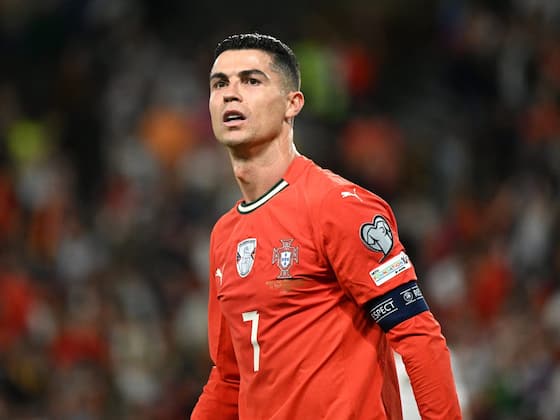
As the 2026 tournament approaches, Portugal stand as perhaps the strongest team never to have lifted the World Cup. Ranked fifth in the world, they have a manager who previously guided a smaller nation to a semi-final, a midfield that could be among the most talented in the competition, and, of course, one of the greatest players to ever grace the game.
That player, Cristiano Ronaldo, was barely a toddler when Portugal beat England in 1986. When he came off the bench in the 2022 defeat to Morocco, with Argentina ultimately winning the tournament, it seemed his dream of equalling Lionel Messi by lifting the World Cup was over. Yet, here he is again in 2026 — still central, still untouchable.
Portugal’s head coach Roberto Martinez faces the critical decision of how best to utilise Ronaldo. Despite being widely regarded as one of the poorest performers at Euro 2024, Ronaldo still started, and in four out of five matches, played the full 90 minutes. When he was sent off in a World Cup qualifier in November for elbowing Ireland’s Dara O’Shea, he was expected to miss the opening matches of the 2026 tournament. But leniency prevailed — after a high-profile dinner with Donald Trump at the White House, FIFA converted his ban into a suspended sentence.
Ironically, Portugal's best performance came in his absence — a 9-1 thrashing of Armenia. While they may lack another elite centre-forward — Goncalo Ramos, who replaced Ronaldo in 2022 and scored a hat-trick against Switzerland, has struggled since — the team clearly has other tactical options to maximise their collective strength.
Nevertheless, Martinez seems to have accepted a role where selecting Ronaldo is non-negotiable. It tests the Spaniard’s flair for optimistic spin — after Ronaldo’s red card against Ireland, Martinez bizarrely praised him for avoiding dismissal in his previous 225 international appearances. Now, his challenge is to build a side capable of beating the very best, with Ronaldo still in it.
The veteran forward can point to impressive statistics: of his 143 international goals, all but two of his last 15 came against sides that either qualified for the World Cup or were good enough to do so. Yet, with Ronaldo leading the line, Portugal are unlikely to adopt a pressing, high-energy style.
Records may be driving him now. Group-stage matches against DR Congo and Uzbekistan — the ones he was supposed to miss — give him a chance to become the first player to score in six different World Cups. Doing so would also allow him to equal Eusebio’s national record of nine World Cup goals. But Eusebio achieved all nine in a single tournament, including six in knockout rounds; Ronaldo, by contrast, has yet to score in one.
In many ways, Portugal’s football identity has become inseparable from Ronaldo — even more so than Brazil’s from Pele or Argentina’s from Diego Maradona or Messi. Before his debut, Portugal had only featured in three World Cups. This will be their sixth with him.
For Roberto Martinez, this will be his third World Cup as a head coach after two stints with Belgium. He once led that golden generation to a semi-final, and now he manages a squad that spans multiple generations — with experienced stars like Bernardo Silva and Bruno Fernandes alongside young talents such as Joao Neves and Vitinha. The midfield, boasting names like Vitinha, Silva, and Fernandes, could be the envy of any nation. Joao Felix and Rafael Leao, meanwhile, vie for a single attacking slot. Felix, now the Saudi Pro League Player of the Year, edges Ronaldo in current form, while Fernandes remains England’s Footballer of the Year. Both Nuno Mendes and Vitinha were named in the Champions League Team of the Season.
Portugal’s depth is remarkable, especially in midfield. Yet, as always, the narrative circles back to Ronaldo. Their projected route could see a quarter-final in Kansas City — potentially against Argentina. That would set up the final chapter of the Messi-Ronaldo saga, a rivalry that has defined an era. Between them, they have scored nearly 2,000 career goals, but when it comes to World Cup trophies, the scoreline remains 1-0 to Messi.
This is Ronaldo’s last shot at the ultimate prize. It might also be Portugal’s best opportunity yet — the lingering question is whether they can win because of him, or in spite of him.