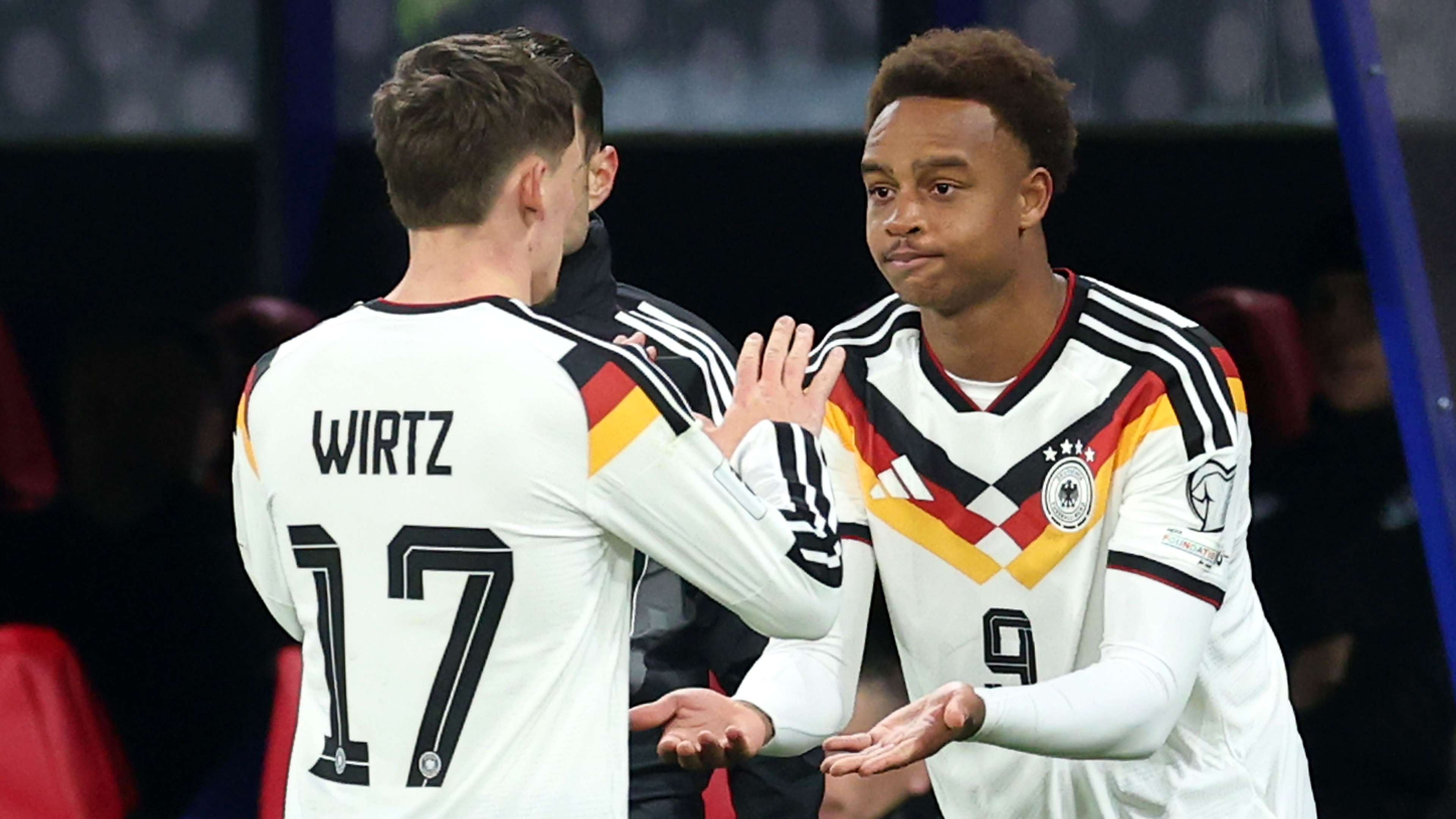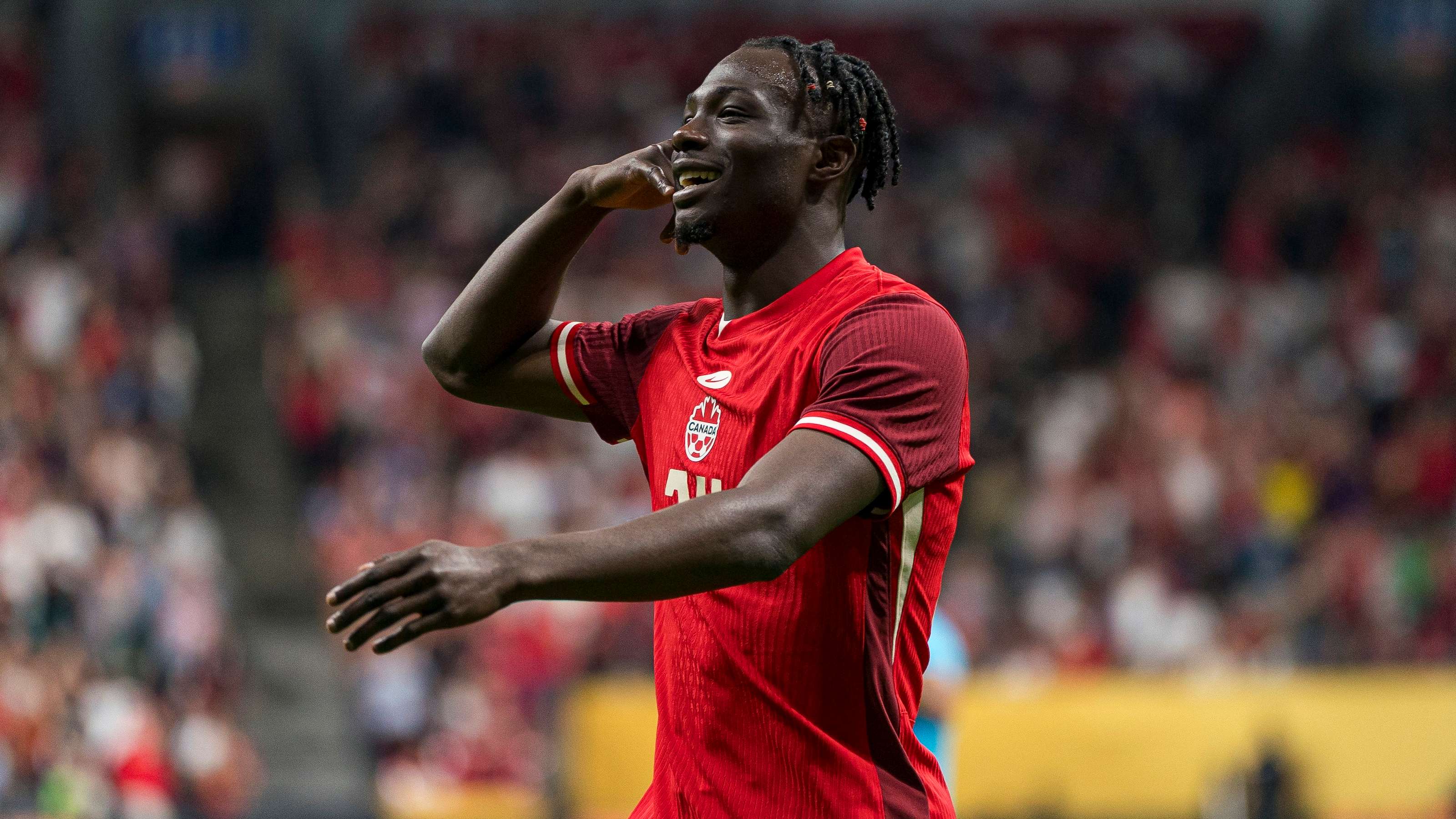
From playing youth football in Croatia to earning a place in Canada’s World Cup squad, Promise David’s remarkable rise and composed attitude could prove crucial as Les Rouges prepare to kick off their campaign on home soil.
TORONTO — When Promise David wakes up on Friday, his first plan is to watch anime. After potentially making his World Cup debut, he’s already decided that a stop at McDonald’s will be his small celebration.
While many players claim that the biggest matches of their careers are “just another game,” Promise — or Tobi, as his teammates call him — genuinely lives by that mindset.
Speaking from a Montreal hotel before Canada’s final pre-World Cup friendly against Ireland, he casually scrolls through his phone to find his most recently watched shows. “Wistoria: Wand and Sword” is his current favourite, and he’s also enjoying being back home, catching up on “Office Movers,” a local series that even features a cameo by Drake.
“I’m finally back in Canada, so I can watch ‘Office Movers,’” said the 6-foot-5 forward, who netted 15 goals in 37 matches this season for Belgium’s Royale Union Saint-Gilloise. “I hate watching shows on dodgy websites, but now that I’m here, I can stream the full seasons easily.”
For someone who just returned from a serious injury to make his first World Cup squad and is days away from playing in front of 40 million Canadians, David’s calmness is striking. Nothing seems to rattle him.
“Same s--t, different day,” he says with a grin. “Wake up, watch my favourite shows, eat, stretch, follow the plan, then score goals and win.”
At 24, David was still playing youth football in Croatia when Canada made its historic return to the 2022 World Cup — their first men’s appearance in 36 years. He never imagined that just four years later, he’d be part of the 2026 edition.
His rapid ascent mirrors the transformation within the Canadian Men’s National Team. Along with four others, David was virtually unknown to fans in 2022. Now, he’s among 13 players making their World Cup debut for Canada this year.
The journey hasn’t been easy. Earlier this year, in February, his dream was nearly destroyed when he suffered a serious hip injury. He described it as feeling like an elastic band had “snapped” inside him. Surgery followed, and the recovery was grueling. But through persistence and encouragement from head coach Jesse Marsch, David made it back in time.
“If I hadn’t made the squad, yeah, that would’ve been a failure,” he admitted. “I heal fast, maybe like a superhuman, and I did eat my vitamins as a kid.”
He laughed as he added, “The pain was a lot, so my brain blocked some of it. I don’t have a high pain tolerance, but I do want a high bank balance — so yeah, it’s pain, but it’s paid pain.”
Now fully fit, he’s visualising his post-match McDonald’s meal. When Marsch told him he’d made the team, he celebrated with Chick-fil-A and an Oreo milkshake. But his hunger for success remains. His composure and resilience have become symbolic traits in a Canadian squad eager to make an impression on football’s grandest stage.
Why the World Cup Matters to Canada
Among the trio of North American hosts, Canada is often seen as the “younger sibling.” The United States commands global attention, while Mexico brings passion and history, having hosted twice before. For Canada, this is a defining moment.
Twelve years ago, they were ranked 122nd by FIFA. When a 17-year-old Alphonso Davies made his emotional speech in 2018 to help secure the 2026 bid, Canada was ranked 80th.
The national team has played six men’s World Cup matches — and lost all six. Their biggest triumphs? The 1904 Olympic gold medal and the 2000 Gold Cup — the latter advancing thanks to a coin toss and happening before football was widely televised in Canada.
This summer, though, offers a stage to display the country’s progress, powered by its multicultural identity and sporting enthusiasm that extends beyond hockey.
“As a country, we’re trying to grow as much as possible,” said vice-captain Stephen Eustáquio after a 2-0 win over Uzbekistan. “We believe we have a strong team that can push boundaries, but we also respect those who came before us. They worked hard to make Canada a football nation. Now it’s our turn to make the country proud.”
This World Cup is more than just a competition; it’s a cultural and sporting milestone. It’s a chance for the CanMNT to inspire Canadians who haven’t yet connected with the sport and to prove that they can stand alongside the world’s best.
The 2022 return to the World Cup ended with lessons learned. Their 2024 Copa América semifinal run, which ended against reigning champions Argentina, showed progress. Now, the goal is to take the next step — to truly compete.
Defining Success
What counts as success depends on perspective. For some, a draw would be satisfying. Others expect to reach the knockout stage. Ambitious fans believe Canada can win Group B and secure a round-of-32 spot in Vancouver. A few even dream of a quarterfinal run.
“We can go deep,” said 20-year-old centre-back Luc de Fougerolles, who just finished his first senior season with FCV Dender in Belgium while on loan from Fulham. “Everyone who goes to the World Cup wants to win it.”
While lifting the trophy may be unrealistic, advancing past the group stage would be monumental for Canadian football. Even one knockout-stage win could change the sport’s landscape in the country forever.
“I just want people to say, ‘Remember that Canadian team in 2026? Wow, what a squad,’” said David. “That’s my goal — to put on a show.”
How long that show runs may not matter as much. Canada’s commitment to Jesse Marsch through the 2030 cycle shows that this is about long-term growth, not just one tournament.
“They all know what this means,” said injured captain Alphonso Davies, who is uncertain for the opener. “There’s not much I can say to motivate them more. Playing for your country, in front of your country — that’s motivation enough.”
Is Canada Built to Compete?
With nine of the 26 players having dealt with injuries in recent months, durability is a concern. However, the recent win over Uzbekistan showed signs that Canada’s structure is coming together just in time.
Marsch’s team thrives on counterpressing in a 4-4-2 formation. Wingers overlap with fullbacks to create attacking overloads, while a double pivot anchors the midfield. One striker often drops deeper to exploit spaces and create opportunities for wide runs or central breakthroughs. Defensively, they’ve been strong under Marsch, conceding just 18 goals in 30 matches.
“We’ve got good balance in the squad,” Marsch said after the Uzbekistan game. “People talked about our lack of goals from open play, but I always said the goals will come because we have firepower.”
“We kept another clean sheet, and we’ve conceded only three goals in 10 matches — that’s an excellent record. If we maintain that, we give ourselves a real shot at a strong World Cup.”
Despite injuries and occasional absences of key players, Canada has remained consistent. Scoring has been the only weak point, but confidence is growing that they can turn a corner as the tournament begins.
The Political Power of the World Cup
Beyond football, hosting the World Cup carries political significance for Canada during a period of shifting North American trade relations. As tensions with its southern neighbour simmer, Canada is using the event as a platform for global visibility and diplomacy.
The tournament, costing $1.3 billion in taxpayer funds for 13 matches in Toronto and Vancouver, may not yield direct profits. However, as a G7 nation, Canada views this as an investment in national pride and international recognition — much like its previous Olympic hosting experiences.
While it may not leave behind major infrastructure, the World Cup will leave a lasting emotional legacy. It’s a chance to unite people and showcase the country’s diversity and ambition.
As Promise David put it best, he just wants it to be a great show. Canada is ready to make sure the world remembers it.