The first half of the World Cup 2026 Group H qualifying match between Spain and Cape Verde ended in a goalless draw.
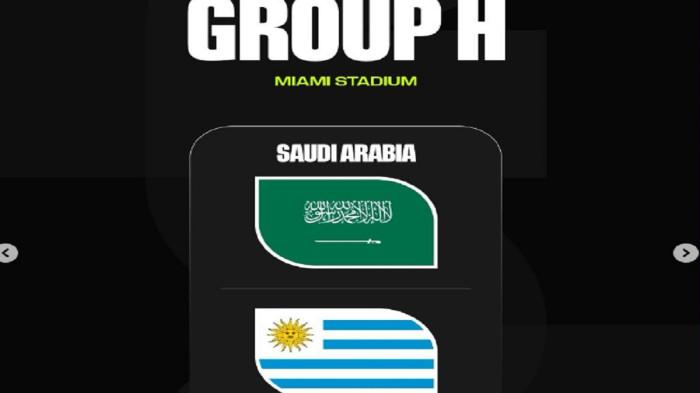
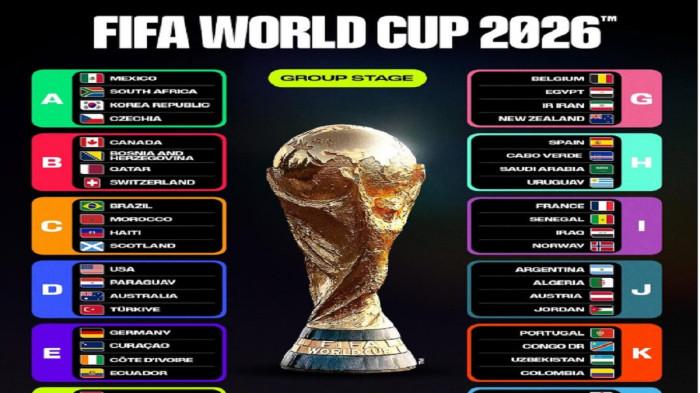
According to reports, this fixture marked Spain’s opening match in the Group H qualification stage for the 2026 FIFA World Cup.
The clash between Spain and Cape Verde took place at the Mercedes-Benz Stadium in Atlanta, United States, on Monday, 15 June 2026, kicking off at 23:00 WIB.
La Furia Roja, as the Spanish national team is known, created several promising chances throughout the first half.
However, Ferran Torres and his teammates were unable to find the back of the net due to Cape Verde’s disciplined and resilient defence.
Match Progress
First Half
Spain dominated possession in the opening five minutes, launching continuous attacks on Cape Verde’s defence.
Despite their early control, Spain found it difficult to break down Cape Verde’s defensive line up to the 10th minute.
In the 12th minute, Oyarzabal delivered a dangerous cross that tested Cape Verde’s backline, but a defender managed to clear it away.
Spain’s first real opportunity came in the 14th minute when Pedri fired a low shot from outside the penalty box, only to see it safely gathered by goalkeeper Vozinha.
At the 20-minute mark, Pau Cubarsi nearly opened the scoring after receiving a precise pass from Rodri, but his shot was blocked by a Cape Verde defender.
Cape Verde tried to respond with a counterattack in the 21st minute, yet their effort was neutralised by Spain’s solid backline.
Marc Cucurella had a chance in the 29th minute, unleashing a powerful strike from inside the box, though the attempt sailed over the crossbar.
Oyarzabal once again came close in the 32nd minute after breaking into the penalty area from the right side following a through ball from a teammate, but his attempt was thwarted by quick defensive pressure.
In the 36th minute, Spain created another promising sequence initiated by Cucurella’s movement, but the attack was called offside.
The closest opportunity of the half came in the 39th minute when Cucurella received a lofted pass and sent it to Ferran Torres, whose shot rattled the crossbar. Vozinha then made a superb save from Oyarzabal’s follow-up effort.
Torres had another golden chance just before half-time, receiving a cross from a teammate in the 45th minute. Despite having a clear view of goal, his shot was once again saved by Vozinha.
Spain continued to press until the end of the first half, but the breakthrough never came, leaving the scoreline 0-0 at the interval.
Goalkeeper: Unai Simon
Defenders: Marc Cucurella, Aymeric Laporte, Pau Cubarsi, Marcos Llorente
Midfielders: Fabian Ruiz, Rodri, Pedri
Forwards: Gavi, Oyarzabal, Ferran Torres
Goalkeeper: Vozinha
Defenders: Steven Moreira, Pico, Diney, Sidny Lopes Cabral
Midfielders: Laros Duarte, Kevin Lenini, Ryan Mendes, Jamiro Monteiro, Jovane Cabral
Forward: Dailon Rocha Livramento
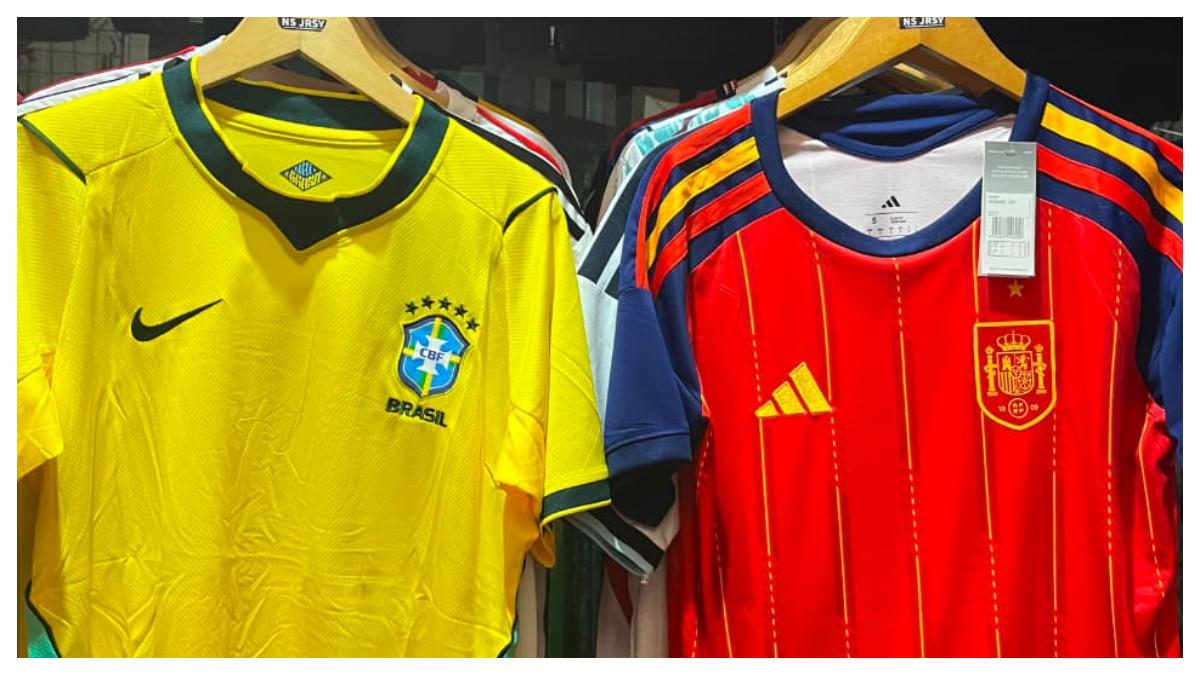
One of the local jersey entrepreneurs in Solo, Nofi Setiawan, owner of NS Jersey, shared his predictions for the potential champion and runner-up of Group A.
Before revealing his predictions, Nofi spoke about his journey in building his jersey business, which he started during high school.
“The background of this business goes back to my school days in the Marketing department. We had to do practical exams, so I decided to test this business idea back then. I was passionate about it, and after graduating from college, I continued selling little by little until now,” Nofi explained on Wednesday, 10 June 2026.
“Thankfully, it has grown quite a bit. We sell two types of adult jerseys — standard (stadium) and player issue versions. We also sell shorts and kids’ jerseys,” he added.
Nofi became more serious about his business after the COVID-19 pandemic hit Indonesia.
“Initially, around 2020, it was more of a hobby — I enjoyed it but didn’t take it seriously. After the pandemic, I decided to pursue it more seriously and expanded the business,” he recalled.
Speaking about the impact of the 2026 FIFA World Cup, Nofi said that public enthusiasm for buying jerseys tends to increase after the group stage concludes.
According to him, the best-selling jerseys are from European countries, especially Germany and France. Besides them, Brazil and Argentina are also in high demand.
“The most popular are definitely Germany and France. Portugal follows, mainly because of Ronaldo. Other strong sellers are Argentina and Brazil. England and the Netherlands are less hyped overall,” he said.
Interestingly, Nofi noted that Dutch jerseys are particularly popular in eastern Indonesia.
“We often ship Dutch jerseys to eastern regions like Papua and Maluku, where there are many people of Dutch descent,” he said.
Nofi explained that his customers usually buy jerseys for three main reasons: design, favourite players such as Ronaldo, Mbappe, or Messi, and budget considerations.
He also mentioned that older designs can suddenly become popular again if a team performs well in the World Cup.
“The best feeling is when an old stock sells because the team advances far in the tournament. For example, during the 2022 World Cup, I still had Argentina kits, and when they reached the semi-final, demand skyrocketed, and prices went up,” he shared.
Nofi’s farthest deliveries have been to Papua and Maluku, often in bulk shipments of up to 12 pieces. Customers there tend to group their orders to reduce shipping costs.
“I’ve sent jerseys as far as Papua and Maluku. Usually, they buy together with friends to save on delivery fees,” he explained.
(TribunWow.com)