It is often said in blood donation camps that “Your one unit of blood can save the lives of three people.” But is this really possible? After all, how can blood donated by one person be useful to three different patients? According to experts, the scientific process of modern blood banking and blood separation (blood component separation) works behind this.
Every year, millions of people in India need blood due to accidents, surgeries, cancer treatment, birth complications and blood disorders. In such a situation, blood donation becomes an important means of saving lives.
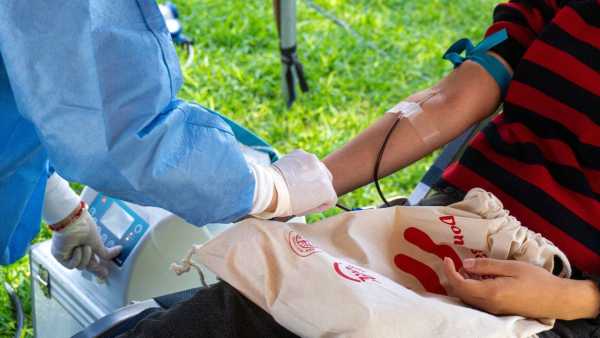
Dr. Uma Rani, Director Pathology, Asian Hospital, says that when a person donates blood, usually about 350 to 450 ml of blood is taken from him. Earlier this whole blood was transfused to only one patient. But modern technology has made this process more effective. Donated blood in a blood bank is separated with the help of special machines into three major components, red blood cells (RBC), plasma and platelets. These three components are used in the treatment of different types of patients.
Red blood cells are used in patients who have anemia, such as severe anemia, major surgery, or accident victims. Plasma is the liquid part of blood, in which many important proteins and clotting factors are present. It is used in the treatment of patients suffering from liver disease, severe burns and bleeding. Whereas platelets are used in dengue, cancer, bone marrow disease and patients undergoing chemotherapy, where the platelet count falls to dangerous levels. This is why different parts of one unit of blood can reach three different patients and help save their lives.
Experts say that even today people have many misconceptions regarding blood donation. Some people feel that donating it causes weakness or lack of blood in the body. Whereas medical science tells the opposite. Dr. Uma Rani, Director Pathology, Asian Hospital, says, "Blood donation by a healthy person is a completely safe process. The body starts replenishing the liquid part of the blood within a few hours and the blood cells also reach normal levels in a few weeks. Blood donation does not cause permanent weakness." They say that for blood donation, a person's age should generally be between 18 to 65 years and his weight should be at least 45 to 50 kg.
Despite the increase in the number of people donating blood voluntarily in India, many hospitals and blood banks have to face shortage of blood from time to time. There is a decline in blood donation during summer, festivals and holidays, while the need of patients remains constant.
Dr. says, "People should understand that blood is not made in any factory. Its availability completely depends on human donation. If healthy people donate blood regularly, thousands of patients can get life-saving treatment on time."
Experts recommend drinking enough water, eating light food and getting good sleep before donating blood. After donating blood, one should rest for some time and take adequate amount of fluids throughout the day. One unit of blood can actually provide hope for life to three people.
The reason for this is the modern medical technology of using different components of blood in different patients. Experts say that regular and voluntary blood donation is not only safe, but it is also the biggest human contribution to the society. A small effort can lead to a new life for someone.