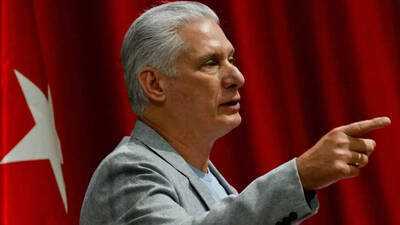
In a recent address to senior leaders of the Communist Party, President Miguel Díaz-Canel emphasized the urgent need for economic reforms in Cuba, a situation exacerbated by a US oil blockade. This speech marks one of his most candid acknowledgments regarding the necessity to revamp the nation’s economic framework. He urged the party's politburo to recognize that 'the situation calls for urgent and necessary changes.'
Díaz-Canel pointed to China and Vietnam as potential examples for Cuba to follow, suggesting that the nation could open its economy while still adhering to socialist values. He stressed the importance of generating economic wealth and ensuring its equitable distribution.
During a crucial meeting aimed at expediting reforms to bolster the struggling private sector, the president acknowledged that some proposed changes might not garner 'absolute consensus.' However, he insisted that these reforms cannot be postponed. 'When people's lives become this hard,' he stated, it is the duty of the government and the Communist Party to 'change what needs to be changed' instead of merely rationalizing the ongoing crisis.
Cuba is currently grappling with severe challenges, including frequent power outages, fuel shortages, and limited access to essential goods such as food, medicine, and clean water. Officials attribute these issues to a mix of domestic inefficiencies and external pressures, particularly US sanctions and restrictions on energy imports.
While the Cuban government has historically blamed its economic struggles on a long-standing US trade embargo, Díaz-Canel also recognized internal issues, including 'slowness, bureaucracy, and norms that hinder production,' along with delayed policy decisions that have exacerbated the crisis.
The president's comments indicate a rising urgency among Cuba's leadership to implement economic reforms that would enhance private enterprise and improve production in light of worsening living conditions. Former president Raúl Castro has reportedly supported these proposed changes, describing them as 'the most beneficial to the revolution at this time,' which suggests a rare consensus within the leadership on the need for reform.
It remains uncertain whether these planned reforms will alleviate external pressures or satisfy the expectations of Washington, where US policies continue to advocate for broader changes to Cuba's economic structure.