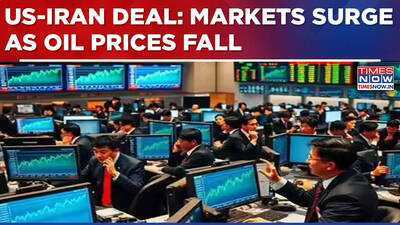
President Donald Trump highlighted two significant aspects of the recent US-Iran agreement: Iran will not possess nuclear weapons, and the Strait of Hormuz will be reopened without tolls. However, following this announcement, there has been no significant increase in marine traffic in this crucial waterway.
During a press briefing, US Vice President JD Vance dodged inquiries regarding the possibility of Iran imposing fees on vessels navigating the Strait of Hormuz. He emphasized that the US supports the idea of free international waterways but noted that the priority is to maintain the strait's accessibility. Vance stated, "The MOU anticipates collaboration among Oman, Iran, and the Gulf coalition to establish a suitable security framework for the straits in the future." He further clarified that the focus is on preventing the straits from becoming a bottleneck for the global economy.
On Thursday, the US Navy announced the lifting of its naval blockade on Iran, permitting oil tankers to transit. This decision followed Vice President Vance's report that 12.5 million barrels of oil passed through the Strait of Hormuz on Wednesday, with military forces allowing over a dozen ships to navigate through the previously enforced blockade. However, the US Central Command indicated that Navy vessels would remain in the vicinity to ensure compliance with the agreement.
In line with the agreement, Iran announced it would not impose any fees on ships passing through the Strait of Hormuz for the next 60 days. Additionally, Iran committed to clearing mines from the strait as part of the deal.
According to a statement from Iran’s Supreme National Security Council, vessels must apply to the Persian Gulf Strait Authority for transit. This Iranian agency, established in May, is responsible for regulating the strait affected by conflict. Iran plans to announce operational protocols and technical details for transit through the Strait of Hormuz soon.